
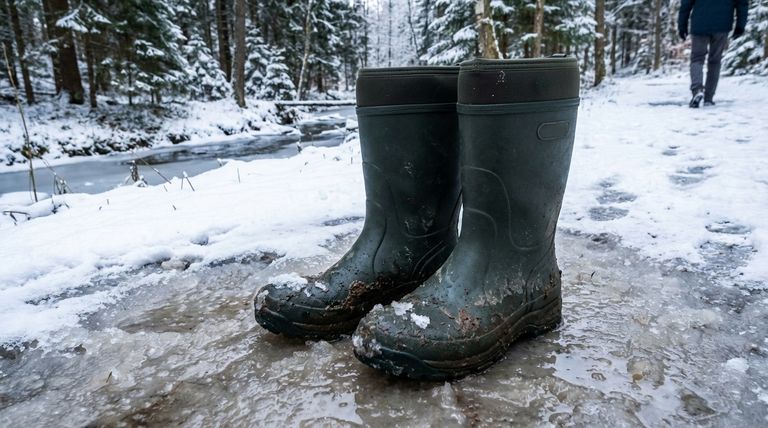
For winter conditions, the primary advantages of Wellington boots are their complete waterproofing, ease of cleaning, and potential for warmth when properly insulated. Their simple, seamless rubber construction provides an impenetrable barrier against slush, mud, and rain, keeping your feet completely dry.
While Wellington boots offer superior waterproofing for wet winter conditions, their effectiveness against the cold is entirely dependent on insulation. A standard, unlined boot is unsuitable for low temperatures, whereas an insulated model is specifically designed for the task.
The Core Advantages of Wellington Boots
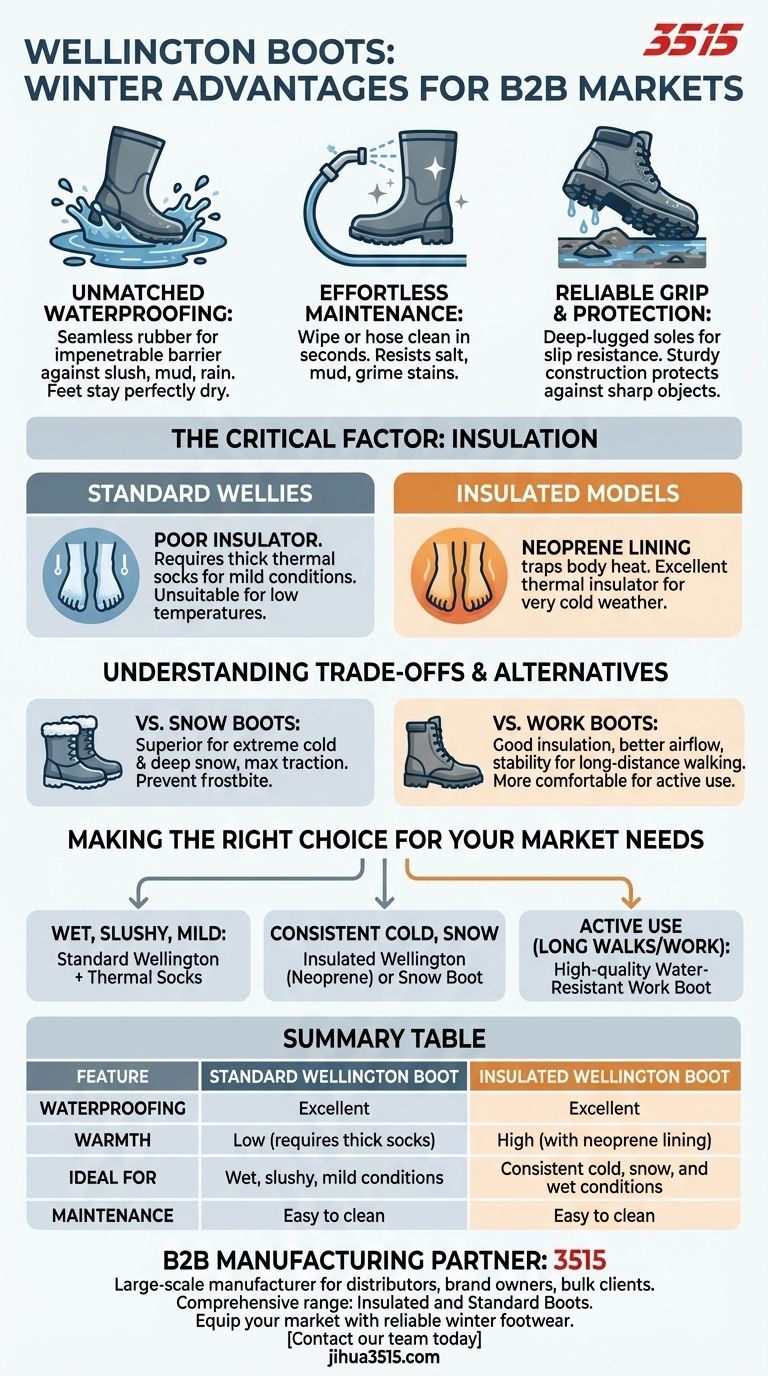
Unmatched Waterproofing
The single greatest strength of a Wellington boot is its material and construction. Being made from rubber, they are inherently waterproof, not just water-resistant.
This makes them the ideal choice for dealing with deep puddles, melting snow, and slush, ensuring your feet remain perfectly dry.
Effortless Maintenance
Winter brings salt, mud, and grime that can stain and degrade other materials like leather or suede.
Wellington boots can be wiped or hosed clean in seconds. This prevents the buildup of corrosive salt stains and preserves the integrity of the boot with minimal effort.
Reliable Grip and Protection
Many Wellington boots are designed with deep-lugged soles that provide good grip on slippery, wet, or muddy surfaces.
Their sturdy construction also protects your feet from sharp objects that might be hidden under snow or in murky puddles.
The Critical Factor: Insulation
The Problem with Standard Wellies
A standard, unlined Wellington boot provides almost no thermal insulation. Rubber is a poor insulator and will quickly conduct the cold from the ground to your feet.
Without a thermal barrier, these boots can leave your feet colder than other types of footwear, even if they are dry.
The Solution: Insulated Models
To combat the cold, manufacturers produce insulated Wellington boots, often using a neoprene lining.
Neoprene is an excellent thermal insulator that traps body heat, keeping your feet warm even in very cold weather, making these models ideal for true winter activities.
The Role of Proper Socks
For unlined or lightly lined boots, the right pair of socks is crucial. Thick, thermal socks made of wool or synthetic blends can add a significant layer of insulation.
However, relying on socks alone is only effective in milder winter conditions, not sustained, freezing temperatures.
Understanding the Trade-offs and Alternatives
Wellies vs. Snow Boots
Dedicated snow boots are purpose-built for warmth and traction in extreme cold and deep snow. They typically offer superior insulation and specialized soles for ice, often surpassing even the best-insulated Wellies.
Snow boots prevent frostbite and provide maximum traction, making them the superior choice for severe winter weather.
Wellies vs. Work Boots
Water-resistant work boots, often made of leather, provide a different balance of features. They offer good insulation, better airflow and breathability, and are designed for stability during long-distance walking.
While not fully waterproof like a Welly, they can be a more comfortable option for long periods of activity on cold, less slushy days.
Making the Right Choice for Your Winter Needs
- If your primary focus is wet, slushy, and mild conditions: A standard Wellington boot paired with a quality thermal sock offers an unbeatable combination of waterproofing and practicality.
- If your primary focus is consistent cold and snow: You must choose an insulated Wellington boot with a neoprene lining or a dedicated snow boot to ensure warmth and safety.
- If your primary focus is active use like long walks or work: A high-quality, water-resistant work boot may provide a better balance of support, insulation, and breathability.
Ultimately, choosing the right boot means matching its specific strengths to the reality of your winter environment.
Summary Table:
| Feature | Standard Wellington Boot | Insulated Wellington Boot |
|---|---|---|
| Waterproofing | Excellent | Excellent |
| Warmth | Low (requires thick socks) | High (with neoprene lining) |
| Ideal For | Wet, slushy, mild conditions | Consistent cold, snow, and wet conditions |
| Maintenance | Easy to clean | Easy to clean |
Need Durable Winter Boots for Your Business?
As a large-scale manufacturer, 3515 produces a comprehensive range of high-quality Wellington boots for distributors, brand owners, and bulk clients. Our production capabilities encompass all types of insulated and standard boots, ensuring your customers get the perfect combination of waterproof protection and winter warmth.
Let us help you equip your market with reliable footwear.
Contact our team today to discuss your production needs!
Visual Guide
Related Products
- Durable Waterproof Rain Boots | Custom Manufacturer for Wholesale & Brands
- Durable Goodyear Welt Leather Work Boots for Wholesale & Private Label
- Wholesale Durable Leather Work Boots | 8-Inch Goodyear Welt Manufacturer
- High-Traction Suede Tactical Boots Wholesale & Custom Manufacturing
- Durable Leather Tactical Boots Wholesale & Custom Manufacturing for Brands
People Also Ask
- What are the main materials for waterproof rain boots? Choose the Right Material for Durability & Comfort
- What is the overall recommendation for choosing rain boot materials? A Guide to Rubber vs. PVC
- How does boot height affect waterproofing? Choose the Right Height for Ultimate Protection
- Why are rain boots more flexible and comfortable than snow boots? The Key Differences Explained
- What are the best types of shoes for different gardening conditions? Find Your Perfect Match.



















