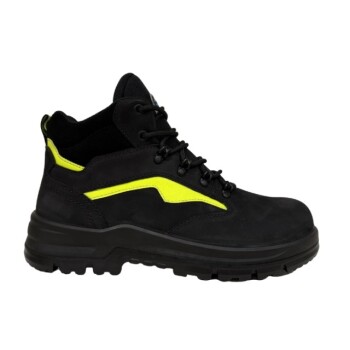
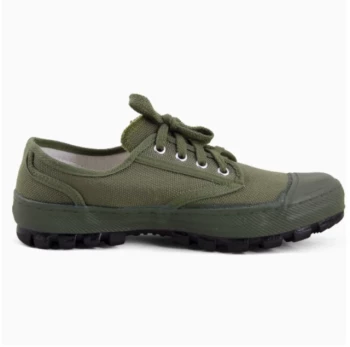
The main types of work boots are best understood by looking at three key characteristics: their construction style, their specific safety features, and the materials used. The most common distinctions are between pull-on and lace-up boots for style, and steel toe and composite toe boots for safety.
Choosing the right work boot isn't about finding a single "best type." It's about understanding how different combinations of construction, safety toes, and specialized features align with the specific hazards and demands of your job.

Foundational Choice: Construction Style
The most immediate choice you'll make is how the boot secures to your foot. This impacts fit, support, and convenience.
Lace-Up Work Boots
Lace-up boots are the traditional standard for many trades. They allow for a highly adjustable and secure fit.
This customizable tightness provides superior ankle support, which is critical when navigating uneven terrain or carrying heavy loads.
Pull-On Work Boots
Also known as Wellington boots, pull-on boots prioritize convenience. The absence of laces makes them extremely fast to put on and take off.
While they offer less ankle support, they are ideal for environments where you need to frequently enter and exit a clean space or for jobs with less demanding terrain.
The Critical Factor: Core Safety Features
Beyond how they fit, work boots are defined by the specific protections they offer. The safety toe is the most fundamental feature.
Protective Toes: The First Line of Defense
The protective toe cap is designed to prevent injury from falling objects or compression. The two dominant technologies are steel and composite materials.
Steel toe caps are the traditional choice, offering maximum protection against impact and compression.
Composite toe caps are a more modern alternative made from non-metal materials like carbon fiber, plastic, or Kevlar.
Specialized Hazard Protection
Many jobs require protection that goes beyond the toe cap.
Electrical Hazard (EH) rated boots are designed to protect you from accidental contact with live electrical circuits.
Waterproof boots use membranes and sealed seams to keep your feet dry in wet conditions, which is crucial for both comfort and health.
Insulated boots are essential for cold-weather environments, incorporating materials that trap heat and protect against frostbite.
Understanding the Trade-offs: Steel Toe vs. Composite Toe
The choice between a steel and composite toe is one of the most common decisions and involves clear trade-offs.
The Case for Steel Toe
Steel offers the highest level of protection against impact and is often the standard in heavy industrial or construction settings.
However, steel is heavy and conducts temperature, meaning the toe cap can get very cold in winter or hot in summer.
The Case for Composite Toe
Composite materials are significantly lighter than steel, which can reduce foot fatigue over a long day.
Because they are non-metallic, they do not conduct electricity or temperature. This makes them ideal for electricians or workers in extreme climates.
Beyond the Boot: Other Safety Footwear Forms
While "work boot" often implies a traditional over-the-ankle style, safety footwear comes in various forms to suit different needs.
Safety Trainers and Shoes
For lighter-duty work or roles that blend office time with time on the factory floor, safety trainers and shoes offer protection in a more comfortable, athletic package.
Safety Wellingtons
These are typically tall, rubber pull-on boots designed for complete waterproofing in extremely wet or muddy environments, such as agriculture or food processing.
How to Choose the Right Work Boot for Your Job
Your daily tasks and work environment should be the ultimate guide for your decision.
- If your primary focus is maximum impact protection in construction or heavy industry: A steel-toe, lace-up boot provides the best combination of safety and ankle support.
- If your primary focus is convenience for indoor/outdoor work: A pull-on boot allows for quick and easy transitions throughout the day.
- If your primary focus is working around electrical hazards or in extreme temperatures: A composite-toe, EH-rated boot offers lightweight safety without conducting electricity or cold.
- If your primary focus is mobility and comfort in a lower-risk environment: A safety trainer provides necessary protection without the bulk of a traditional boot.
Understanding these core categories empowers you to select the precise footwear that functions as a true tool for your job.
Summary Table:
| Feature | Lace-Up Boots | Pull-On Boots | Steel Toe | Composite Toe |
|---|---|---|---|---|
| Primary Benefit | Superior ankle support & adjustable fit | Maximum convenience & speed | Maximum impact protection | Lightweight, non-conductive |
| Best For | Uneven terrain, heavy loads | Frequent on/off, less demanding terrain | Heavy industry, construction | Electricians, extreme climates |
Need the Right Work Boots for Your Team?
As a large-scale manufacturer, 3515 produces a comprehensive range of safety footwear for distributors, brand owners, and bulk clients. Whether you require durable steel-toe lace-ups for construction crews or lightweight composite-toe boots for electricians, our production capabilities cover all types of shoes and boots to meet your exact specifications.
Contact us today to discuss your requirements and get a quote tailored to your business needs.
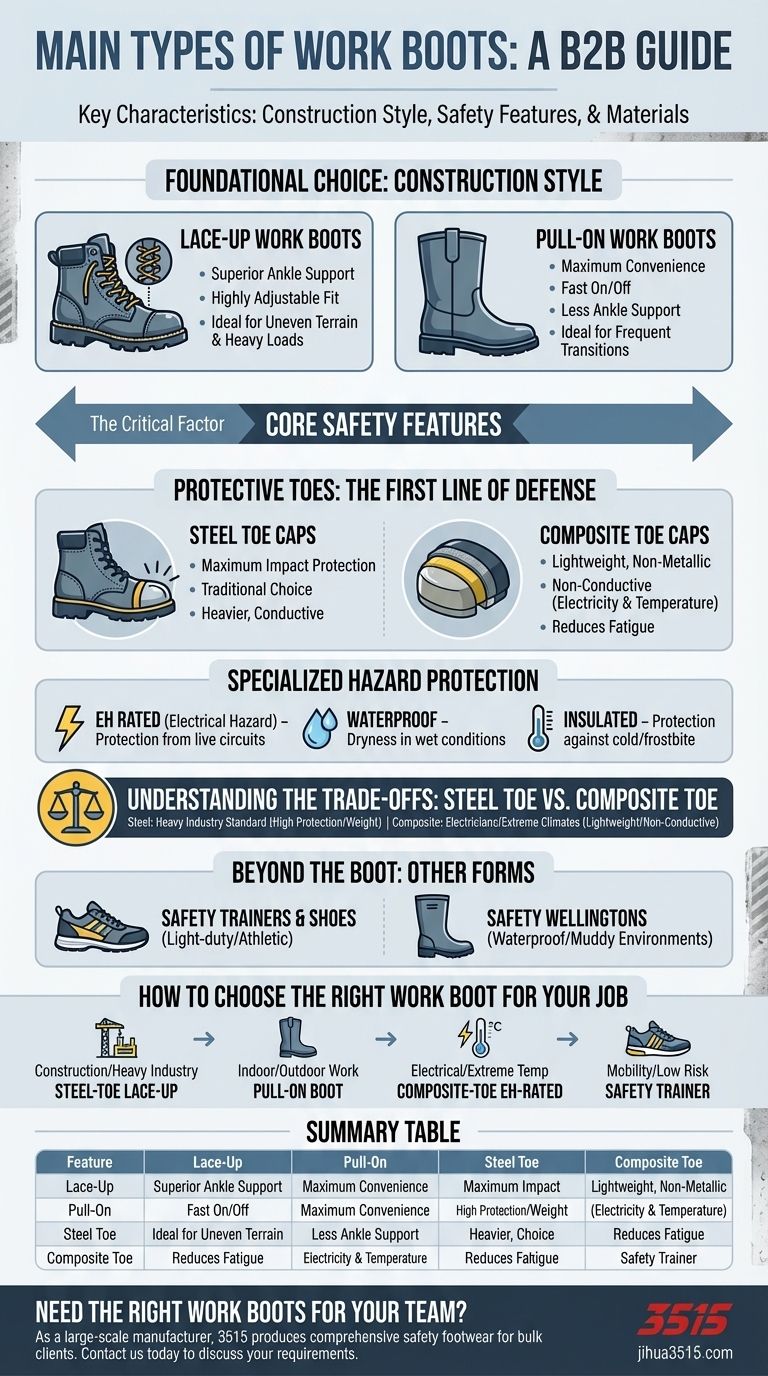
Visual Guide
Related Products
- Durable Leather Work Boots for Wholesale & Custom Manufacturing
- Durable Leather Work Boots for Wholesale & Custom OEM Manufacturing
- Durable Leather Work Boots Wholesale Manufacturer & Custom Factory
- Durable Leather Moc Toe Work Boots for Wholesale & Custom Manufacturing
- Wholesale Durable 6-Inch Work Boots | Custom & Private Label Manufacturer
People Also Ask
- What is the difference between full-grain and top-grain leather? Premium Material Guide for Boot Manufacturers
- What are the common workplace hazards that can be mitigated with the right work boots? Protect Your Workforce
- What are the common foot issues workers face due to uncomfortable work boots? Prevent Pain & Deformities
- What are the advantages of leather versus synthetic work boots? A Guide to Choosing the Right Material
- What are the key components of modern work boots? Engineered for Ultimate Durability and Comfort