
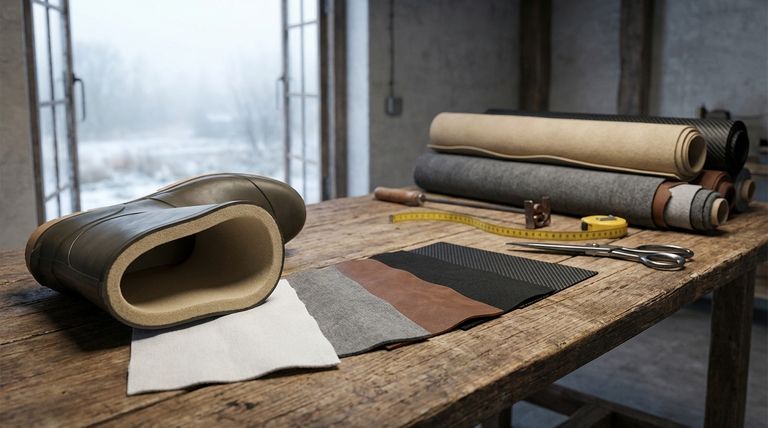
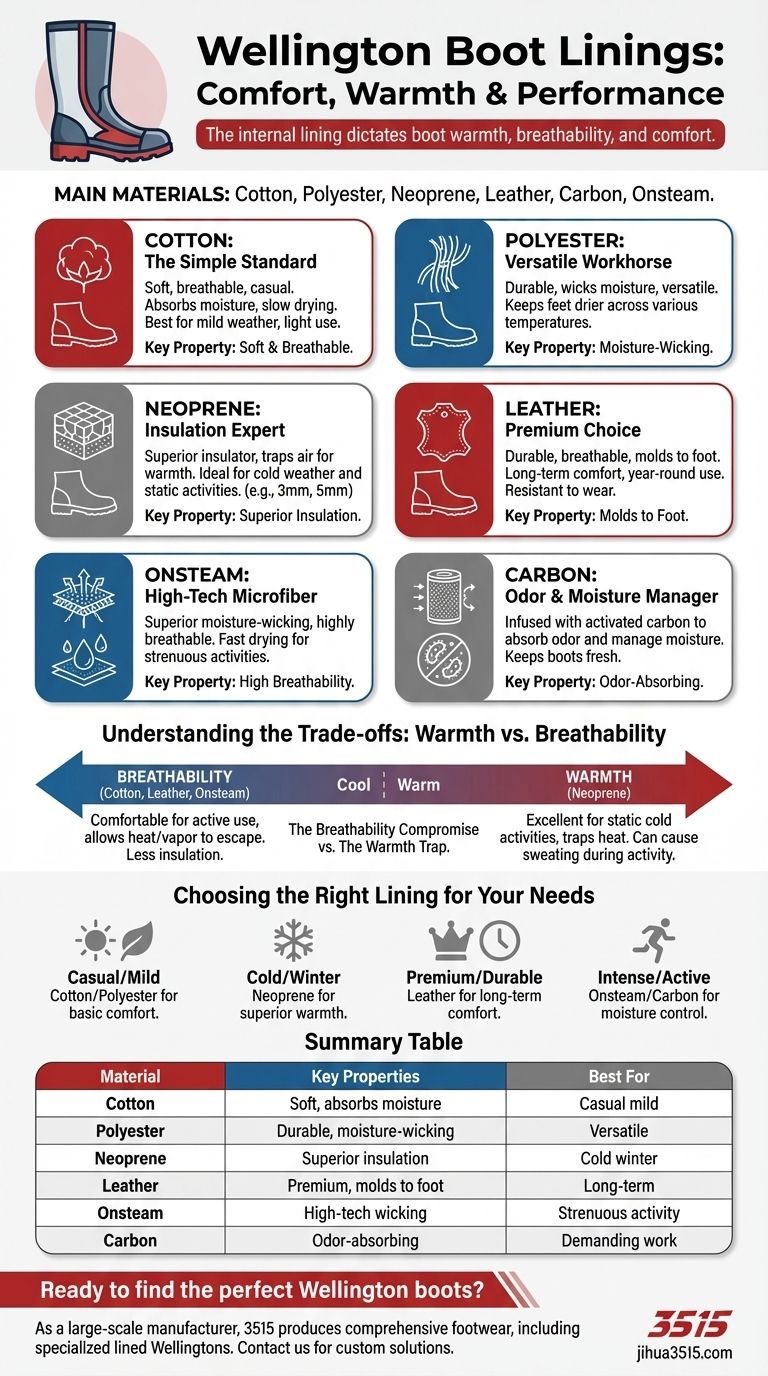
At a glance, the primary lining materials used in Wellington boots are cotton, polyester, neoprene, leather, carbon, and Onsteam. Each material is chosen to provide a specific balance of comfort, warmth, moisture management, and durability, catering to different environments and uses.
The most critical factor in choosing a Wellington boot isn't the rubber exterior, but the internal lining. Your decision should be guided entirely by the conditions you'll face, as the lining dictates the boot's warmth, breathability, and overall comfort.
A Deeper Look at Wellington Linings
While all Wellingtons are waterproof on the outside, the lining determines how they feel and perform on the inside. Understanding the properties of each material is key to avoiding cold, clammy, or uncomfortable feet.
Cotton: The Simple Standard
Cotton is a common lining in basic or fair-weather Wellingtons. It's soft and breathable, making it comfortable for casual wear in mild temperatures.
However, its major drawback is moisture absorption. Cotton soaks up sweat and is very slow to dry, which can lead to discomfort and cold feet in cooler or high-activity situations.
Polyester: The Versatile Workhorse
Polyester is a synthetic fabric that offers a significant upgrade from cotton. It is more durable and, most importantly, excels at wicking moisture away from the skin.
This makes polyester linings a versatile choice, helping to keep feet drier and more comfortable across a wider range of temperatures and activity levels.
Neoprene: The Insulation Expert
Neoprene is the same material used in wetsuits. It is a foamed synthetic rubber that traps air, making it an exceptional insulator.
This is the go-to lining for cold weather, winter, or for anyone who works in consistently cool conditions. Linings are typically rated by thickness (e.g., 3mm, 5mm), with thicker neoprene providing more warmth.
Leather: The Premium Choice
Found in high-end boots, a leather lining offers a unique combination of durability, breathability, and long-term comfort. It is highly resistant to wear and tear.
Over time, leather molds to the shape of your foot, creating a custom fit. While not as insulating as neoprene, it provides a luxurious feel and excellent moisture management for year-round use.
Onsteam: The High-Tech Microfiber
Onsteam is a modern, high-performance microfiber lining. It's engineered to be extremely breathable and can absorb many times its own weight in moisture.
This material feels similar to leather but offers superior moisture-wicking and drying speed, making it ideal for those who need maximum breathability and dry comfort during strenuous activity.
Carbon: The Odor and Moisture Manager
Carbon-infused linings are another technical option. The activated carbon woven into the fabric helps absorb odor-causing bacteria and manage moisture.
These linings are often chosen for their ability to keep boots feeling fresh and dry, particularly during long hours of wear in demanding work environments.
Understanding the Trade-offs: Warmth vs. Breathability
The central conflict in boot lining selection is balancing insulation with moisture management. There is no single material that is perfect for every situation.
The Warmth Trap
Heavily insulated linings like neoprene are excellent for static activities in the cold, such as standing in a field or fishing.
However, during active use like long walks or manual labor, they can trap too much heat. This causes your feet to sweat, and that trapped moisture can eventually make your feet feel cold and clammy.
The Breathability Compromise
Conversely, highly breathable linings like cotton or leather are comfortable for active use in mild weather. They allow heat and water vapor to escape.
Their weakness is a lack of insulation. In cold, static conditions, they offer little protection, and your feet will quickly become cold.
Choosing the Right Lining for Your Needs
To make the right choice, honestly assess how and where you will use your boots most often.
- If your primary focus is casual, light use in spring or autumn: A cotton or polyester lining provides basic comfort without causing overheating.
- If your primary focus is warmth in cold or winter conditions: Neoprene is the undisputed best choice for its superior insulation.
- If your primary focus is premium comfort and long-term durability: A leather lining will mold to your foot and withstand years of wear.
- If your primary focus is intense activity and moisture control: Advanced synthetics like Onsteam or carbon offer the best performance for keeping feet dry.
Ultimately, selecting the right Wellington boot is an exercise in matching the lining's properties to your specific environment and activity level.
Summary Table:
| Lining Material | Key Properties | Best For |
|---|---|---|
| Cotton | Soft, breathable, absorbs moisture | Casual wear in mild weather |
| Polyester | Durable, excellent moisture-wicking | Versatile use across temperatures |
| Neoprene | Superior insulation, traps warmth | Cold weather, winter conditions |
| Leather | Premium, durable, molds to foot | Long-term comfort, year-round use |
| Onsteam | High-tech, superior moisture-wicking | Strenuous activity, maximum breathability |
| Carbon | Odor-absorbing, moisture management | Demanding work environments, long wear |
Ready to find the perfect Wellington boots for your needs?
As a large-scale manufacturer, 3515 produces a comprehensive range of footwear for distributors, brand owners, and bulk clients. Our production capabilities encompass all types of shoes and boots, including Wellingtons with the specialized linings detailed above. We can help you select or customize the ideal boot lining—whether it's warm neoprene for winter work or breathable Onsteam for high-activity use—to ensure superior comfort and performance for your customers.
Contact our expert team today to discuss your Wellington boot requirements and leverage our manufacturing expertise.
Visual Guide
Related Products
- Durable Waterproof Rain Boots | Custom Manufacturer for Wholesale & Brands
- Wholesale Waterproof Tactical Boots Custom Suede & High-Traction Soles
- Durable Goodyear Welt Leather Work Boots for Wholesale & Private Label
- Durable Leather Tactical Boots Wholesale & Custom Manufacturing for Brands
- High-Traction Suede Tactical Boots Wholesale & Custom Manufacturing
People Also Ask
- What are the main materials for waterproof rain boots? Choose the Right Material for Durability & Comfort
- What is the overall recommendation for choosing rain boot materials? A Guide to Rubber vs. PVC
- How does boot height affect waterproofing? Choose the Right Height for Ultimate Protection
- Why are rain boots more flexible and comfortable than snow boots? The Key Differences Explained
- What are the best types of shoes for different gardening conditions? Find Your Perfect Match.















