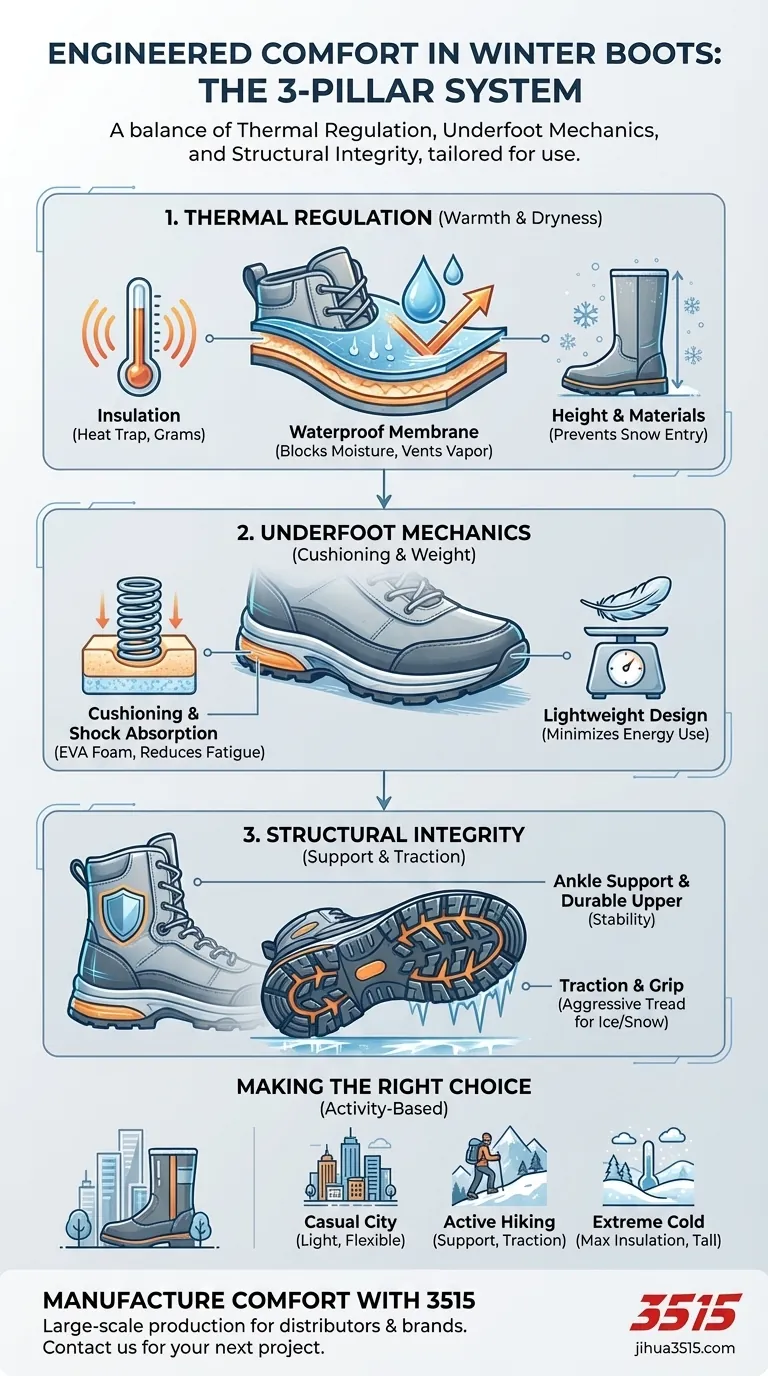
True comfort in winter boots is an engineered system built on three pillars: thermal regulation (warmth and dryness), underfoot mechanics (cushioning and weight), and structural integrity (support and traction). These components work together to protect you from the elements while preventing the fatigue and strain of all-day wear.
The core principle of winter boot comfort is not about a single feature, but about the intelligent balance of warmth, waterproofing, weight, and support, tailored specifically to how you intend to use them.
The Foundation of Comfort: Warmth and Dryness
Before you can be comfortable, you must be warm and dry. This is the non-negotiable baseline for any effective winter boot.
Insulation: Your Personal Furnace
Insulation is what traps your body heat, keeping your feet warm in freezing temperatures. It's often made from synthetic materials and its effectiveness is measured in grams.
A higher gram count typically means more warmth, but also more bulk.
Waterproofing: The Critical Barrier
Wet feet become cold feet, instantly destroying comfort. Modern boots use a waterproof membrane, like Gore-Tex or a proprietary equivalent, which is a layer built into the boot that blocks external moisture while allowing sweat to escape.
This barrier is essential for navigating snow, slush, and cold puddles.
Materials and Height: The First Line of Defense
The boot's upper materials, often leather or durable synthetics, provide the first layer of protection and support.
A higher boot shaft is also a key comfort feature, as it physically prevents snow from entering from the top and provides additional warmth for your ankles.
The Mechanics of All-Day Wear
Once warmth and dryness are secured, comfort is defined by how the boot feels and performs with every step you take.
Cushioning and Shock Absorption
The midsole of the boot acts as its suspension system. Cushioning, typically made of foam, provides a rebounding effect that reduces foot fatigue.
Shock absorption works in tandem, dampening the impact of walking on hard or uneven surfaces, which protects your joints over time.
The Critical Role of Weight
Weight is a subtle but powerful factor in comfort. A heavy boot requires more energy to lift with every step, leading to significant fatigue over a full day.
Manufacturers use lightweight materials like EVA (ethylene vinyl acetate) foam for soles to provide excellent cushioning and thermal efficiency without adding unnecessary bulk.
Traction and Grip: Confidence in Every Step
Feeling secure on slippery surfaces is a crucial component of psychological comfort. A quality winter boot must have a durable rubber outsole with deep, aggressive treads.
This design provides reliable traction on snow and ice, allowing you to walk with confidence and a natural stride.
Understanding the Trade-offs
Choosing the perfect boot means understanding that no single design excels at everything. There are always compromises.
Warmth vs. Weight
The warmest boots, packed with high-gram insulation, are often the heaviest and bulkiest. This is ideal for stationary activities in extreme cold but can feel cumbersome for active use or casual city walking.
Waterproofing vs. Breathability
While a waterproof membrane is essential, the most robust systems can sometimes limit breathability. On warmer days or during intense activity, this can lead to sweaty feet, which can eventually make you feel cold and uncomfortable.
Flexibility vs. Support
A stiff boot with strong ankle support is excellent for hiking on uneven, snowy terrain. However, that same rigidity can feel restrictive and unnatural when simply walking on a cleared sidewalk.
Making the Right Choice for Your Activity
To find the most comfortable boot, you must first define your primary goal.
- If your primary focus is casual city wear: Prioritize lighter weight, lower-profile insulation, and flexible materials for an easy walking experience.
- If your primary focus is active winter hiking: Prioritize robust ankle support, aggressive traction, and a durable waterproof membrane.
- If your primary focus is deep snow and extreme cold: Prioritize a tall boot height, maximum insulation (400g or higher), and complete waterproofing.
Understanding these core components empowers you to look past marketing and select a boot truly engineered for your needs.
Summary Table:
| Component | Key Features | Purpose |
|---|---|---|
| Thermal Regulation | Insulation (grams), Waterproof Membrane | Keeps feet warm and dry |
| Underfoot Mechanics | Cushioning (EVA foam), Shock Absorption, Lightweight | Reduces foot fatigue and impact |
| Structural Integrity | Traction (aggressive tread), Ankle Support, Durable Upper | Provides stability and confidence on slippery surfaces |
Ready to manufacture comfortable winter boots that your customers will love?
As a large-scale manufacturer, 3515 produces a comprehensive range of footwear for distributors, brand owners, and bulk clients. Our production capabilities encompass all types of shoes and boots, ensuring we can deliver the perfect balance of warmth, weight, and support your market demands.
Contact us today to discuss your next winter boot project and experience the 3515 advantage.
Visual Guide
Related Products
- Premium Insulated Safety Boots and Shoes for Wholesale & Bulk Orders
- Factory Direct Wholesale Rain Boots Durable Waterproof & Fully Customizable
- Durable Waterproof Rain Boots | Custom Manufacturer for Wholesale & Brands
- Wholesale Waterproof Tactical Boots Custom Suede & High-Traction Soles
- Heavy-Duty Waterproof Nubuck Safety Boots Safety Shoes for Bulk Supply
People Also Ask
- What are the recommended insulation ratings for mild winter conditions? A Guide for Active & Stationary Workers
- How does insulation thickness correlate with temperature ranges? A Guide to Choosing the Right Warmth
- What insulation level is needed for severe cold and stationary work? 1200g or Higher is Essential
- What safety advantages do insulated boots offer beyond warmth? Dielectric Protection & Superior Grip
- How does fleece lining contribute to the warmth of insulated boots? Trapping Air for Superior Cold Protection