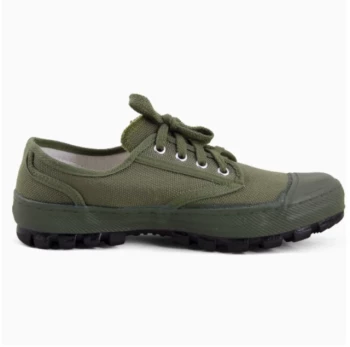
Dedicated gardening shoes are necessary because they are purpose-built tools designed to protect you from injury, save your everyday footwear from ruin, and provide the specific support required for garden work. Unlike regular shoes, they are engineered to withstand constant exposure to water, soil, and sharp objects, ultimately enhancing your safety, comfort, and efficiency.
The core issue isn't about owning another pair of shoes; it's about using the right tool for the job. Everyday footwear fails to provide the necessary durability, protection, and task-specific support that gardening demands, creating risks for both your feet and your wallet.
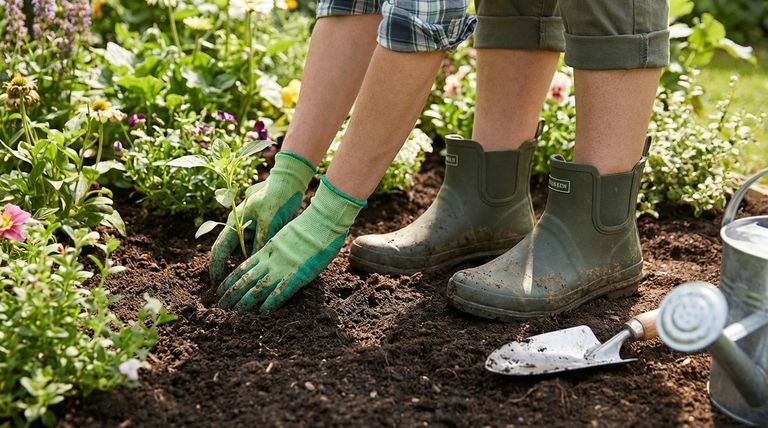
The Functional Failures of Everyday Shoes in the Garden
Using standard sneakers or casual shoes for gardening is a common mistake that leads to predictable problems. They simply are not designed for the unique environment of a garden.
Inadequate Protection from Hazards
Regular shoes, especially those with soft mesh uppers or thin soles, offer minimal defense against the garden's hidden dangers. Sharp rocks, buried tools, or thorny branches can easily pierce a standard sole, leading to injury.
Furthermore, their soles often lack the deep, grooved treads needed for wet or muddy conditions, significantly increasing the risk of slips and falls on unstable ground.
Accelerated Wear and Tear
Dirt, moisture, and mulch are destructive to the materials used in everyday shoes. Constant dampness can cause glues to fail and leather to crack, while abrasive soil particles will permanently stain and degrade fabric uppers.
This exposure drastically shortens the lifespan of your regular shoes, forcing you to replace them far sooner than you would with normal use.
Lack of Task-Specific Support
Gardening involves prolonged periods of squatting, kneeling, and standing on uneven terrain. This places unique stress on your feet, ankles, and back.
Everyday shoes lack the specific arch support, ankle stability, and cushioned footbeds required to mitigate this strain, leading to fatigue and discomfort.
Anatomy of an Effective Gardening Shoe
Gardening shoes are not a single style but a category of footwear defined by a few critical features. Understanding these components helps clarify their value.
The Critical Role of the Sole
The sole is the shoe's most important functional element. A proper gardening shoe features a treaded, non-slip sole to ensure a secure grip on wet grass and slick mud.
Many are also built with reinforced or puncture-resistant soles to protect your feet from sharp objects and cushioned footbeds to absorb impact and reduce fatigue during long hours of work.
Durable and Easy-to-Clean Materials
Effective gardening shoes are almost always made from waterproof materials like rubber, PVC, or EVA foam.
These materials do not absorb water, are resistant to abrasion from dirt and soil, and can be quickly and easily hosed off, preventing you from tracking mud into your home.
Designs for Different Tasks
The most common styles—clogs, ankle boots, and tall boots—are each suited for different types of work.
Slip-on clogs are ideal for quick, light tasks like watering or harvesting. Ankle boots provide more support for digging, while tall boots offer maximum protection in very wet, muddy, or overgrown conditions.
Understanding the Trade-offs and Common Pitfalls
Choosing the wrong type of gardening shoe can be as ineffective as using a regular sneaker. The key is to match the shoe to both your foot and your specific gardening habits.
Prioritizing Fit Over Style
A proper fit is crucial for safety and comfort. Your shoe should be snug enough to prevent your foot from sliding but not so tight that it restricts movement or causes blisters.
Pay close attention to width. Some clog styles can be too wide for narrow feet, while some tall boot shafts may be too constricting.
Matching Shoe Type to Your Tasks
Using a backless clog for heavy-duty digging on a slope is a recipe for a twisted ankle. They offer no ankle support and can easily slip off.
Reserve slip-on styles for level ground and light work. For any task involving shovels, steep grades, or extended effort, choose a shoe that fully encloses and supports your foot, such as an ankle or tall boot.
Making the Right Choice for Your Goal
The best gardening shoe is one that directly addresses the demands of your specific activities.
- If your primary focus is light weeding and watering: A pair of waterproof, slip-on clogs offers the perfect blend of convenience and basic protection.
- If your primary focus is heavy digging or working in very wet conditions: Prioritize tall, waterproof rubber boots with aggressive, non-slip soles for maximum safety and support.
- If your primary focus is all-day comfort on varied terrain: Look for lace-up ankle boots with excellent arch support and cushioning to minimize fatigue.
Investing in proper gardening footwear is a direct investment in your own safety, comfort, and long-term enjoyment of your work.
Summary Table:
| Feature | Everyday Shoes | Gardening Shoes |
|---|---|---|
| Protection | Minimal; thin soles, soft uppers | Reinforced, puncture-resistant soles |
| Durability | Ruined by mud, water, and dirt | Waterproof, easy-to-clean materials (rubber, PVC) |
| Support | Lacks arch/ankle support for prolonged work | Designed for squatting, kneeling, and uneven terrain |
| Traction | Slippery on wet grass/mud | Deep, non-slip treads for stability |
| Use Case | Casual wear | Task-specific (light weeding, digging, wet conditions) |
Ready to equip yourself with the right footwear for gardening?
As a large-scale manufacturer, 3515 produces a comprehensive range of durable, task-specific gardening shoes and boots for distributors, brand owners, and bulk clients. Our production capabilities ensure high-quality, waterproof footwear designed for safety and comfort.
Contact us today to discuss your needs and discover how we can support your business with reliable gardening footwear solutions!
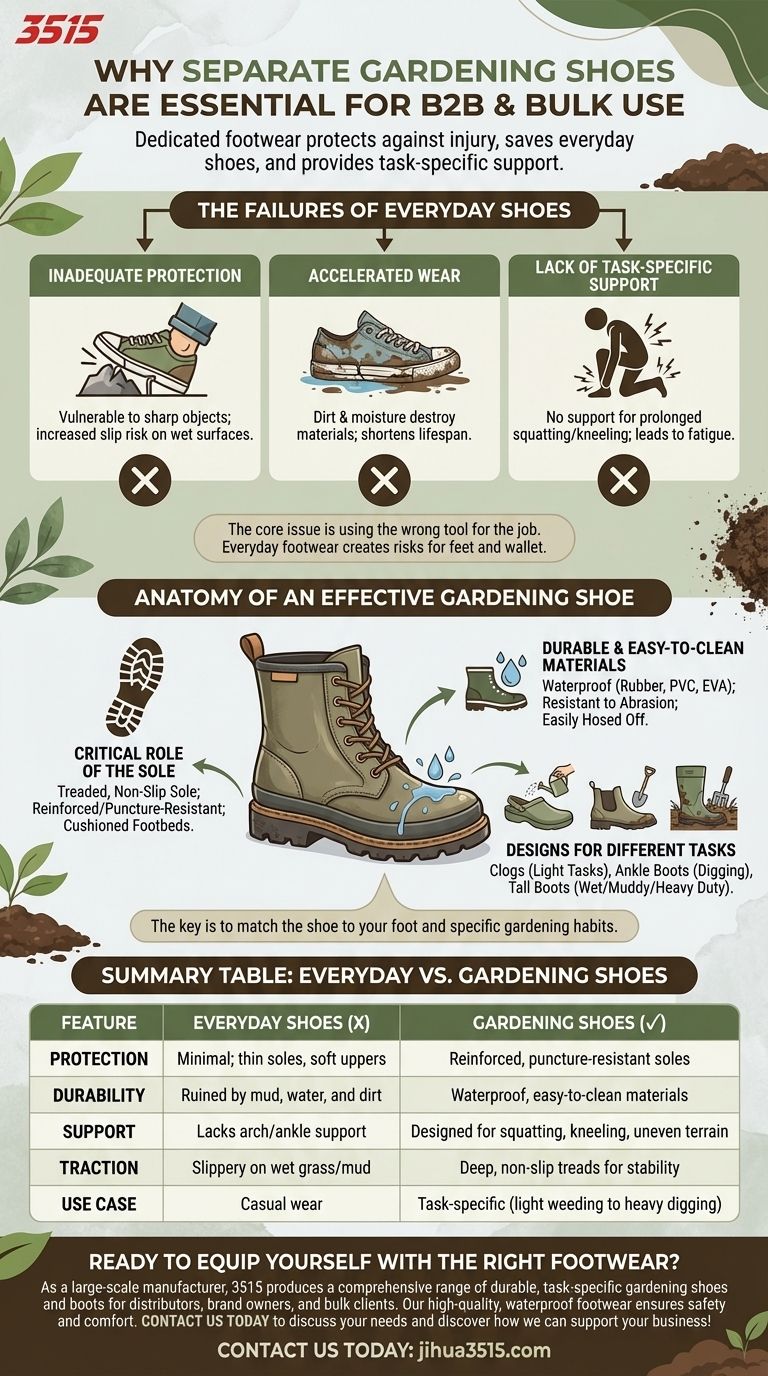
Visual Guide
Related Products
- Durable Rubber Sole Outdoor Shoes Wholesale & Custom Manufacturing
- Wholesale Durable Camouflage Canvas Shoes with High-Traction Cleated Rubber Sole
- Wholesale Durable Camo Canvas Shoes with High-Traction Rubber Soles
- Premium Lightweight Safety Shoes for Wholesale & Bulk Orders
- Wholesale Comfortable Business Casual Shoes Custom Manufacturing
People Also Ask
- What is the function of the sole in outdoor shoes? Find the Perfect Grip and Support
- What role do outdoor shoes and sneakers play in navigating external terrains? Engineered Stability for Every Surface
- How is AI utilized in the design of outdoor and safety footwear? Harnessing Big Data for Market-Driven Shoe Innovation
- Why is durability important when selecting outdoor shoes? A Guide to Safety & Long-Term Value
- What are the key components of outdoor shoes that affect comfort and sturdiness? A Guide to Durable, High-Performance Footwear