
To put it simply, horse riding boots contribute to rider comfort through a combination of ergonomic design, specialized support, and protective features. They utilize cushioned insoles and stable construction to reduce strain on the feet, ankles, and lower legs, ensuring a rider can maintain proper form without pain, even during long sessions in the saddle.
Rider comfort in a boot is not merely about soft padding. It is a technical system designed to manage pressure, absorb shock, and provide stability, which collectively reduces fatigue and prevents the specific types of pain associated with riding.
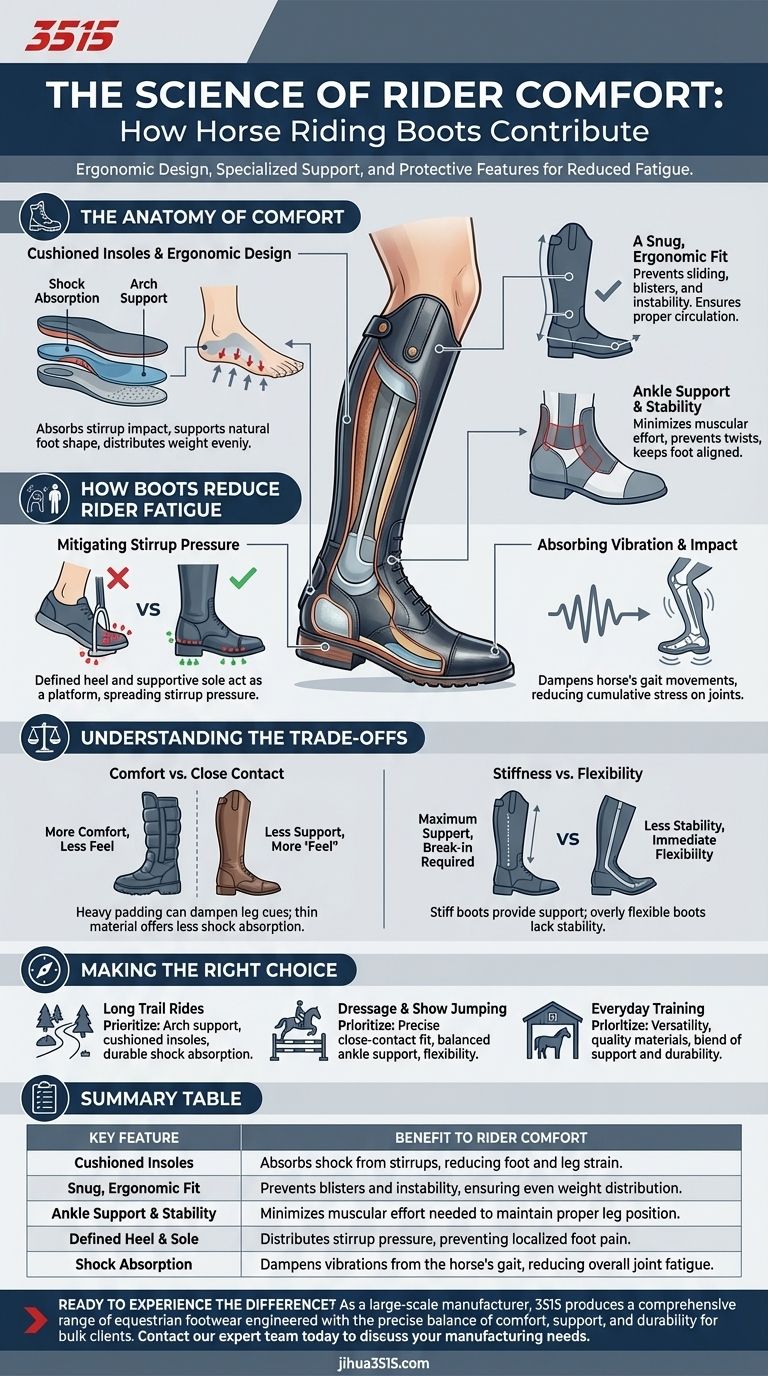
The Anatomy of a Comfortable Riding Boot
True comfort is engineered from the ground up. It results from several key features working in concert to support the unique physical demands of being in the saddle.
Cushioned Insoles and Ergonomic Design
A quality riding boot begins with its foundation. Cushioned insoles are designed to absorb shock and reduce the impact transferred from the stirrups to your feet.
This is paired with an ergonomic design that supports the natural shape of your foot, particularly the arch. This helps distribute your weight evenly and prevents strain on your ligaments and muscles.
The Critical Role of a Snug Fit
A boot's comfort is directly tied to its fit. The ideal fit is snug without being restrictive, preventing your foot from sliding inside the boot, which can cause blisters and instability.
Ill-fitting boots can lead to restricted circulation and even cause injury. It's often recommended to try on boots at the end of the day when your feet are slightly swollen to ensure long-term comfort.
Stability and Ankle Support
Riding requires constant, subtle adjustments in your lower leg. Riding boots provide crucial stability for the ankle, preventing twists and reducing the muscular effort needed to keep your foot in the correct position.
This structural support minimizes fatigue in the small stabilizing muscles around your joints, allowing you to ride longer without discomfort.
How Boots Reduce Rider Fatigue
Comfort extends beyond simple padding. A well-designed boot actively works to prevent the fatigue that can cut a ride short or lead to poor riding posture.
Mitigating Pressure from the Stirrups
The narrow pressure point of a stirrup iron can become intensely uncomfortable in soft-soled shoes. Riding boots feature a supportive sole and a defined heel to prevent the stirrup from pressing directly into the sole of your foot.
This structure acts as a stable platform, distributing the pressure across a wider area and making long periods with your feet in the stirrups far more bearable.
Absorbing Vibration and Impact
Similar to how motorcycle boots absorb road vibrations, riding boots help dampen the constant small movements and impacts of the horse's gait.
This shock absorption reduces the cumulative stress on your joints, from your feet all the way up through your knees and hips, leading to less overall body fatigue after a ride.
Understanding the Trade-offs
Choosing a boot often involves balancing different design priorities. Understanding these trade-offs is key to finding the right boot for your needs.
Comfort vs. Close Contact
Extremely cushioned or heavily padded boots might feel comfortable on the ground, but they can dampen the rider's feel. This can make it harder to deliver the subtle leg cues necessary for precise communication with the horse.
Conversely, a boot designed for maximum "feel" with thin leather may offer less support and shock absorption, potentially leading to faster fatigue.
Stiffness vs. Flexibility
A new, stiff boot provides maximum support but may require a break-in period to become comfortable. A boot that is too flexible from the start may not offer the ankle stability needed for certain disciplines or long rides.
The right balance depends on your primary riding activity and personal preference for support.
Making the Right Choice for Your Goal
Ultimately, the most comfortable boot is the one that best matches your specific riding discipline and physical needs.
- If your primary focus is long trail rides: Prioritize boots with excellent arch support, cushioned insoles, and durable shock absorption to handle extended time in the saddle.
- If your primary focus is competitive dressage or show jumping: Seek a boot with a precise, close-contact fit that balances ankle support with the flexibility needed for nuanced leg cues.
- If your primary focus is everyday training and general riding: Look for a versatile boot made of quality materials that offers a good blend of support, durability, and all-day comfort.
Investing in a well-designed, properly fitting pair of boots is a direct investment in your effectiveness, endurance, and overall enjoyment of riding.
Summary Table:
| Key Feature | Benefit to Rider Comfort |
|---|---|
| Cushioned Insoles | Absorbs shock from stirrups, reducing foot and leg strain. |
| Snug, Ergonomic Fit | Prevents blisters and instability, ensuring even weight distribution. |
| Ankle Support & Stability | Minimizes muscular effort needed to maintain proper leg position. |
| Defined Heel & Sole | Distributes stirrup pressure, preventing localized foot pain. |
| Shock Absorption | Dampens vibrations from the horse's gait, reducing overall joint fatigue. |
Ready to experience the difference a perfectly engineered boot makes?
As a large-scale manufacturer, 3515 produces a comprehensive range of equestrian footwear for distributors, brand owners, and bulk clients. Our production capabilities encompass all types of riding boots, engineered with the precise balance of comfort, support, and durability your customers need.
Let us help you provide the ultimate in rider comfort. Contact our expert team today to discuss your manufacturing needs.
Visual Guide
Related Products
- Wholesale Tactical Boots High-Traction & Reflective for Bulk & Brand Orders
- Durable Goodyear Welt Leather Work Boots for Wholesale & Private Label
- Wholesale High-Traction Camo Boots - Custom Manufacturer for Brands
- Durable Leather High-Ankle Tactical Boots for Wholesale & Custom Manufacturing
- Durable Leather Tactical Boots Wholesale & Custom Manufacturing for Brands
People Also Ask
- How do tactical boots protect against injuries? Discover the Integrated Safety System
- How do manufacturing processes for electronic textiles balance durability with wearing comfort? Innovation in Footwear
- Are tactical boots suitable for hiking? Discover the Ultimate Footwear for Rugged Trails
- What is the role of high-frequency acquisition hardware in technical skill analysis for outdoor and tactical boots?
- What is the necessity of high-performance tactical boots in exoskeletons? Enhancing Load Efficiency and Safety



















