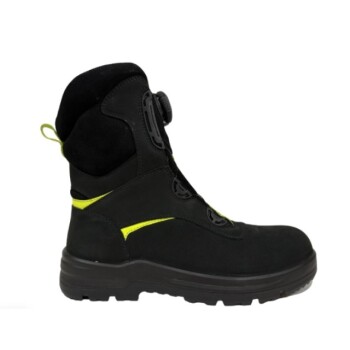
The most common complaints about Irish Setter Vaptrek snake boots center on two related issues: significant discomfort during extended walks and a stiff, restrictive feel that limits natural movement. While the boots may feel comfortable when standing or for short distances, users report that this comfort quickly fades after about half an hour of continuous walking.
The core issue stems from a fundamental design trade-off: the rigid materials required for effective snakebite protection directly conflict with the flexibility needed for all-day walking comfort.
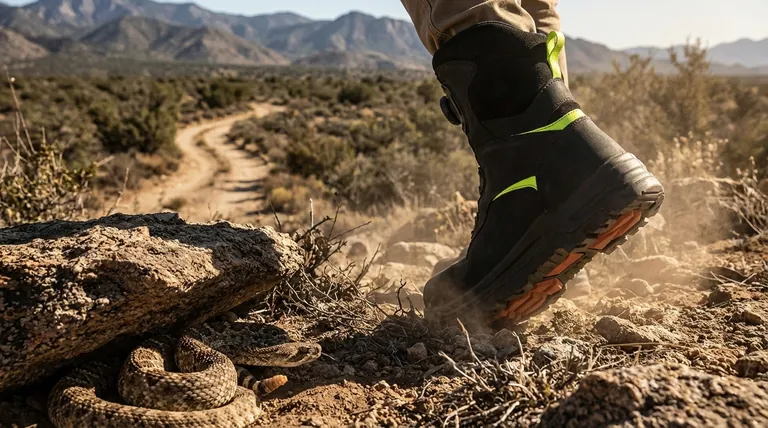
The Conflict: Protection vs. Ergonomics
To understand the user complaints, you must first understand the non-negotiable requirement of a snake boot. Its primary job is to prevent a fang from penetrating the material and reaching your skin.
The Nature of Snake-Proof Materials
Snake boots rely on tough, tightly woven synthetic fabrics or other puncture-resistant layers. These materials are inherently rigid by design.
This rigidity is not a flaw in its protective function; it is the very feature that provides puncture resistance and ensures your safety in the field.
The Impact on Flexibility
This necessary stiffness directly translates into a boot that does not flex naturally with your foot and ankle. Where a standard hiking boot is engineered to bend at key points, a snake boot must maintain its structural integrity.
This leads to the restrictive feeling users report, making agile movements or navigating uneven terrain feel cumbersome.
The Discomfort Dilemma
For short periods, the supportive nature of a stiff boot can feel fine. However, during a sustained walk, the lack of flex creates problems.
Your foot attempts to bend naturally with each step, but the boot resists. This constant opposition leads to friction, pressure points, and fatigue, causing the discomfort that emerges after 30-60 minutes of hiking.
Understanding the Trade-offs
Choosing a snake boot like the Vaptrek involves accepting a specific set of compromises. It's crucial to evaluate these based on your intended use.
Pro: Uncompromising Protection
The primary advantage is its core function. The stiffness and robust construction provide a high degree of confidence against snakebites, which is the main reason for buying this type of footwear.
Con: Poor Suitability for High-Mileage Treks
The most significant drawback is its unsuitability for activities that involve covering a lot of ground. For hunters or hikers who are constantly on the move, the reported discomfort can become a serious issue, potentially cutting a day short.
Con: A Potentially Difficult Break-in Period
While not explicitly stated in all feedback, boots described as "stiff" and "restrictive" often have a challenging and prolonged break-in period before they conform even slightly to your foot.
Making the Right Choice for Your Activity
Your decision should be based entirely on how you plan to use the boots. The Irish Setter Vaptrek is a specialized tool, and its suitability depends on the task.
- If your primary focus is stationary hunting (e.g., in a blind or tree stand) or short walks to your position: The Vaptrek's protective qualities are paramount, and the lack of long-distance comfort may not be a factor.
- If your primary focus is active, mobile hunting or long-distance hiking in snake country: The common complaints about discomfort and stiffness suggest you should prioritize finding a more flexible snake boot designed for high mileage.
Ultimately, you must align the boot's design strengths with the physical demands of your activity.
Summary Table:
| Aspect | Pro (Strength) | Con (Common Complaint) |
|---|---|---|
| Protection | Excellent puncture resistance for safety in snake country. | Stiff, rigid materials required for protection. |
| Comfort & Mobility | Supportive feel for short periods or stationary use. | Discomfort and restrictive feel after 30-60 minutes of walking. |
| Best Use Case | Ideal for stationary hunting (e.g., tree stands, blinds). | Not suitable for high-mileage, active hunting or long hikes. |
Need Durable, High-Performance Work Boots Without the Compromises?
As a large-scale manufacturer, 3515 produces a comprehensive range of footwear for distributors, brand owners, and bulk clients. Our production capabilities encompass all types of shoes and boots, including safety footwear designed for both protection and all-day comfort. We understand the balance between durability and ergonomics.
Let us help you source or develop the perfect boot for your market. Contact our team today to discuss your specific requirements and explore our manufacturing solutions.
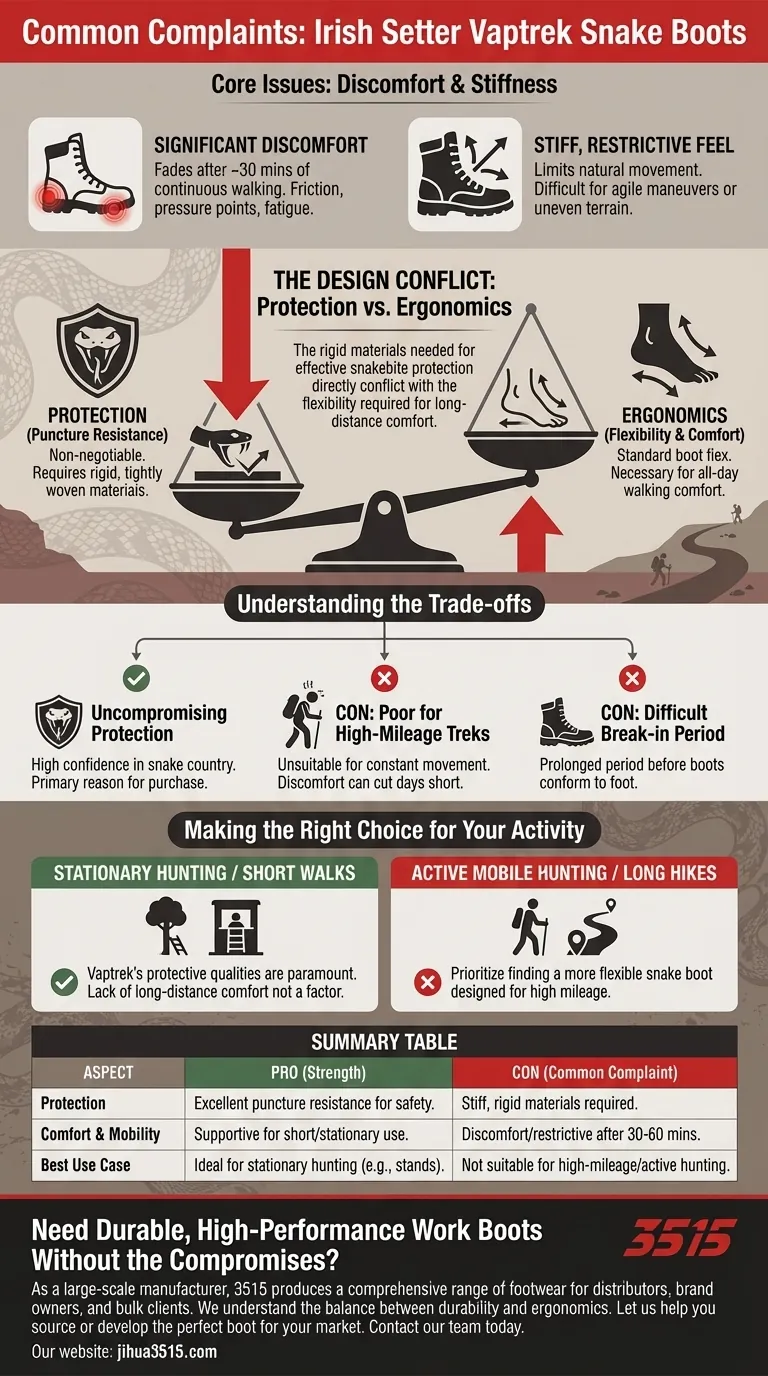
Visual Guide
Related Products
- Durable High-Ankle Tactical Boots Wholesale Manufacturer for Custom & Bulk Orders
- Durable Leather High-Ankle Tactical Boots for Wholesale & Custom Manufacturing
- Wholesale Waterproof Tactical Boots Custom Suede & High-Traction Soles
- Wholesale Safety Boots Manufacturer for Custom & Private Label Orders
- Premium High-Cut Waterproof Safety Boots Manufacturing & Wholesale Solutions
People Also Ask
- What specialized protections do tactical boots offer? Maximize Endurance with High-Performance Footwear
- How do tactical boots protect against injuries? Discover the Integrated Safety System
- What are the ideal use cases for tactical boots? Empower Your Performance in Demanding Scenarios
- Can tactical boots be stylish for everyday wear? Yes, with the right styling and features.
- What are the primary benefits of wearing tactical boots for everyday use? Get All-Day Comfort & Durability