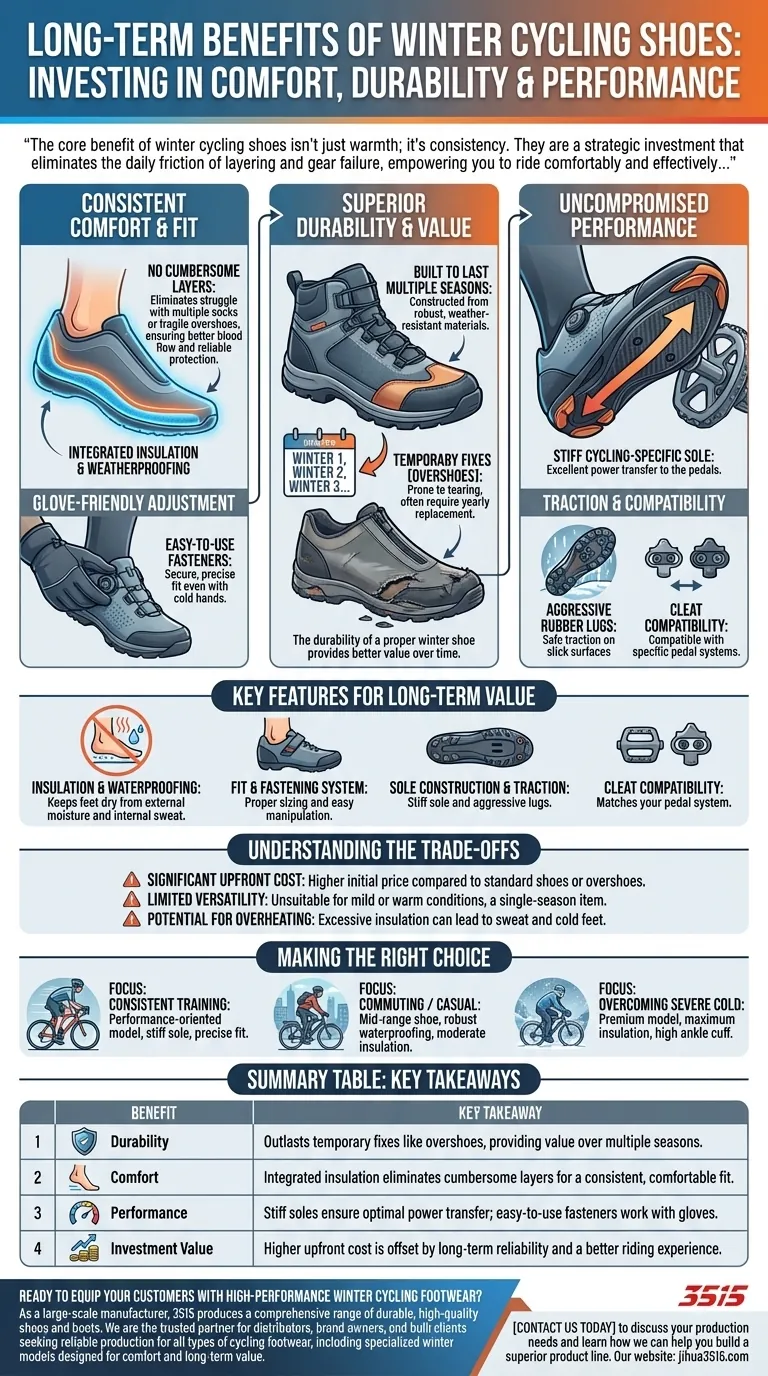
Investing in dedicated winter cycling shoes pays long-term dividends through superior durability, consistent comfort, and improved performance. Unlike temporary solutions like overshoes, they are a single, robust piece of equipment designed to last multiple seasons, ultimately providing better value and a more enjoyable riding experience.
The core benefit of winter cycling shoes isn't just warmth; it's consistency. They are a strategic investment that eliminates the daily friction of layering and gear failure, empowering you to ride comfortably and effectively throughout the coldest months of the year.
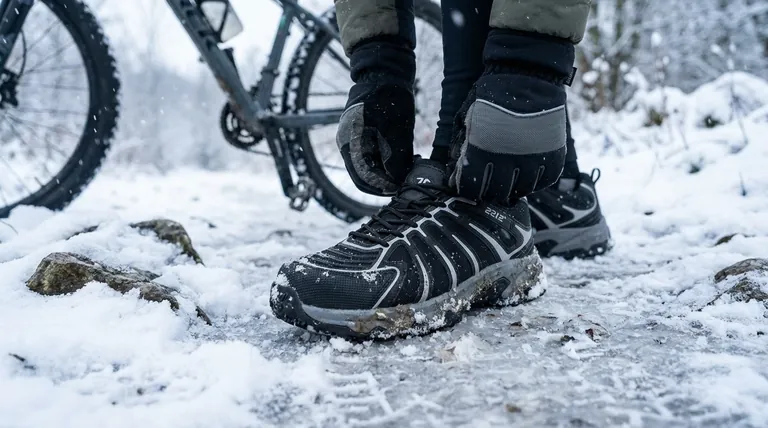
Beyond Simple Warmth: The True Value Proposition
While keeping your feet warm is the obvious goal, the long-term advantages are rooted in how a purpose-built shoe achieves this compared to stop-gap measures.
Consistent Comfort, Not Cumbersome Layers
A dedicated winter shoe provides integrated insulation and weatherproofing in one streamlined package.
This eliminates the need to struggle with multiple layers of socks or fragile overshoes, which can bunch up, restrict blood flow, and offer unreliable protection.
Durability That Outlasts Temporary Fixes
Winter cycling shoes are constructed from robust, weather-resistant materials designed to withstand cold, wet, and abrasive conditions.
Overshoes, by contrast, are prone to tearing at the sole and zipper, often requiring yearly replacement. The durability of a proper winter shoe means it will serve you reliably for several seasons.
Uncompromised Performance and Fit
These shoes are built on a stiff cycling-specific sole, ensuring excellent power transfer to the pedals—a feature often compromised by the bulk of an overshoe.
The fastening systems, like BOA dials, are designed to be easily adjusted even with gloves on, securing a precise fit that temporary solutions cannot match.
Key Features of a Worthwhile Investment
To realize the long-term benefits, you must select a shoe that correctly matches your needs. Focus on these critical design elements.
Insulation and Waterproofing
The most crucial features are an insulated inner and a waterproof or highly water-resistant outer membrane. This combination keeps your feet dry from both external moisture and internal sweat, which is key to staying warm.
Fit and Fastening System
Proper sizing is essential. You may need to size up slightly to accommodate thicker winter socks without compressing them, which would reduce their insulating properties.
Look for fastening systems like BOA dials or robust straps that are easy to manipulate with cold hands or gloves.
Sole Construction and Traction
A stiff sole is vital for efficient pedaling. Additionally, a quality winter shoe will have aggressive rubber lugs for safe and secure traction when you have to dismount on icy or slick surfaces.
Cleat Compatibility
Ensure the shoe is compatible with your specific pedal and cleat system, whether it's a 2-bolt SPD style for mountain biking or a 3-bolt system for road cycling.
Understanding the Trade-offs
Objectivity requires acknowledging the potential downsides. A winter shoe is a specialized tool with clear limitations.
Significant Upfront Cost
The primary barrier to entry is the high initial price. These shoes represent a significant investment compared to a standard pair of cycling shoes or a set of overshoes.
Limited Versatility
Their heavy insulation makes them completely unsuitable for riding in mild or warm conditions. They are a single-season item in your cycling wardrobe.
Potential for Overheating
Choosing a shoe with too much insulation for your climate can be as detrimental as having too little. Feet that sweat excessively will quickly become cold and clammy.
Making the Right Choice for Your Goal
Your decision should be guided by your specific riding discipline and winter conditions.
- If your primary focus is consistent training: Invest in a performance-oriented model with a stiff carbon sole and a precise fit to maintain power output all winter.
- If your primary focus is commuting or casual riding: A mid-range shoe with robust waterproofing and moderate insulation offers the best balance of comfort, durability, and value.
- If your primary focus is overcoming severe cold feet or pain: A premium model with maximum insulation and a high ankle cuff is a non-negotiable investment in your health and ability to ride.
Ultimately, a dedicated winter shoe transforms cycling from a seasonal activity into a year-round pursuit.
Summary Table:
| Benefit | Key Takeaway |
|---|---|
| Durability | Outlasts temporary fixes like overshoes, providing value over multiple seasons. |
| Comfort | Integrated insulation eliminates cumbersome layers for a consistent, comfortable fit. |
| Performance | Stiff soles ensure optimal power transfer; easy-to-use fasteners work with gloves. |
| Investment Value | Higher upfront cost is offset by long-term reliability and a better riding experience. |
Ready to equip your customers with high-performance winter cycling footwear?
As a large-scale manufacturer, 3515 produces a comprehensive range of durable, high-quality shoes and boots. We are the trusted partner for distributors, brand owners, and bulk clients seeking reliable production for all types of cycling footwear, including specialized winter models designed for comfort and long-term value.
Contact us today to discuss your production needs and learn how we can help you build a superior product line.
Visual Guide
Related Products
- Premium Insulated Safety Boots and Shoes for Wholesale & Bulk Orders
- Wholesale Durable Camouflage Canvas Shoes with High-Traction Cleated Rubber Sole
- Premium Suede Sport Safety Shoes for Wholesale & Bulk Orders
- Advanced KPU Athletic Safety Shoe with Steel Toe Cap Anti-Slip Rotary Lacing System
- Lightweight Breathable Sneakers with Wet-Traction Grip for Wholesale & Private Label
People Also Ask
- What are the recommended insulation ratings for mild winter conditions? A Guide for Active & Stationary Workers
- How does insulation thickness correlate with temperature ranges? A Guide to Choosing the Right Warmth
- What insulation level is needed for severe cold and stationary work? 1200g or Higher is Essential
- What safety advantages do insulated boots offer beyond warmth? Dielectric Protection & Superior Grip
- How does fleece lining contribute to the warmth of insulated boots? Trapping Air for Superior Cold Protection