
Ultimately, the primary limitations of tactical boots stem from their design focus on mobility and comfort over absolute protection. Compared to heavier combat or work boots, they offer less durability under harsh conditions, reduced protection from punctures and impacts, and potentially weaker traction on extreme terrain.
Tactical boots are a specialized tool, not an indestructible one. Their limitations are the direct trade-offs made to achieve their signature light weight, flexibility, and comfort, making them ideal for agility-focused roles but unsuitable for heavy combat or industrial work.
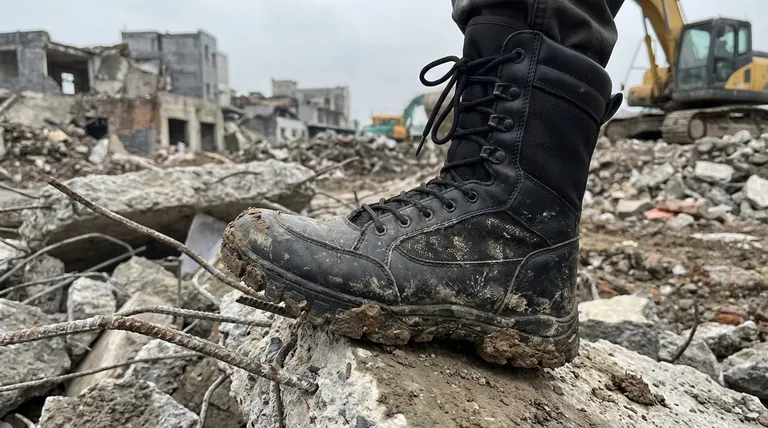
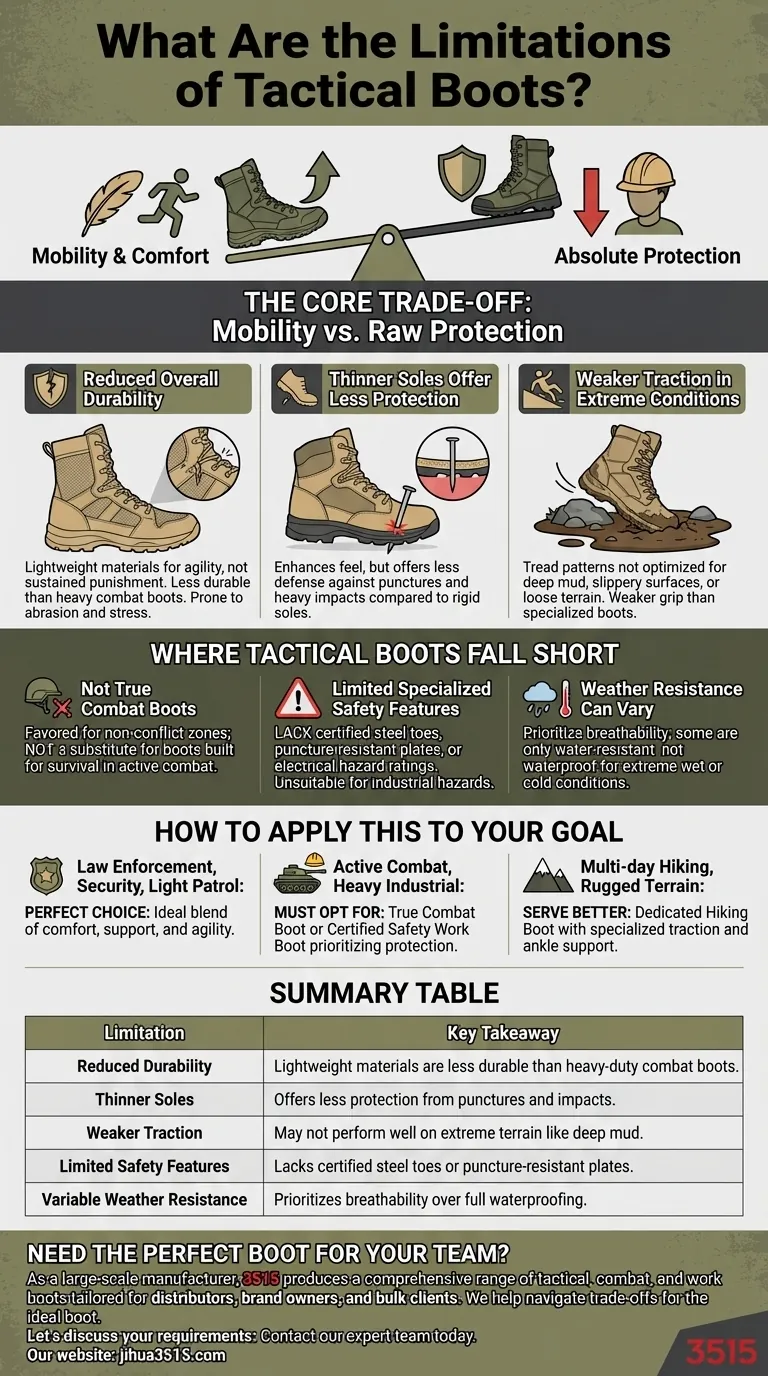
The Core Trade-off: Mobility vs. Raw Protection
The defining characteristic of a tactical boot is its balance between the agility of an athletic shoe and the resilience of a traditional boot. This design philosophy inherently creates limitations when the boots are pushed outside their intended purpose.
Reduced Overall Durability
Tactical boots are not designed for the sustained punishment of an active combat zone. The materials are chosen to be lightweight and breathable, which means they are less durable than the thick, rugged leather and reinforced construction of military combat boots.
They are engineered for patrolling and rapid response, not for withstanding the constant abrasion and stress of a battlefield environment.
Thinner Soles Offer Less Protection
A key way tactical boots reduce weight is by using thinner, more flexible soles. While this enhances feel and agility, it offers less protection against sharp objects like nails or broken glass.
They may also provide less cushioning and defense against heavy impacts compared to the thick, rigid soles found on dedicated work or combat boots.
Weaker Traction in Extreme Conditions
While many tactical boots have excellent grip for urban or dry environments, their tread patterns are not always optimized for extreme conditions. The outsole may provide weaker traction on exceptionally slippery surfaces, deep mud, or loose, uneven terrain compared to specialized hiking or mountaineering boots.
Where Tactical Boots Fall Short
Understanding the specific scenarios where these boots are not the right tool is critical for safety and performance.
They Are Not True Combat Boots
It is a common misconception to use "tactical" and "combat" interchangeably. Tactical boots are favored by personnel in non-conflict zones because they reduce fatigue over long hours.
However, they should not be considered a direct substitute for combat boots, which are built to a higher standard of protection and durability for survival in conflict.
Limited Specialized Safety Features
Standard tactical boots are not purpose-built work boots. They typically lack certified safety features like steel toes, puncture-resistant plates, or high voltage electrical hazard (EH) ratings.
While some hybrid "tactical work boots" exist to meet these standards, a standard pair is not appropriate for hazardous industrial or construction environments.
Weather Resistance Can Vary
To maximize breathability, many tactical boots sacrifice complete water protection. While some models are waterproof, others are merely water-resistant and will not hold up in extremely wet conditions or full submersion.
This trade-off for better airflow makes them more comfortable in hot climates but a potential liability in cold, wet environments.
How to Apply This to Your Goal
Choosing the right footwear means matching the boot's design to your primary activity.
- If your primary focus is law enforcement, security, or light patrol: A tactical boot is likely the perfect choice, offering an ideal blend of comfort, support, and agility for long shifts.
- If your primary focus is active combat or heavy industrial work: You must opt for a true combat boot or a certified safety work boot that prioritizes protection above all else.
- If your primary focus is multi-day hiking on rugged terrain: A dedicated hiking boot with specialized traction and ankle support will serve you better and more safely than a tactical boot.
Ultimately, view tactical boots as a specific tool for a specific job, and their limitations become clear guidelines for their proper use.
Summary Table:
| Limitation | Key Takeaway |
|---|---|
| Reduced Durability | Lightweight materials are less durable than heavy-duty combat boots. |
| Thinner Soles | Offers less protection from punctures and impacts. |
| Weaker Traction | May not perform well on extreme terrain like deep mud. |
| Limited Safety Features | Lacks certified steel toes or puncture-resistant plates. |
| Variable Weather Resistance | Prioritizes breathability over full waterproofing. |
Need the Perfect Boot for Your Team?
Understanding the limitations of tactical boots is the first step to selecting the right footwear. As a large-scale manufacturer, 3515 produces a comprehensive range of tactical, combat, and work boots tailored for distributors, brand owners, and bulk clients.
We can help you navigate these trade-offs and provide the ideal boot for your specific application, ensuring performance, safety, and comfort.
Let's discuss your requirements: Contact our expert team today to explore our production capabilities and find your perfect solution.
Visual Guide
Related Products
- Durable Leather Tactical Boots Wholesale & Custom Manufacturing for Brands
- High-Traction Suede Tactical Boots Wholesale & Custom Manufacturing
- Durable Leather High-Ankle Tactical Boots for Wholesale & Custom Manufacturing
- Durable Mid-Cut Tactical Boots for Wholesale & Private Label
- Wholesale Waterproof Tactical Boots Custom Suede & High-Traction Soles
People Also Ask
- What specialized protections do tactical boots offer? Maximize Endurance with High-Performance Footwear
- What features should law enforcement officers look for in tactical boots? Essential Guide for Safety & Performance
- Importance of Professional Tactical Boots in Loess Gully Regions: Ensure Safety and Precision for Field Monitoring
- What is rucking, and why are tactical boots suitable for it? Discover the Ultimate Footwear for Heavy Loads
- What makes the traction of tactical boots superior? Unlock the Science of Unbeatable Grip















