
The most important features to consider when buying tactical boots are the materials of the upper, the construction of the sole, the level of protection, and the overall design tailored to your specific environment. These elements work together to determine a boot's durability, support, and comfort during demanding activities.
Choosing the right tactical boot isn't about finding the one with the most features; it's about understanding the trade-offs between protection, mobility, and comfort to select a boot that performs like a tool built for your specific mission.
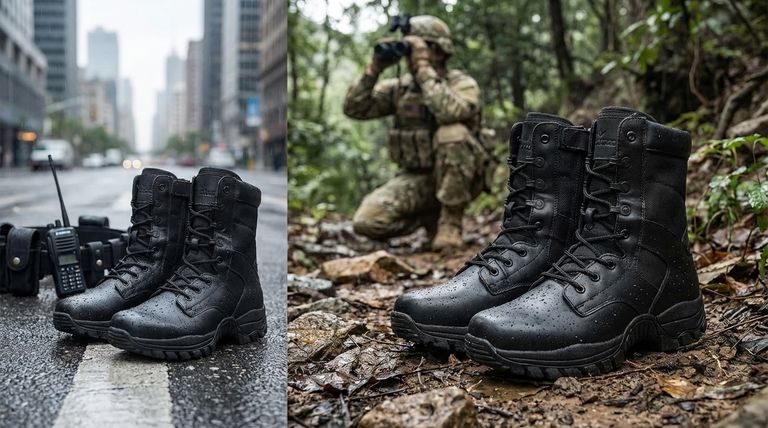
The Anatomy of a Tactical Boot: A Three-Part System
A tactical boot is more than just footwear; it's a system designed for performance under pressure. Understanding its core components is the first step in making an informed choice.
The Upper: Your First Line of Defense
The upper section of the boot protects your foot from the elements and provides structural support.
Materials are the primary determinant of a boot's weight, durability, and breathability. Full-grain leather offers maximum durability and water resistance, while synthetics like nylon provide a lighter, more breathable, and often more flexible option.
Water Resistance is crucial for keeping your feet dry. Many boots feature a waterproof membrane, but remember this can sometimes reduce breathability. For hot, dry climates, boots with mesh panels and moisture-wicking linings prioritize ventilation.
Boot Height directly impacts the balance between support and mobility. High-cut boots (8 inches or more) offer excellent ankle support, which is critical on uneven terrain. Low or mid-cut boots provide greater flexibility and are lighter, making them ideal for urban environments or tasks requiring agility.
The Midsole: The Engine of Comfort
The midsole is the layer between the insole and the outsole, responsible for shock absorption and stability.
A quality cushioned midsole, often made from materials like EVA or polyurethane, reduces fatigue by absorbing impact during long periods of standing or high-impact movement.
For hazardous environments, some midsoles are puncture-resistant, offering a critical layer of protection against sharp objects like nails or glass.
The Outsole: Your Connection to the Ground
The outsole is the part of the boot that makes contact with the ground, making it the foundation for your traction and stability.
The tread pattern is designed for superior grip across varied terrains, from wet pavement to loose gravel. Look for deep, aggressive lugs for outdoor use and flatter, slip-resistant patterns for urban settings.
Outsole material is also key. Rubber is common for its excellent slip-resistance and durability, while polyurethane offers a lighter-weight alternative that is also highly durable.
Critical Protective Features Explained
Beyond the basic construction, specific features enhance safety in unpredictable situations.
Toe Protection: Soft, Composite, or Steel
The type of toe determines the level of impact protection for the front of your foot.
Soft-toe boots offer the most mobility and lightest weight, suitable for situations where impact hazards are low.
Composite-toe caps are made from non-metal materials like carbon fiber or Kevlar. They provide significant impact protection while being lighter than steel and do not conduct heat, cold, or electricity.
Steel-toe boots offer the maximum possible protection against crushing and impact, making them essential for work in the most hazardous environments.
Ankle Support: Stability When It Counts
Reinforced ankle construction, especially in high-cut boots, is vital for preventing sprains and injuries. This feature provides the stability needed when carrying heavy loads or moving quickly across unstable ground.
Understanding the Trade-offs
There is no single "best" tactical boot, only the best boot for a specific purpose. Every feature choice involves a trade-off.
Durability vs. Weight
Heavier materials like thick leather offer exceptional longevity and protection but can increase fatigue over time. Lighter synthetic boots enhance speed and agility but may not withstand the same level of abuse.
Waterproofing vs. Breathability
A fully waterproof boot is excellent for wet conditions but can trap sweat in hot weather, leading to discomfort. A highly breathable boot will keep your feet cool and dry from sweat but offers little protection from rain or puddles.
Protection vs. Mobility
Maximum protection from features like steel toes and rigid ankle support comes at the cost of flexibility and weight. You must decide if your environment demands the security of a fortress or the agility of a running shoe.
Making the Right Choice for Your Mission
Select your boot by prioritizing the features that align with your most common activities and environments.
- If your primary focus is urban law enforcement: Prioritize a lightweight, flexible boot with a slip-resistant outsole and good cushioning for long hours on pavement.
- If your primary focus is rugged field operations: Choose a durable, high-cut boot with excellent ankle support, water resistance, and an aggressive tread for varied terrain.
- If your primary focus is emergency response or rescue: Opt for a versatile boot with certified safety features like a composite toe and puncture-resistant sole.
- If your primary focus is general outdoor recreation: A lightweight, breathable, and flexible boot with good traction will provide the comfort and performance you need.
Ultimately, the right tactical boot feels less like a piece of gear and more like a natural extension of your body.
Summary Table:
| Feature Category | Key Considerations | Ideal For |
|---|---|---|
| Upper | Full-grain leather (durability), synthetics (lightweight), waterproofing, boot height | Varies by environment (e.g., leather for rugged terrain, synthetics for urban use) |
| Midsole | Cushioning (EVA, polyurethane), puncture resistance | Long hours on feet, hazardous environments |
| Outsole | Tread pattern (deep lugs for outdoors, flat for urban), material (rubber, polyurethane) | Traction and stability on different surfaces |
| Protection | Toe type (soft, composite, steel), ankle support | Hazard levels (e.g., steel toe for maximum impact protection) |
Ready to Equip Your Team with High-Performance Tactical Boots?
As a large-scale manufacturer, 3515 produces a comprehensive range of tactical, safety, and outdoor footwear for distributors, brand owners, and bulk clients. Our production capabilities encompass all types of boots, ensuring durability, protection, and comfort tailored to your specific needs.
We help you:
- Source reliable footwear with consistent quality for your customers.
- Customize designs to meet your brand's unique specifications.
- Scale production efficiently to fulfill large orders on time.
Let's discuss your requirements and how we can support your business.
Contact 3515 today for a consultation
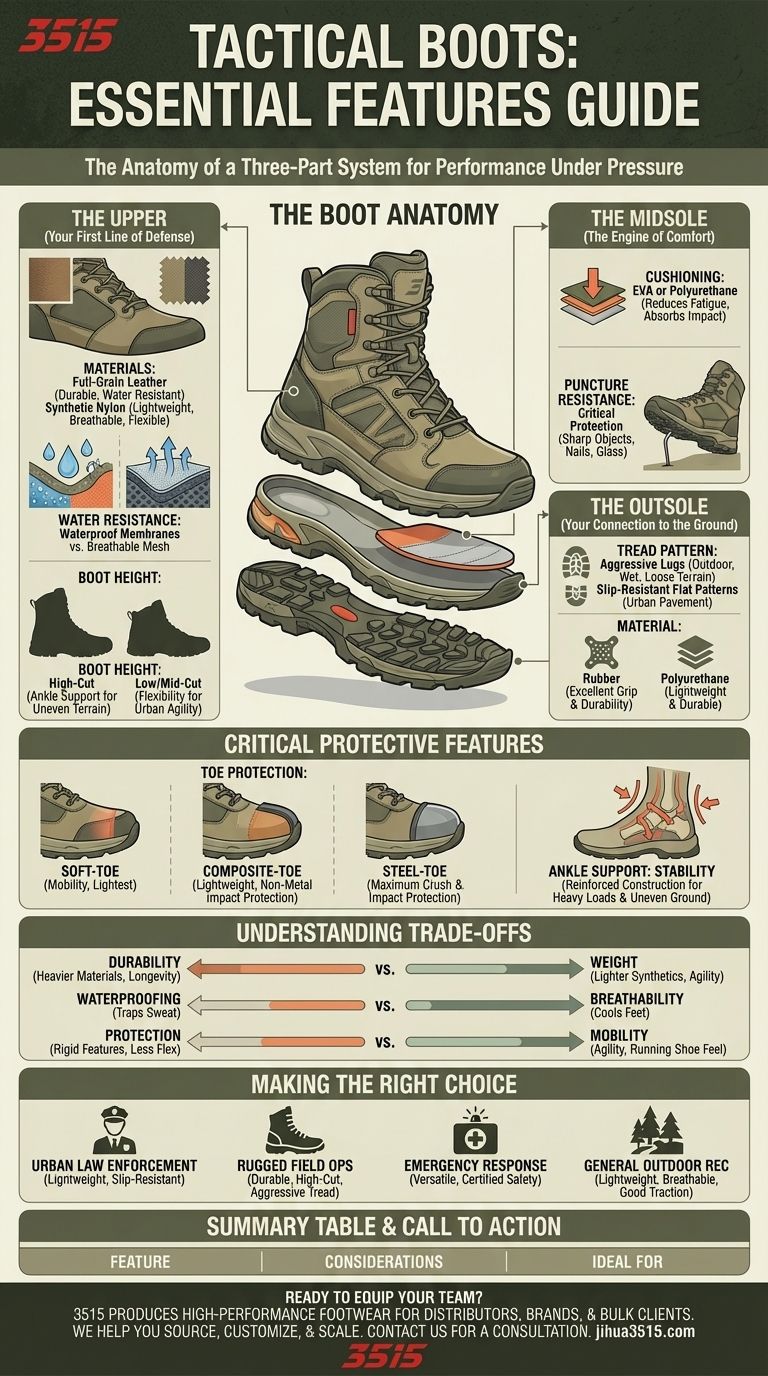
Visual Guide
Related Products
- Durable Leather Tactical Boots Wholesale & Custom Manufacturing for Brands
- High-Traction Suede Tactical Boots Wholesale & Custom Manufacturing
- Durable Leather High-Ankle Tactical Boots for Wholesale & Custom Manufacturing
- Durable Mid-Cut Tactical Boots for Wholesale & Private Label
- Wholesale Waterproof Tactical Boots Custom Suede & High-Traction Soles
People Also Ask
- What specialized protections do tactical boots offer? Maximize Endurance with High-Performance Footwear
- What features should law enforcement officers look for in tactical boots? Essential Guide for Safety & Performance
- Importance of Professional Tactical Boots in Loess Gully Regions: Ensure Safety and Precision for Field Monitoring
- What is rucking, and why are tactical boots suitable for it? Discover the Ultimate Footwear for Heavy Loads
- What makes the traction of tactical boots superior? Unlock the Science of Unbeatable Grip















