
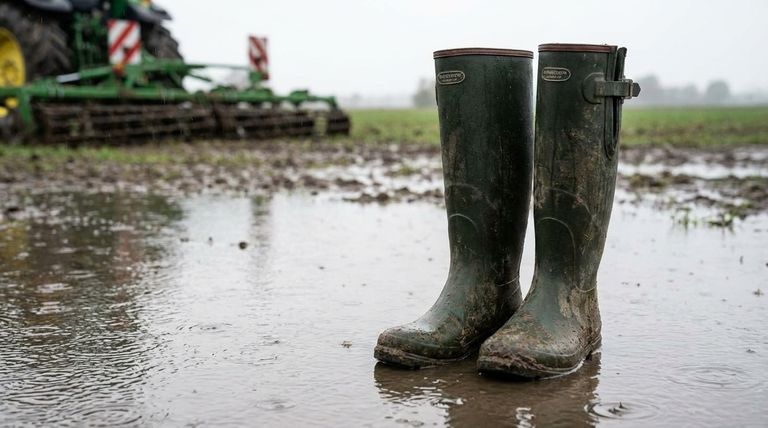
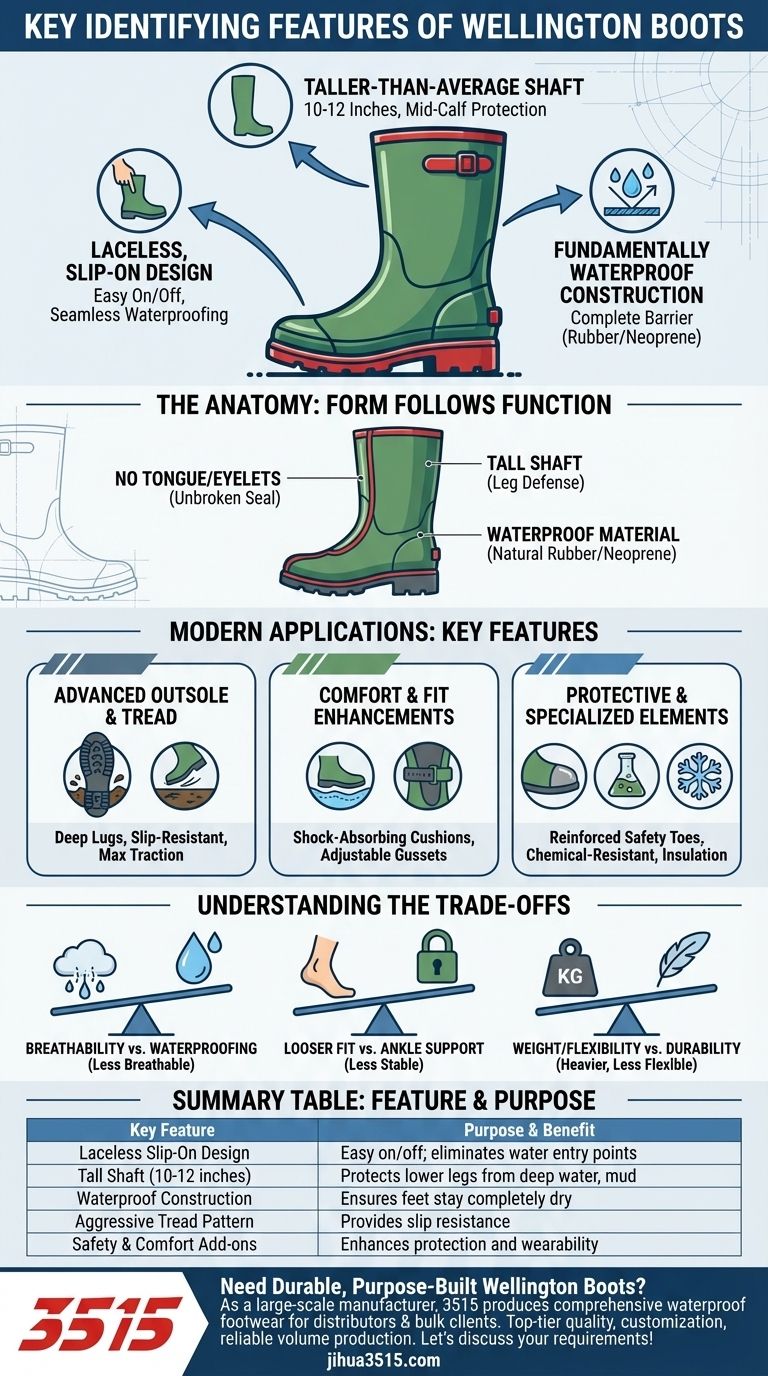
At their core, Wellington boots are defined by three key visual and functional characteristics. They are tall, laceless, slip-on boots designed to provide a completely waterproof barrier. This simple, practical design is their most recognizable feature, distinguishing them from traditional lace-up work or rain boots.
Beyond their distinctive silhouette, the true identity of a Wellington lies in its functional purpose: to create an impassable seal against water, mud, and contaminants. This mission dictates every aspect of their design, from their height to their material composition.
The Anatomy of a Wellington: Form Follows Function
The classic features of a Wellington boot are not stylistic choices; they are direct solutions to the challenges of working in wet and messy environments.
The Laceless, Slip-On Design
The most immediate identifier is the lack of laces. This allows for extremely easy on-and-off functionality, which is critical when boots are covered in mud or contaminants.
More importantly, this laceless construction eliminates the tongue and eyelets of a standard boot—the most common points of water ingress. This creates an unbroken, seamless surface for superior waterproofing.
A Taller-Than-Average Shaft
Wellington boots typically feature a shaft that is 10 to 12 inches tall, reaching the mid-calf.
This height is purely functional, designed to protect the wearer's lower legs from deep puddles, significant mud, chemical splashes, and other workplace hazards that shorter boots could not defend against.
Fundamentally Waterproof Construction
This is the non-negotiable trait of a true Wellington. The entire boot, from the outsole to the collar, is constructed from waterproof materials like natural rubber or neoprene.
This ensures the wearer's feet remain completely dry, whether facing heavy rain or standing in water.
Key Features for Modern Applications
While the core design remains, modern Wellingtons have evolved with advanced features tailored to specific uses, from agricultural work to daily commuting.
Advanced Outsole and Tread
To ensure safety on slick surfaces, high-quality Wellingtons feature aggressive tread patterns.
Look for features like deep lugs, slip-resistant compounds, or even tri-density soles designed to provide maximum traction in mud, water, and on slippery man-made floors.
Comfort and Fit Enhancements
Modern designs incorporate features for all-day comfort. Shock-absorbing cushions in the footbed reduce fatigue, while adjustable gussets on the calf allow for a more customized and secure fit.
Protective and Specialized Elements
For industrial and agricultural use, Wellingtons often include critical safety features.
These can include reinforced safety toes (steel or composite), chemical-resistant materials for protection against contaminants, and insulation for warmth in cold weather conditions.
Understanding the Trade-offs
The specialized design of Wellington boots presents inherent compromises that are important to understand.
Breathability vs. Waterproofing
The same impermeable materials that make Wellingtons completely waterproof also make them non-breathable. This can lead to sweat and moisture buildup inside the boot during strenuous activity or in warm weather.
A Looser, Less Secure Fit
The convenient slip-on design offers less ankle support than a tightly laced boot. This can be a drawback on uneven terrain where ankle stability is critical.
Weight and Flexibility
The heavy-duty rubber and protective elements required for durability and safety can make some Wellington boots heavier and less flexible than other types of footwear.
Selecting the Right Wellington for Your Needs
Choosing the correct boot depends entirely on your intended use.
- If your primary focus is daily wear and rain protection: Look for a lightweight natural rubber boot with a comfortable footbed and a good grip for wet pavement.
- If your primary focus is a demanding work environment: Prioritize boots with certified safety toes, chemical resistance, and deep, slip-resistant treads.
- If your primary focus is cold weather conditions: Seek out models with neoprene construction or dedicated insulation to ensure warmth is a key feature alongside waterproofness.
By understanding these core features, you can select a boot that doesn't just fit your foot, but perfectly fits your purpose.
Summary Table:
| Key Feature | Purpose & Benefit |
|---|---|
| Laceless Slip-On Design | Easy on/off; eliminates water entry points for superior waterproofing |
| Tall Shaft (10-12 inches) | Protects lower legs from deep water, mud, and contaminants |
| Waterproof Construction (e.g., rubber, neoprene) | Ensures feet stay completely dry in wet conditions |
| Aggressive Tread Pattern | Provides slip resistance on muddy or slick surfaces |
| Safety & Comfort Add-ons (e.g., steel toe, cushioning) | Enhances protection and wearability for specific tasks |
Need durable, purpose-built Wellington boots for your business or customers?
As a large-scale manufacturer, 3515 produces a comprehensive range of waterproof footwear for distributors, brand owners, and bulk clients. Our production capabilities encompass all types of Wellington boots—from lightweight rain boots to heavy-duty safety models with reinforced toes and chemical resistance.
We ensure top-tier quality, customization options, and reliable volume production to meet your exact needs. Let’s discuss your requirements and get a quote today! Contact our team now to learn more.
Visual Guide
Related Products
- Durable Waterproof Rain Boots | Custom Manufacturer for Wholesale & Brands
- Durable Goodyear Welt Leather Work Boots for Wholesale & Private Label
- Wholesale Durable Leather Work Boots | 8-Inch Goodyear Welt Manufacturer
- High-Traction Suede Tactical Boots Wholesale & Custom Manufacturing
- Premium Wholesale Tactical Style Safety Shoes Boots with Quick Lacing
People Also Ask
- What are the main materials for waterproof rain boots? Choose the Right Material for Durability & Comfort
- What is the overall recommendation for choosing rain boot materials? A Guide to Rubber vs. PVC
- How does boot height affect waterproofing? Choose the Right Height for Ultimate Protection
- Why are rain boots more flexible and comfortable than snow boots? The Key Differences Explained
- What are the best types of shoes for different gardening conditions? Find Your Perfect Match.



















