
In essence, a medical walking boot is an engineered tool designed to create a highly controlled environment for a healing foot or ankle. Its key functions are to provide robust immobilization and protection similar to a cast, but with the critical advantage of allowing for controlled mobility and a gradual reintroduction of weight, which is vital for a comprehensive recovery.
A walking boot serves as a bridge between the total immobility of a cast and the full function of a healthy limb. Its purpose is to balance the need for protection with the benefits of controlled movement, thereby optimizing the body's natural healing process.
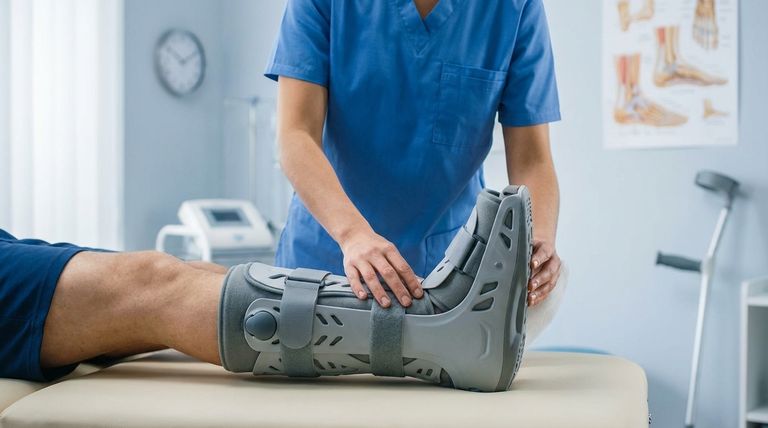
The Core Principle: Creating a Healing Environment
For tissues like bones, ligaments, or tendons to heal, they need a stable and protected environment. The boot's primary job is to create this ideal state.
Immobilization and Stability
The rigid shell and secure straps of a walking boot work together to stabilize the injured area. This restriction of movement is critical, as it prevents the damaged tissues from being stressed or re-injured, allowing them to knit back together properly.
This function is similar to a traditional cast but offers adjustability to accommodate swelling.
Support and Protection
A walking boot acts as a shield. The hard outer casing protects the foot and ankle from accidental bumps and external forces that could disrupt the healing process.
Internally, the boot's design helps to distribute pressure and weight across the entire lower leg, reducing the load on the specific injury site and alleviating pain.
The Bridge to Recovery: Controlled Mobility
Unlike a cast, a boot is not meant for complete and total immobility. Its unique advantage lies in its ability to allow for safe, limited movement.
Enabling Necessary Activity
The ability to walk, even in a limited capacity, is crucial for daily life. A boot allows for this essential mobility while ensuring the injury remains secure.
This controlled movement also helps prevent the severe joint stiffness and muscle atrophy often associated with prolonged casting.
Facilitating Proper Alignment
Many boots feature a "rocker bottom" sole. This curved design encourages a more natural heel-to-toe walking motion (gait).
Promoting proper alignment during recovery helps retrain muscles and prevents the development of poor walking habits that can cause secondary issues later on.
Gradual Weight-Bearing Progression
One of the boot's most vital roles is facilitating a medically supervised transition from non-weight-bearing to full weight-bearing.
This gradual reintroduction of stress is essential for strengthening the healing bone or tissue, preparing it to handle the demands of normal activity once the boot is removed.
Understanding the Trade-offs
While highly effective, a medical walking boot is a tool with specific limitations and potential side effects that are important to acknowledge.
Potential for Muscle Weakness
Because the boot provides so much support, the stabilizing muscles in your lower leg and foot don't have to work as hard. This can lead to weakness and a loss of muscle mass over time, which is why physical therapy is often a critical part of the post-boot recovery plan.
Altered Gait and Secondary Aches
Walking in a boot is not natural. The height and rigidity of the boot can alter your body's alignment, sometimes leading to secondary aches and pains in the knee, hip, or lower back of either leg.
The Importance of Proper Fit
A boot that is too loose will fail to provide adequate support, while one that is too tight can cause pressure sores, chafing, and restrict blood flow. A proper fit, as determined by a medical professional, is non-negotiable for both safety and effectiveness.
Making the Right Choice for Your Goal
Your approach to using a walking boot should align with your specific recovery objectives, as guided by your healthcare provider.
- If your primary focus is safety and protection: Adhere strictly to your prescribed weight-bearing limitations and ensure the boot is always securely fastened to prevent accidental stress on the injury.
- If your primary focus is maintaining daily mobility: Use the boot as an enabling tool, but remain mindful of its limitations and avoid overexertion or activities that cause pain.
- If your primary focus is a complete long-term recovery: View the boot as one phase in a larger process that will likely include physical therapy to rebuild strength, flexibility, and balance after it is removed.
Ultimately, a medical walking boot is a sophisticated device that empowers you to take an active role in a structured and successful recovery.
Summary Table:
| Function | Key Benefit |
|---|---|
| Immobilization & Stability | Protects the injury, prevents re-injury, and allows tissues to heal. |
| Support & Protection | Shields from external impact and distributes weight to reduce pain. |
| Controlled Mobility | Prevents muscle atrophy and joint stiffness while enabling essential daily activity. |
| Gradual Weight-Bearing | Safely transitions from non-weight-bearing to full activity under medical guidance. |
Ready to source high-quality medical walking boots for your patients or retail partners?
As a large-scale manufacturer, 3515 produces a comprehensive range of medical and protective footwear for distributors, brand owners, and bulk clients. Our production capabilities ensure durable, effective walking boots that support a structured and successful recovery.
Contact our experts today to discuss your specific needs and receive a customized quote.
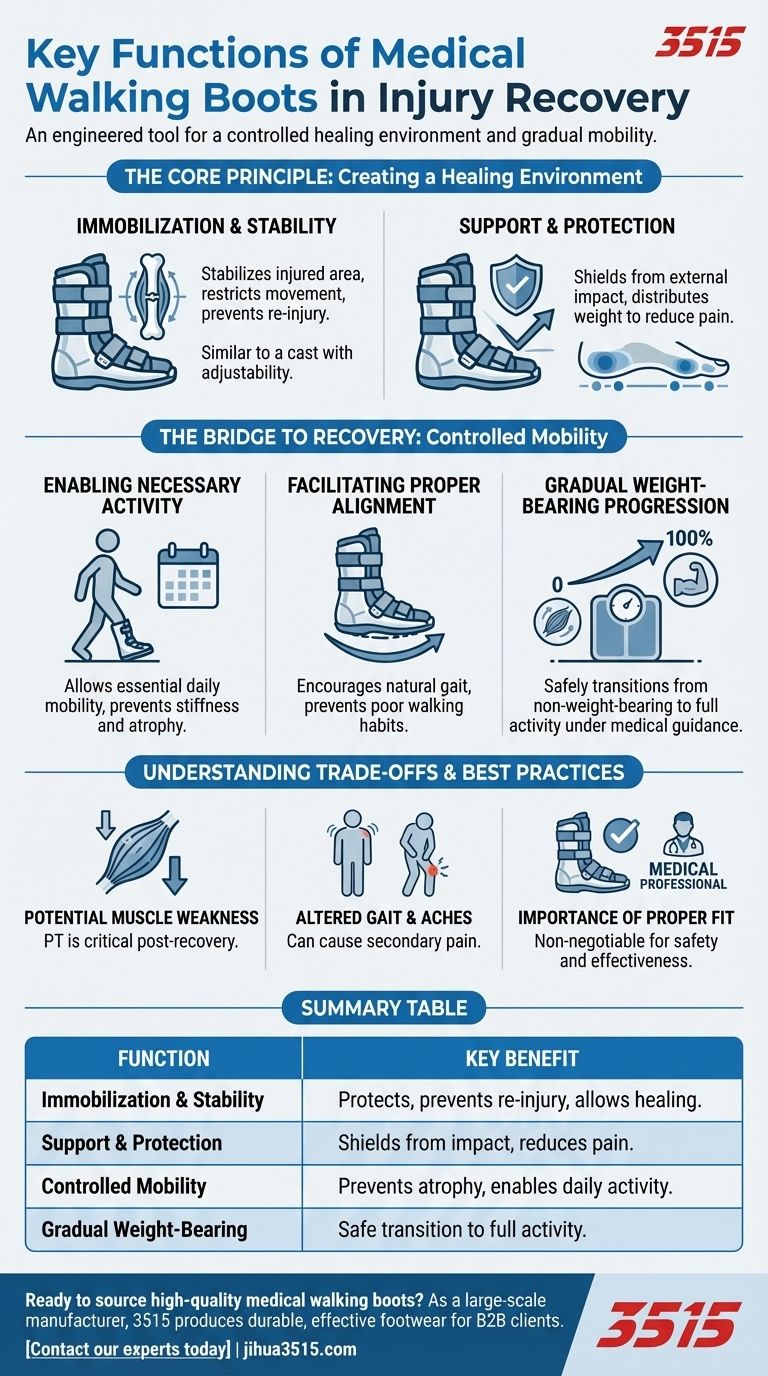
Visual Guide
Related Products
- Durable Military Combat Boots with Water Drainage for Wholesale & OEM
- Wholesale Waterproof Tactical Boots Custom Suede & High-Traction Soles
- Wholesale Safety Boots Manufacturer for Custom & Private Label Orders
- Heavy-Duty Waterproof Nubuck Safety Boots Safety Shoes for Bulk Supply
- High-Traction Suede Tactical Boots Wholesale & Custom Manufacturing
People Also Ask
- Why must gait validation for military applications be conducted in combat boots? Ensure Data Accuracy for Soldiers
- What are the common types of combat boots? Find the Right Boot for Your Mission
- What factors should be considered when choosing military boots for hiking? Durability vs. Weight for Your Terrain
- What are the key considerations when choosing military boots? Prioritize Compliance, Environment & Fit
- How should the midfoot and heel fit in military boots? Achieve a Snug, Secure Fit for Blister Prevention


















