
The defining characteristic of a show jumping boot is its construction from soft, flexible leather. This design is not accidental; it is engineered to allow the rider’s ankle and leg to move freely, adapting to the dynamic positions required for balance and communication with the horse while navigating a course of fences.
A show jumping boot is not built for rugged protection like a work boot. Instead, it is a piece of performance equipment designed for one primary purpose: to maximize flexibility and feel, allowing the rider to maintain balance and give precise cues to the horse.
The Core Principle: Flexibility for Performance
The demands of show jumping require a boot that acts like a second skin rather than rigid armor. Every design choice serves to enhance the rider's connection with the horse.
The Role of Soft Leather
High-quality show jumping boots are crafted from supple leather that molds to the rider's leg. This creates a close, comfortable fit that prevents slipping and allows the rider to feel the horse's sides accurately.
Critical Ankle Articulation
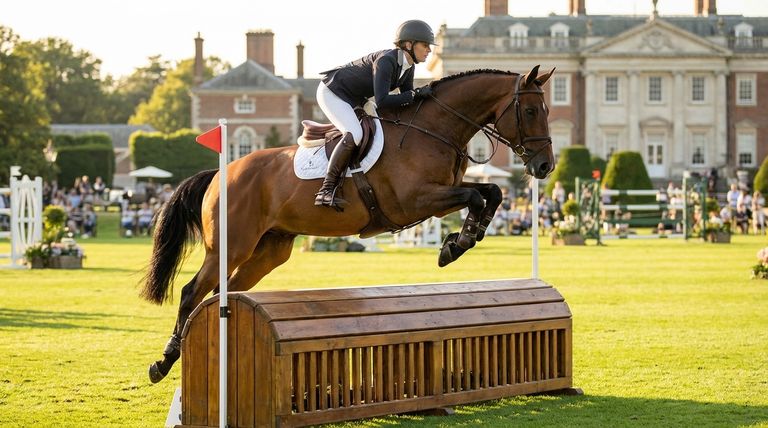
The most important function is allowing the ankle to flex. Riders must be able to sink their weight down into their heels to maintain a secure two-point position over jumps and absorb the shock of landing. A stiff boot would prevent this critical movement.
Enhanced Rider-Horse Communication
A close-fitting, flexible boot enables the rider to apply subtle leg cues. This precise communication is essential for adjusting the horse's stride, direction, and pace between obstacles on a complex course.
How Show Jumping Boots Differ from Other Types
Understanding what a show jumping boot isn't helps clarify its specific purpose. The design contrasts sharply with boots built for protection or other equestrian disciplines.
Focus on Feel, Not Heavy Reinforcement
Unlike adventure or public order boots, show jumping boots lack features like steel toes or heavily reinforced heels. Such elements would add bulk and stiffness, directly inhibiting the ankle flexion and close contact needed for performance.
Tall Boots vs. Paddock Boots
The traditional show jumping boot is a tall boot, extending up to the knee. However, paddock boots (which end just above the ankle) paired with matching half chaps are a popular and often more affordable alternative, especially for training and younger riders.
Understanding the Trade-offs
The specialized design of a show jumping boot comes with inherent compromises that riders must understand.
Protection is Sacrificed for Mobility
The soft leather and flexible design offer minimal impact protection. These boots will not guard effectively against being stepped on by a horse or a collision with an obstacle.
Maintenance is Essential
Supple leather requires consistent care. Regular cleaning and conditioning are necessary to keep the boots from drying out, cracking, and losing the flexibility they were designed for.
A Necessary Break-in Period
Even the softest leather requires a break-in period. The boots must conform to the specific contours of the rider's leg and ankle, which can cause initial discomfort, particularly behind the knee and at the ankle.
Making the Right Choice for Your Goal
Selecting the correct boot depends entirely on your primary activity.
- If your primary focus is competitive show jumping: A well-fitted tall boot made from soft leather is the standard, designed specifically to enhance balance and communication in the ring.
- If your primary focus is training or everyday riding: The combination of paddock boots and half chaps offers similar functionality and leg protection with greater versatility and often at a lower cost.
- If your primary focus is trail riding or working around the barn: Prioritize a sturdier boot with more reinforcement and ankle support, as the flexibility of a show jumping boot is not the main requirement.
Ultimately, the right show jumping boot functions as an extension of your leg, enabling the precise communication and balance required for success.
Summary Table:
| Characteristic | Purpose & Benefit |
|---|---|
| Soft, Flexible Leather | Allows natural ankle movement and molds to the leg for a secure, comfortable fit. |
| Focus on Ankle Articulation | Enables the rider to sink their heels for balance and absorb the shock of landing over jumps. |
| Minimal Reinforcement | Prioritizes feel and close contact with the horse over rugged protection. |
| Tall Boot or Paddock/Chap Combo | Tall boots are traditional for competition; paddock boots offer a versatile, cost-effective alternative. |
Ready to Experience Superior Performance?
As a large-scale manufacturer, 3515 produces a comprehensive range of equestrian footwear for distributors, brand owners, and bulk clients. Our production capabilities encompass all types of riding boots, including premium show jumping boots designed for optimal flexibility and performance.
We can help you:
- Source high-quality, flexible boots that enhance rider communication.
- Develop custom designs tailored to your brand and market.
- Benefit from our extensive manufacturing experience and efficient bulk production.
Contact us today to discuss your footwear needs and discover how we can bring value to your business.
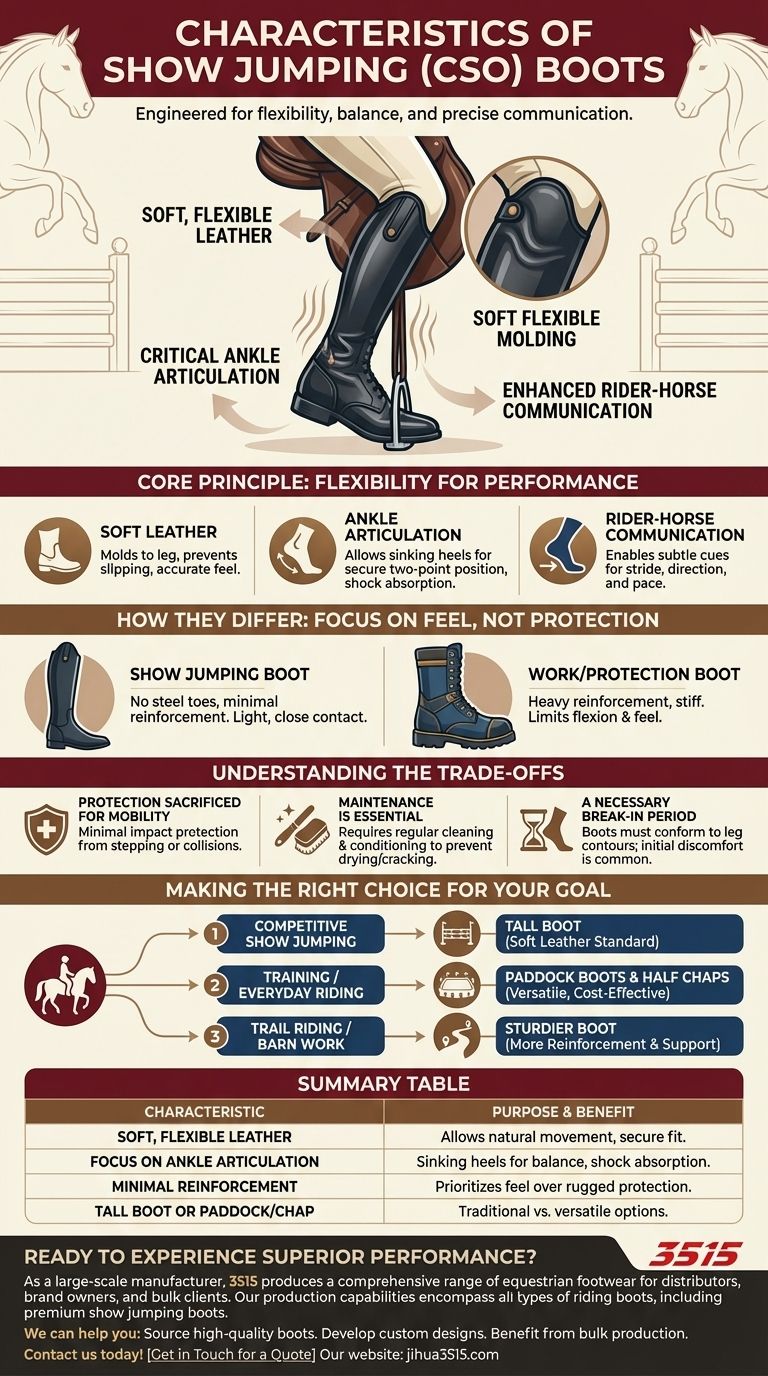
Visual Guide
Related Products
- Wholesale High-Traction Camo Boots - Custom Manufacturer for Brands
- Wholesale Tactical Boots High-Traction & Reflective for Bulk & Brand Orders
- Durable High-Ankle Tactical Boots Wholesale Manufacturer for Custom & Bulk Orders
- Durable Leather High-Ankle Tactical Boots for Wholesale & Custom Manufacturing
- Premium Wholesale Tactical Style Safety Shoes Boots with Quick Lacing
People Also Ask
- What are the key features of the new line of camo boots? Built for Extreme Cold & Rugged Terrain
- Are camo boots necessary for hunting success? Prioritize Performance Over Pattern
- How does the Rank Score Test identify the primary causes of premature failure in tactical and work boots? Key Insights
- What is the technical logic behind using closed-eye testing for tactical boots? Unlocking Peak Footwear Stability
- What shoes to wear for a security job? Durable, Protective Footwear for Long Shifts



















