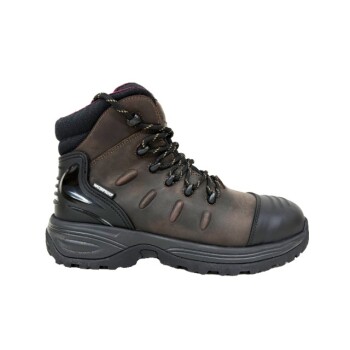
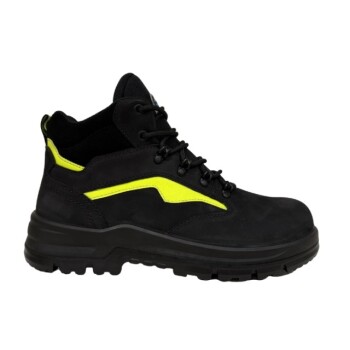
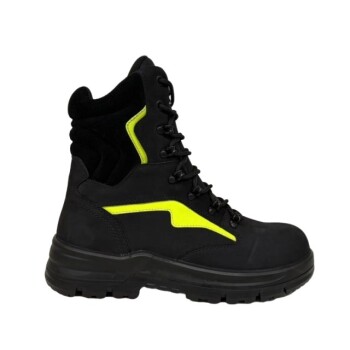
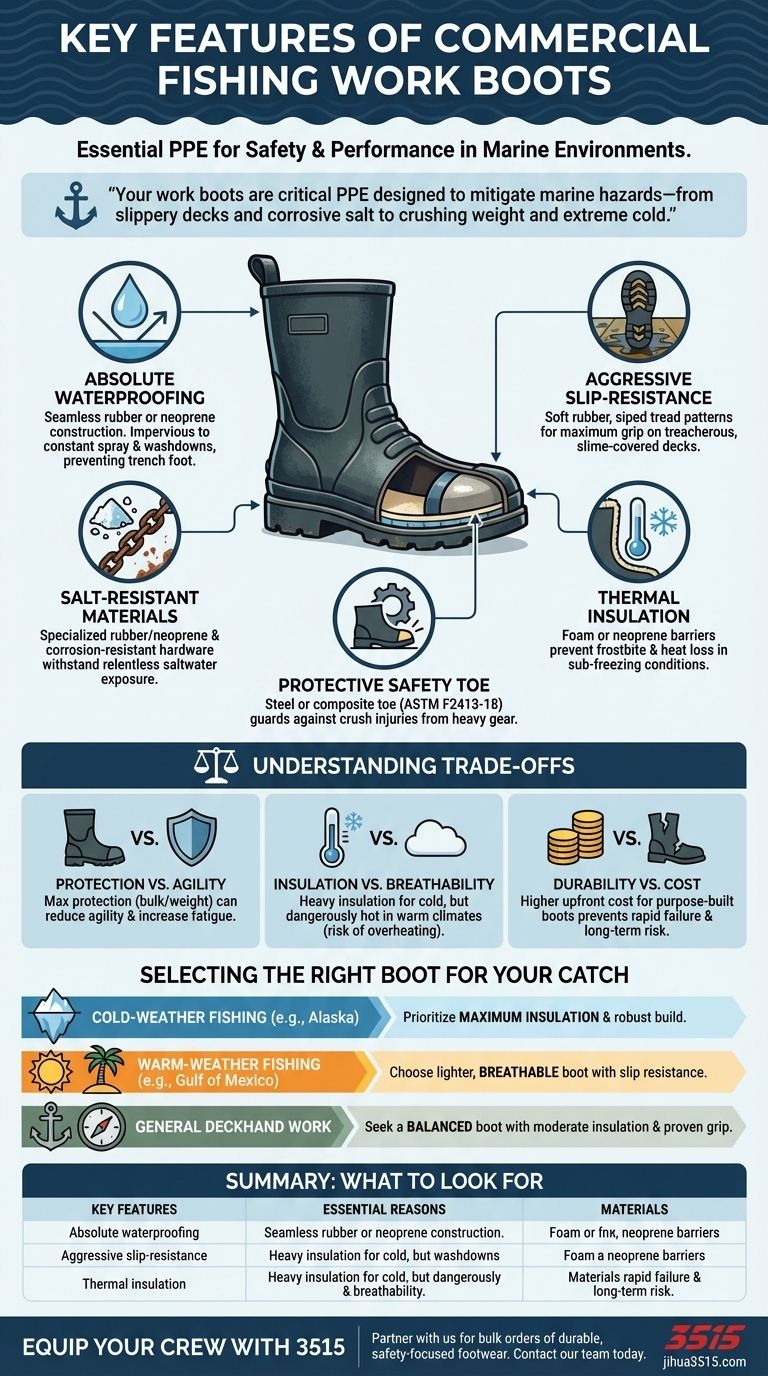
The essential features of commercial fishing boots are absolute waterproofing, aggressive slip-resistant outsoles, salt-resistant materials, thermal insulation, and a protective safety toe. These elements are not optional upgrades but fundamental requirements for safety and performance in one of the world's most demanding work environments.
Your work boots are not just footwear; they are a critical piece of personal protective equipment designed to mitigate the constant, specific hazards of a marine environment—from slippery decks and corrosive salt to crushing weight and extreme cold.
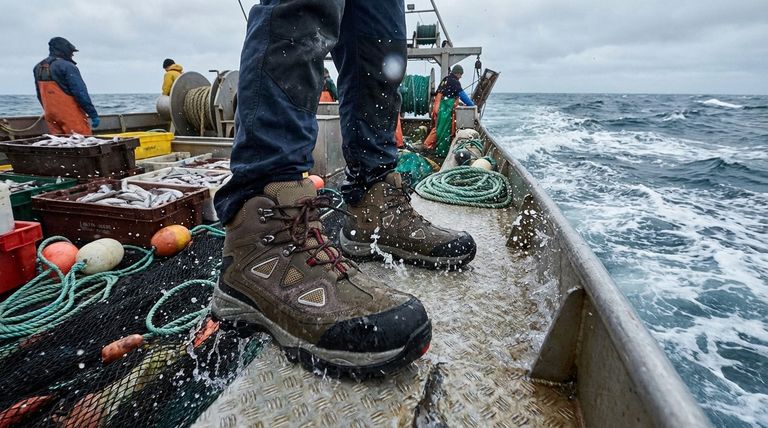
The Foundation: Non-Negotiable Safety Features
On a commercial fishing vessel, the wrong boots can lead directly to injury. Three features form the core of a boot's ability to protect you from immediate physical harm.
Absolute Waterproofing for Constant Exposure
The term "waterproof" here means impervious to constant spray, washdowns, and submersion. This is not about keeping your feet dry from rain but protecting them from perpetual wetness.
High-quality boots for this purpose are typically made from a seamless construction of rubber or neoprene, ensuring no water can penetrate. This prevents not only discomfort but also more serious issues like trench foot.
Unyielding Grip on Treacherous Surfaces
A standard work boot sole is inadequate for a vessel's deck, which is often covered in water, fish slime, and oil while constantly pitching and rolling.
Look for specialized slip-resistant outsoles, often with a soft rubber compound and a "siped" or chevron tread pattern. These designs are engineered to channel water away and maximize surface contact to maintain grip.
Impact Protection from Heavy Gear
The risk of crush injuries from dropped crab pots, heavy equipment, or shifting gear is extremely high. A safety toe is mandatory.
Most commercial fishing boots feature a steel or composite safety toe that meets industry standards (like ASTM F2413-18) for impact and compression resistance.
Built to Endure the Marine Environment
Beyond immediate safety, these boots must withstand the relentless hostility of their surroundings. Durability is a function of materials designed specifically for marine use.
Resisting the Corrosive Power of Saltwater
Saltwater is incredibly corrosive and will rapidly degrade standard leathers, stitching, and even certain metals used in lesser boots.
Commercial fishing boots use materials inherently resistant to salt, primarily specialized rubber and neoprene compounds. All components, including any buckles or hardware, must be made of corrosion-resistant materials.
Thermal Regulation in Extreme Temperatures
Working in cold waters, such as the North Atlantic or Bering Sea, presents a severe risk of frostbite and loss of circulation.
Insulation is a critical feature for cold-weather fishing. Boots are often lined with foam or neoprene of varying thicknesses to provide a thermal barrier, keeping feet warm and functional even in sub-freezing conditions.
Understanding the Trade-offs
Selecting the perfect boot involves balancing competing needs. The ideal choice for one environment may be a liability in another.
Protection vs. Agility
Heavily insulated boots with steel toes and thick outsoles offer maximum protection. However, this added bulk and weight can reduce agility and increase fatigue over a long shift.
Insulation vs. Breathability
A boot with heavy insulation is essential for Alaskan king crab fishing but will be dangerously hot and uncomfortable for a shrimper in the Gulf of Mexico. Overheating can lead to excessive sweating, blisters, and fungal infections.
Durability vs. Cost
The most durable, purpose-built fishing boots represent a significant upfront investment. Opting for cheaper, general-purpose boots almost always results in rapid failure from salt corrosion or physical damage, creating a greater long-term cost and a serious safety risk.
Selecting the Right Boot for Your Catch
Your specific fishing grounds and target species dictate the priority of these features.
- If your primary focus is cold-weather fishing (e.g., Alaska, North Atlantic): Prioritize maximum insulation and a robust, protective build above all else.
- If your primary focus is warm-weather fishing (e.g., Gulf of Mexico, tropical waters): Choose a lighter, non-insulated boot that emphasizes breathability and slip resistance.
- If your primary focus is general deckhand work across varied conditions: Seek a balanced, all-around boot with moderate insulation, a proven slip-resistant sole, and uncompromising durability.
Ultimately, choosing the right boot is an investment in your safety, comfort, and ability to perform your job effectively day after day.
Summary Table:
| Key Feature | Why It's Essential | What to Look For |
|---|---|---|
| Absolute Waterproofing | Protects against constant exposure to water, preventing trench foot and discomfort. | Seamless rubber or neoprene construction. |
| Aggressive Slip-Resistance | Maintains grip on wet, slippery decks covered in fish slime and oil. | Soft rubber, siped or chevron tread pattern outsoles. |
| Salt-Resistant Materials | Prevents rapid degradation from corrosive saltwater. | Specialized rubber/neoprene compounds and corrosion-resistant hardware. |
| Thermal Insulation | Protects against frostbite and loss of circulation in cold waters. | Foam or neoprene linings of appropriate thickness for the climate. |
| Protective Safety Toe | Guards against crush injuries from heavy gear like crab pots. | Steel or composite toe meeting ASTM F2413-18 standards. |
Equip Your Crew with Boots Built for the Catch
As a large-scale manufacturer, 3515 produces a comprehensive range of durable, safety-focused footwear for distributors, brand owners, and bulk clients. Our production capabilities encompass all types of commercial fishing boots, engineered to withstand the harshest marine conditions.
Partner with us to provide your team or customers with footwear that guarantees:
- Unmatched Safety: Superior slip-resistance and protective toes to mitigate workplace hazards.
- Long-Lasting Durability: Salt-resistant materials that endure the corrosive marine environment.
- Optimal Comfort: Engineered for thermal regulation and waterproof protection during long shifts.
Ready to source reliable work boots for commercial fishing? Contact our team today to discuss your specific needs and volume requirements.
Visual Guide
Related Products
- Durable Goodyear Welt Leather Work Boots for Wholesale & Private Label
- Durable Leather Moc Toe Work Boots for Wholesale & Custom Manufacturing
- Premium Oil Wax Leather Safety Boots for Bulk Purchase
- Durable Leather Work Boots for Wholesale & Custom Manufacturing
- Durable Leather Work Boots for Wholesale & Custom OEM Manufacturing
People Also Ask
- What is the difference between full-grain and top-grain leather? Premium Material Guide for Boot Manufacturers
- What are the advantages of leather as an upper material for work boots? Unmatched Durability & Custom Comfort
- Why is it important to waterproof leather work boots? Protect Your Investment and Performance
- How should new leather work boots be broken in? A Guide to Comfort and Durability
- What are the advantages of leather uppers in work boots? Unmatched Durability & Protection