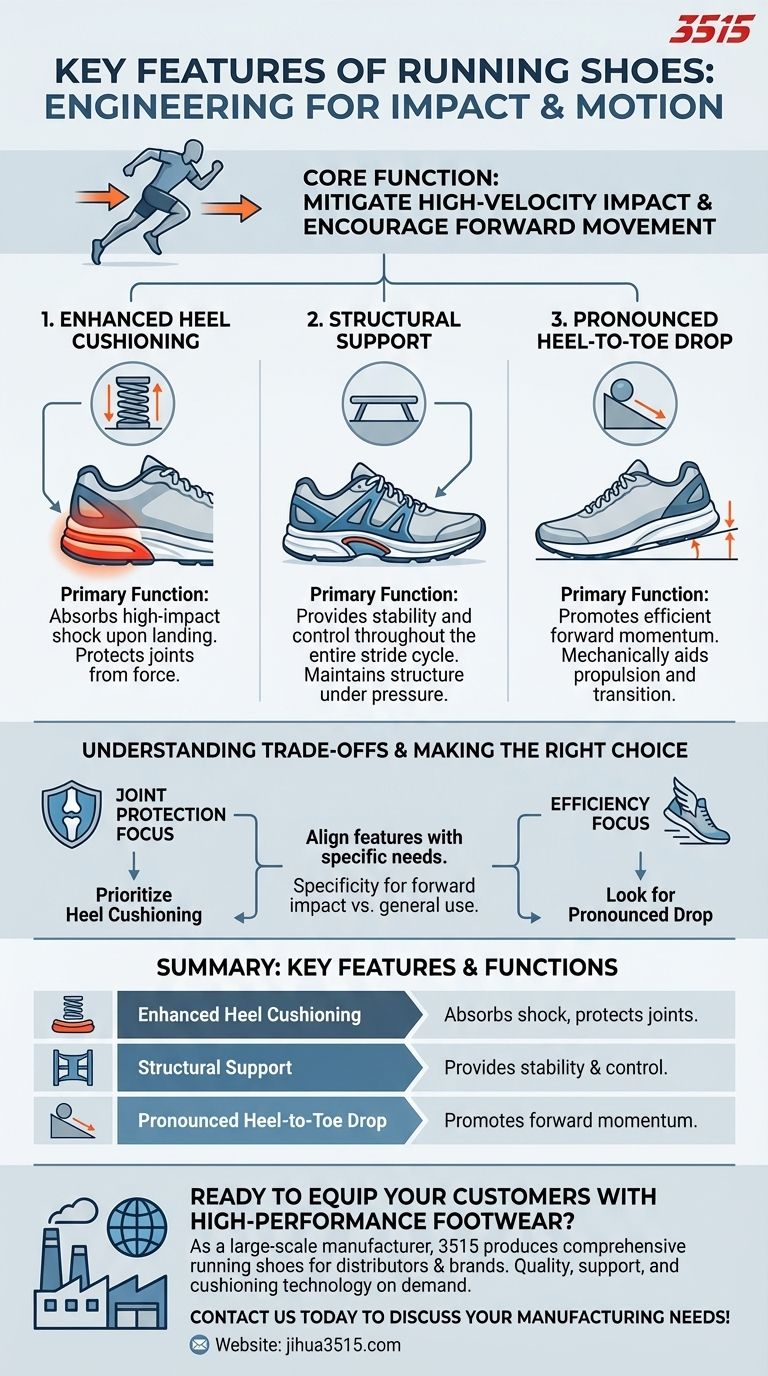
Running shoes are distinguished by their specific engineering to manage high-velocity impact. They rely on concentrated cushioning in the heel to absorb shock and a structural design that provides stability through the stride. Additionally, they utilize a pronounced heel-to-toe drop to mechanically assist with forward momentum.
The core function of a running shoe is to mitigate the stress of high-impact forces while actively encouraging forward movement through specific geometry.
The Mechanics of Impact Protection
Absorbing Shock at the Heel
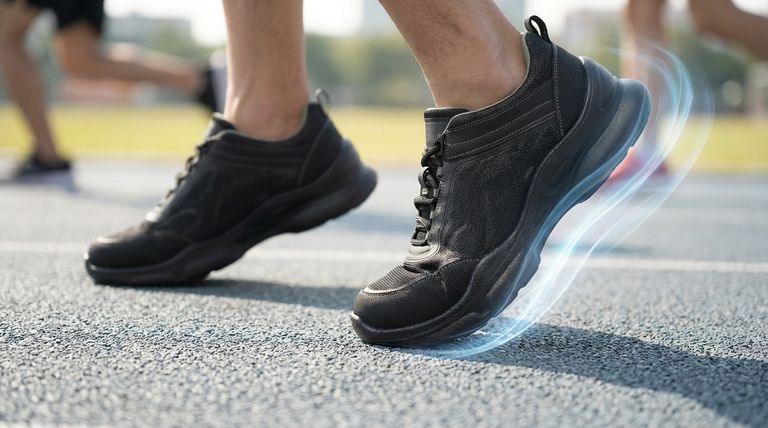
Running generates significantly higher forces than walking or standing. To counter this, running shoes feature enhanced cushioning specifically placed in the heel area. This design element is critical for absorbing the initial shock of landing.
Providing Essential Support
Beyond simple softness, the shoe must maintain structure under pressure. The design includes specific features to provide support during the entire stride cycle. This ensures stability as the foot bears the full weight of the body.
Geometry and Motion
The Heel-to-Toe Drop
A key technical specification is the heel-to-toe drop. This refers to the difference in height between the heel and the forefoot. Running shoes often feature a more pronounced drop compared to casual footwear.
Promoting Forward Momentum
This specific geometry serves a functional purpose beyond aesthetics. The angle is engineered to naturally promote forward motion. It helps transition the body's weight efficiently into the next step.
Understanding the Trade-offs
Specificity vs. General Use
These shoes are optimized specifically for forward, high-impact movement. Because they prioritize shock absorption and forward propulsion, the geometry is distinct. Using shoes without these specific features for running risks exposing the body to unmanaged impact forces.
Making the Right Choice for Your Goal
To select the right gear, you must align the shoe's features with your specific needs.
- If your primary focus is Joint Protection: Prioritize cushioning in the heel to maximize shock absorption capabilities.
- If your primary focus is Efficiency: Look for a pronounced heel-to-toe drop to mechanically aid in forward propulsion.
By understanding how cushioning and geometry work together, you can select a tool that effectively handles impact while keeping you moving forward.
Summary Table:
| Key Feature | Primary Function |
|---|---|
| Enhanced Heel Cushioning | Absorbs high-impact shock upon landing to protect joints. |
| Structural Support | Provides stability and control throughout the entire stride cycle. |
| Pronounced Heel-to-Toe Drop | Promotes efficient forward momentum and aids propulsion. |
Ready to equip your customers with high-performance running shoes?
As a large-scale manufacturer, 3515 produces a comprehensive range of footwear for distributors, brand owners, and bulk clients. Our production capabilities encompass all types of running shoes, ensuring your brand gets the quality, support, and cushioning technology that runners demand.
Contact us today to discuss your manufacturing needs and elevate your footwear line!
Visual Guide
Related Products
- Wholesale Durable & Breathable Training Shoes for Custom Brands
- Custom OEM Training Shoes Wholesale Manufacturer Durable & Breathable
- Wholesale Breathable Training Shoes Custom Athletic Footwear Manufacturer
- Lightweight Breathable Training Shoes for Wholesale & Custom OEM Manufacturing
- Wholesale Breathable Athletic Sneakers - Custom Lightweight Cushioned Footwear Manufacturer
People Also Ask
- Why is structural stability in footwear required during dual-task walking tests? Ensure Sensor Precision & Data Integrity
- Why is the integration of advanced cushioning in training shoes necessary for athletes? Boost Recovery and Performance
- Why is the use of flat-soled or professional training shoes essential for WBV? Maximize Vibration Energy Transfer
- Why is it necessary for participants to wear professional training shoes? Ensuring Data Accuracy & Patient Safety
- How does the Ground Reaction Force (GRF) constancy hypothesis influence professional training shoes and sneakers?