
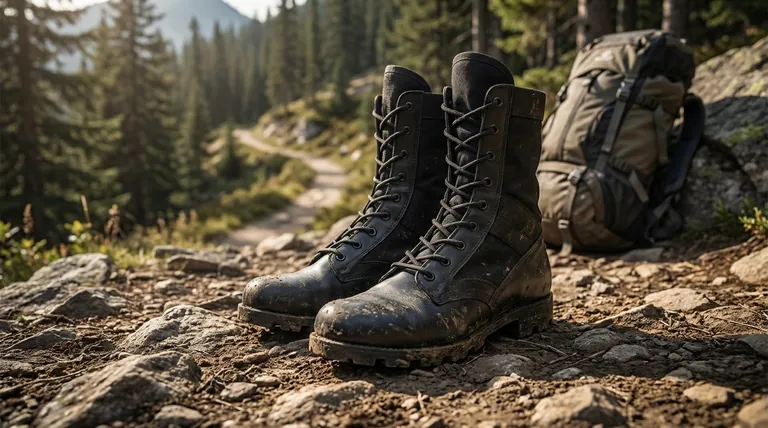
At their core, military boots are engineered for uncompromising durability and support under extreme conditions. They are made suitable for certain types of hiking by a few key features: rugged, wear-resistant materials for protection, exceptional high-ankle support to prevent injury, and aggressive outsoles with deep lugs designed for reliable traction on unpredictable terrain.
While military boots offer elite durability and protection, they represent a significant trade-off. Their strengths in ruggedness and support must be weighed against their inherent disadvantages in weight, breathability, and flexibility when compared to modern, specialized hiking boots.
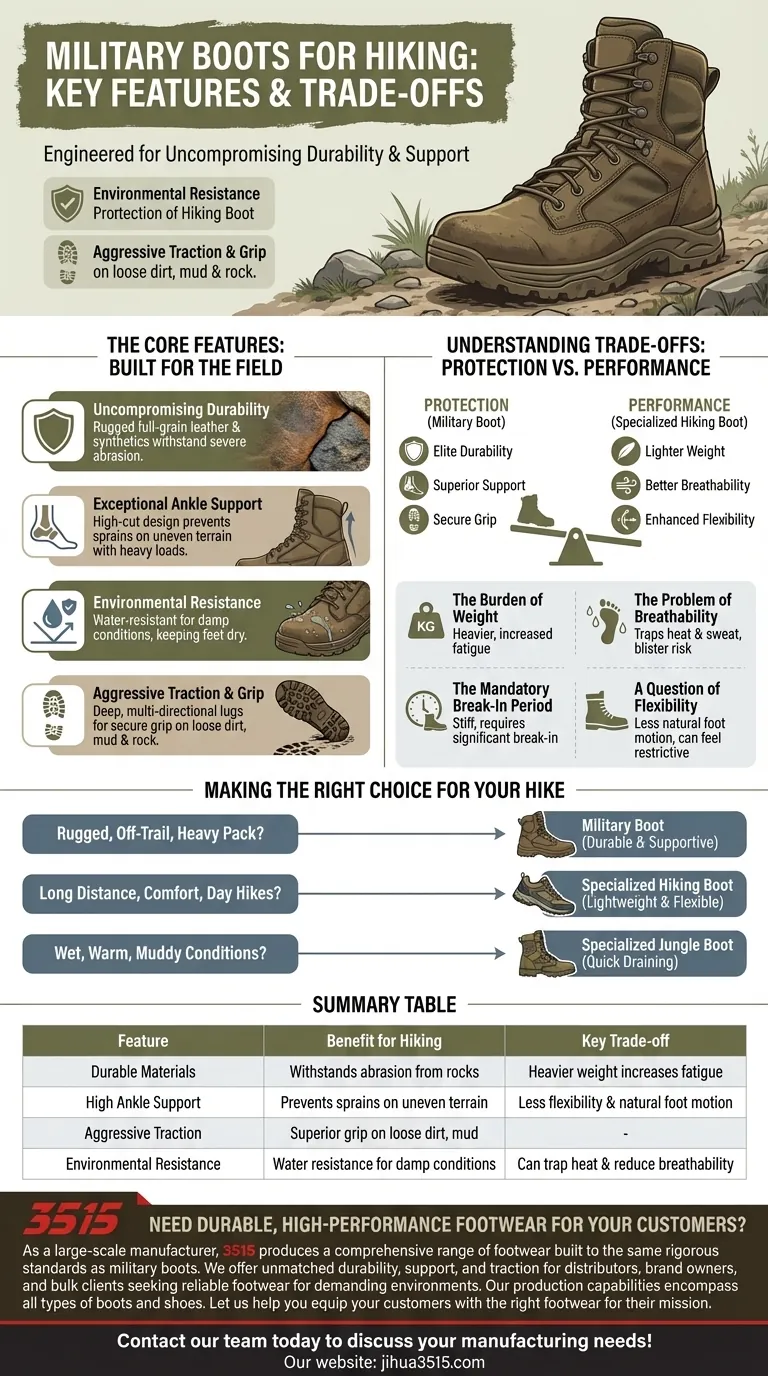
The Core Features Built for the Field
Military boots are designed as a platform for stability and protection, which translates directly to performance in demanding hiking environments.
Uncompromising Durability
The primary materials, often full-grain leather and heavy-duty synthetic fabrics like nylon, are chosen for maximum wear resistance. This ensures the boots can withstand abrasion from rocks, brush, and harsh field use without failing.
Exceptional Ankle Support
Their high-cut design is fundamental to their purpose. This structure provides critical stability for the ankle, helping to prevent sprains and twists on uneven ground, especially when carrying the heavy load of a backpack.
Environmental Resistance
Most military boots offer a degree of water resistance to keep feet dry in damp conditions. This protection is vital for maintaining foot health and comfort during extended periods outdoors.
Aggressive Traction and Grip
The outsoles are engineered with deep, multi-directional lugs. This aggressive tread pattern provides a secure grip on a wide variety of surfaces, from loose dirt and slick mud to rocky inclines.
Understanding the Trade-offs: Protection vs. Performance
While their protective features are clear, using military boots for recreational hiking involves several critical trade-offs that are often addressed by dedicated hiking footwear.
The Burden of Weight
Military boots are typically heavier than their civilian counterparts. This extra weight, while a byproduct of durable construction, can lead to increased fatigue and require more energy expenditure over long-distance hikes.
The Problem of Breathability
The same robust materials that provide durability and water resistance can also limit breathability. In hot or dry climates, this can trap sweat, leading to discomfort and an increased risk of blisters. An exception is the "jungle boot," which is designed to drain water quickly rather than block it.
The Mandatory Break-In Period
Due to their stiff construction, most military boots require a significant break-in period. Attempting a long hike without properly molding them to your feet is a common cause of painful blisters and discomfort.
A Question of Flexibility
The rigidity that provides excellent support can also feel restrictive. Modern hiking boots often incorporate more flexible midsoles that allow for a more natural foot motion, which many find more comfortable during extended treks.
Making the Right Choice for Your Hike
Your decision should be based on the specific demands of your hike and your personal priorities.
- If your primary focus is maximum durability and ankle support for rugged, off-trail use with a heavy pack: A well-fitted military boot can be a viable, protective option.
- If your primary focus is comfort and lower fatigue on long-distance or day hikes: A dedicated, lightweight hiking boot with a flexible midsole is almost always the superior choice.
- If your primary focus is hiking in wet, warm, and muddy conditions: A specialized military "jungle boot" may outperform traditional waterproof boots by draining water quickly instead of trapping it.
By understanding these core trade-offs, you can confidently choose the footwear that best serves your mission on the trail.
Summary Table:
| Feature | Benefit for Hiking | Key Trade-off |
|---|---|---|
| Durable Materials | Withstands abrasion from rocks and brush | Heavier weight increases fatigue |
| High Ankle Support | Prevents sprains on uneven terrain with a heavy pack | Less flexibility and natural foot motion |
| Aggressive Traction | Superior grip on loose dirt, mud, and rocky inclines | - |
| Environmental Resistance | Water resistance for damp conditions | Can trap heat and reduce breathability |
Need Durable, High-Performance Footwear for Your Customers?
As a large-scale manufacturer, 3515 produces a comprehensive range of footwear built to the same rigorous standards as military boots. We offer unmatched durability, support, and traction for distributors, brand owners, and bulk clients seeking reliable footwear for demanding environments.
Our production capabilities encompass all types of boots and shoes. Let us help you equip your customers with the right footwear for their mission.
Contact our team today to discuss your manufacturing needs!
Visual Guide
Related Products
- Durable Military Combat Boots with Water Drainage for Wholesale & OEM
- High-Traction Suede Tactical Boots Wholesale & Custom Manufacturing
- Durable High-Ankle Tactical Boots for Wholesale & Custom Manufacturing
- Durable Mid-Cut Tactical Boots for Wholesale & Private Label
- Wholesale Waterproof Tactical Boots Custom Suede & High-Traction Soles
People Also Ask
- Why must gait validation for military applications be conducted in combat boots? Ensure Data Accuracy for Soldiers
- What are the common types of combat boots? Find the Right Boot for Your Mission
- What factors should be considered when choosing military boots for hiking? Durability vs. Weight for Your Terrain
- What are the key considerations when choosing military boots? Prioritize Compliance, Environment & Fit
- How should the midfoot and heel fit in military boots? Achieve a Snug, Secure Fit for Blister Prevention


















