
Beyond basic waterproofing, high-quality women's Wellington boots are defined by a synthesis of superior materials and thoughtful design. The key features to look for are natural rubber construction for durability, an adjustable gusset for a personalized fit, a shock-absorbing cushioned insole for comfort, and a deep-tread outsole for reliable traction in any weather.
A premium Wellington boot is more than just waterproof; it's a piece of technical footwear. The goal is to find the right balance of durable materials, supportive comfort, and a secure fit that matches your specific environment and activity level.
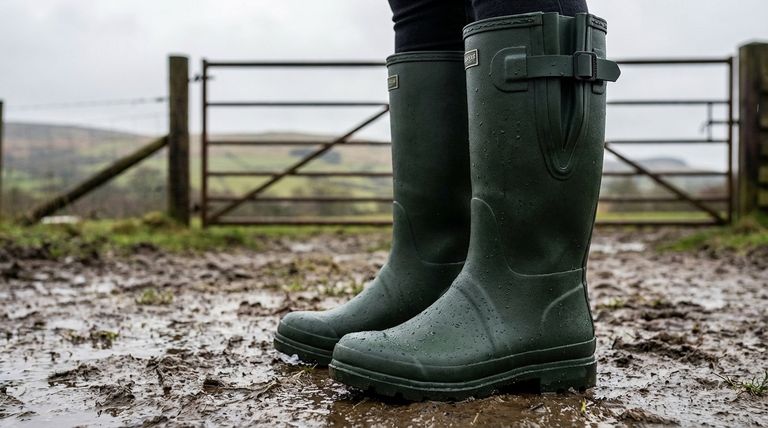
The Anatomy of a Superior Wellington Boot
Understanding the core components of a high-quality boot allows you to see past marketing and focus on genuine performance features. Each element serves a critical function in delivering protection and comfort.
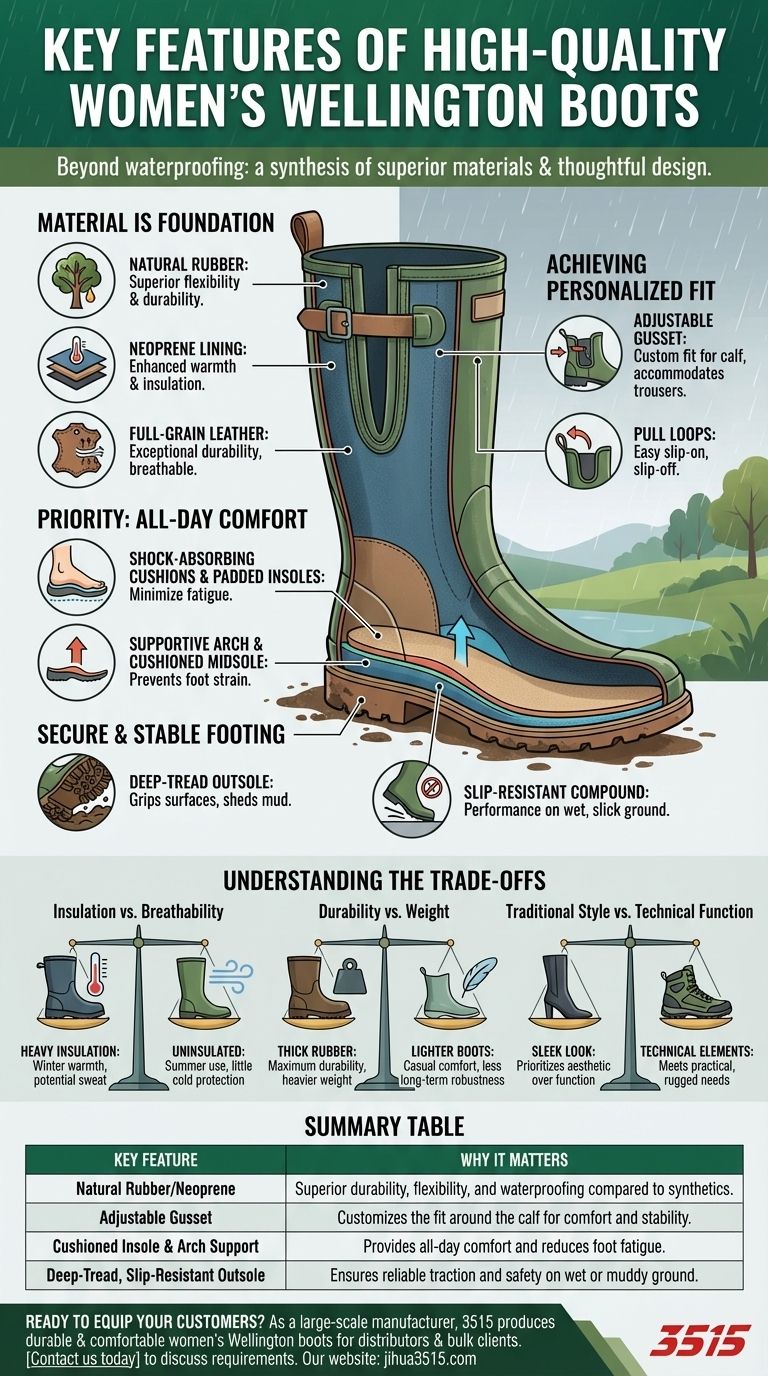
Material is the Foundation
The choice of material dictates the boot's durability, flexibility, and waterproofing integrity.
Natural rubber is the gold standard for traditional Wellingtons. It offers superior flexibility and durability compared to cheaper synthetic plastics, which can crack over time.
For enhanced warmth and flexibility, many premium boots incorporate neoprene. This material provides excellent insulation, making it ideal for colder climates.
Specialized models may use full-grain leather, which offers exceptional durability and breathability but requires more maintenance to retain its water resistance.
Prioritizing All-Day Comfort
A boot that isn't comfortable is one you won't wear. High-quality designs integrate features that support your foot for extended periods.
Shock-absorbing cushions and padded insoles are critical for minimizing fatigue, especially when walking on hard or uneven ground.
A supportive arch and a cushioned midsole prevent foot strain, transforming the boot from a simple rain cover into a functional piece of footwear.
Ensuring a Secure and Stable Footing
Traction is a non-negotiable safety feature, particularly in wet or muddy conditions.
Look for deep tread patterns or lugs on the outsole. These channels are designed to grip surfaces and shed mud and debris effectively, reducing the risk of slipping.
The sole material itself should be a slip-resistant compound designed for performance on slick surfaces.
Achieving a Personalized Fit
A poor fit can lead to chafing and instability. The best boots offer features that adapt to your body.
An adjustable gusset on the side of the boot is a hallmark of a premium design. This feature allows you to customize the fit around your calf, accommodating different sizes and allowing you to tuck in trousers.
Simple but effective pull loops make the slip-on, slip-off design much easier to manage.
Understanding the Trade-offs
No single boot is perfect for every situation. Choosing the right one means understanding the inherent compromises in design.
Insulation vs. Breathability
Heavily insulated boots with thick neoprene linings are excellent for winter but can cause your feet to sweat excessively in milder weather.
Conversely, uninsulated rubber boots are great for summer rain but offer little protection from the cold. Look for breathable linings if you plan to wear them in varied conditions.
Durability vs. Weight
Thicker, natural rubber construction offers maximum durability for rigorous work. However, this often comes at the cost of increased weight.
Lighter boots may be more comfortable for casual walking, but they may not withstand the demands of heavy-duty use over the long term.
Traditional Style vs. Technical Function
Some fashion-oriented Wellingtons prioritize a sleek look over functional elements.
This can mean a shallower tread, a less durable material, or the absence of an adjustable gusset. Always evaluate whether the boot's technical features meet your practical needs.
Making the Right Choice for Your Needs
Select your boots based on their intended use to ensure you get the performance and comfort you require.
- If your primary focus is all-day work or walking: Prioritize boots with robust arch support, a shock-absorbing midsole, and a deep, slip-resistant tread.
- If your primary focus is cold-weather use: Look for a neoprene lining or other dedicated insulation of at least 3mm for effective warmth.
- If your primary focus is a secure fit for varied activities: An adjustable gusset is non-negotiable to accommodate different calf sizes and clothing layers.
- If your primary focus is occasional, light-duty use: A standard natural rubber boot with a decent tread is perfectly sufficient without needing premium cushioning features.
Armed with this understanding, you can confidently select a boot that delivers protection, comfort, and lasting value.
Summary Table:
| Key Feature | Why It Matters |
|---|---|
| Natural Rubber/Neoprene | Superior durability, flexibility, and waterproofing compared to synthetics. |
| Adjustable Gusset | Customizes the fit around the calf for comfort and stability. |
| Cushioned Insole & Arch Support | Provides all-day comfort and reduces foot fatigue. |
| Deep-Tread, Slip-Resistant Outsole | Ensures reliable traction and safety on wet or muddy ground. |
Ready to equip your customers with superior Wellington boots?
As a large-scale manufacturer, 3515 produces a comprehensive range of durable and comfortable footwear for distributors, brand owners, and bulk clients. Our production capabilities encompass all types of women's Wellington boots, tailored to your specific market needs—from rugged work boots to stylish, functional designs.
Contact us today to discuss your requirements and discover how we can add value to your product line.
Visual Guide
Related Products
- Durable Waterproof Rain Boots | Custom Manufacturer for Wholesale & Brands
- Wholesale Women's Leather Derby Shoes Custom Factory Production
- Wholesale Classic Leather Lace-Up Ankle Boots for Brand Manufacturing
- Durable Goodyear Welt Leather Work Boots for Wholesale & Private Label
- Durable Moc-Toe Wedge Work Boots | Wholesale Manufacturing for Brands
People Also Ask
- What are the main materials for waterproof rain boots? Choose the Right Material for Durability & Comfort
- What is the overall recommendation for choosing rain boot materials? A Guide to Rubber vs. PVC
- How does boot height affect waterproofing? Choose the Right Height for Ultimate Protection
- Why are rain boots more flexible and comfortable than snow boots? The Key Differences Explained
- What are the best types of shoes for different gardening conditions? Find Your Perfect Match.


















