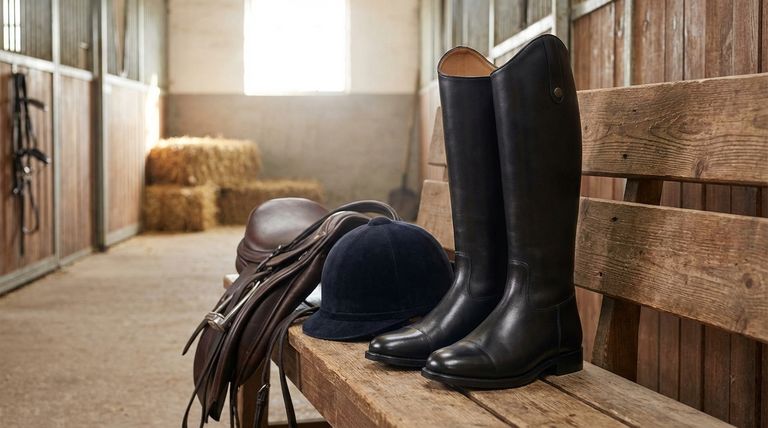
At its core, a classic riding boot is defined by four key features: a tall shaft, a sturdy toe, a distinct heel, and a smooth sole. Each element is engineered not for fashion, but for the specific demands of safety and performance when interacting with a horse and saddle.
The design of a traditional riding boot is a masterclass in functional minimalism. Every feature exists to solve a specific problem, primarily to protect the rider's leg from the saddle and ensure the foot can safely engage with and disengage from the stirrup.
The Anatomy of a Riding Boot: Form Follows Function
Understanding a riding boot requires looking at each component as a piece of safety equipment. The classic design has been refined over centuries to mitigate the inherent risks of equestrian activities.
The High Shaft
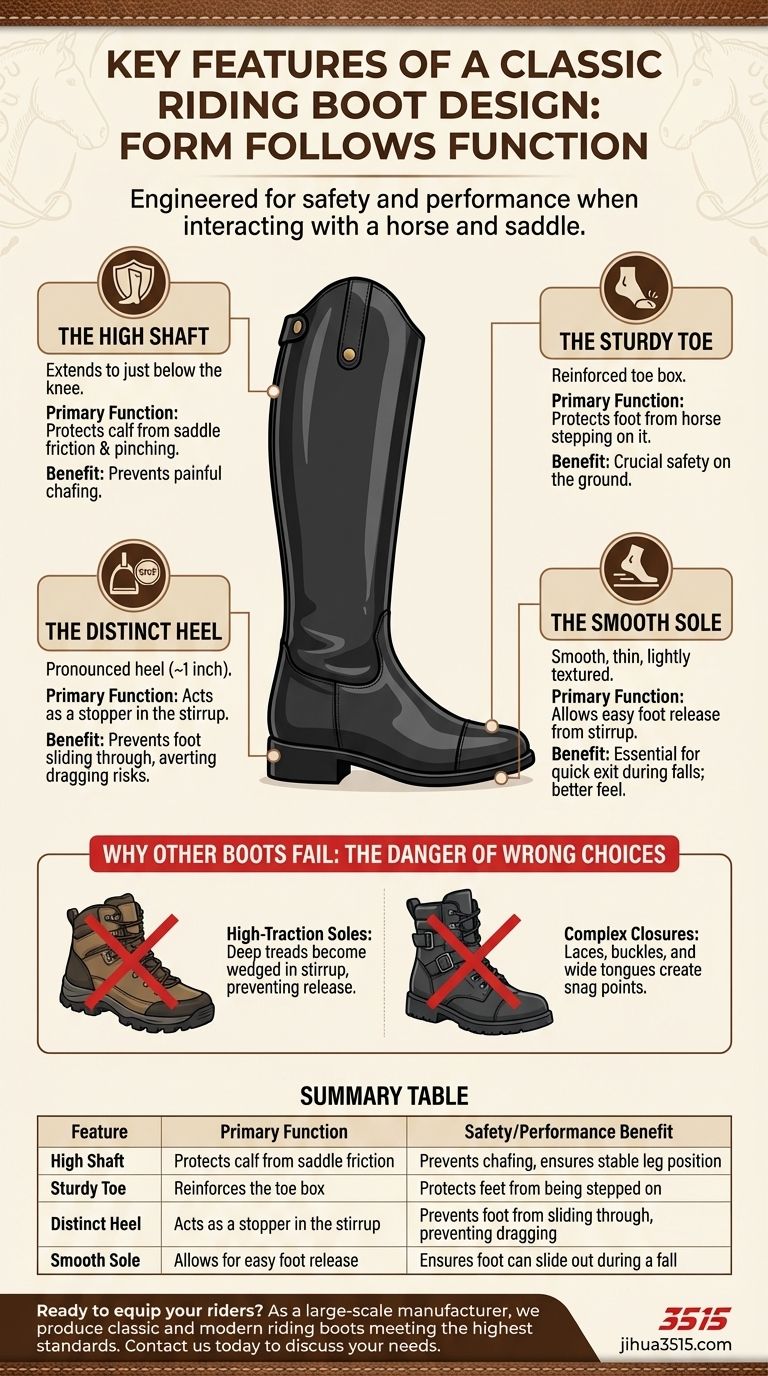
The shaft of the boot extends high up the leg, often to just below the knee.
Its primary purpose is to protect the rider's calf from the friction and pinching of the saddle's leather stirrup straps, preventing painful chafing during a ride.
The Sturdy Toe
A riding boot features a reinforced and sturdy toe box.
This is a crucial safety feature for when the rider is on the ground. It helps protect the foot from being stepped on by the horse, a significant and common risk.
The Distinct Heel
Perhaps the most critical safety feature is the pronounced heel, typically measuring about one inch.
This heel acts as a stopper, physically preventing the rider's foot from accidentally sliding all the way through the stirrup. This helps avert a dangerous scenario where a rider could be caught and dragged in the event of a fall.
The Smooth Sole
The sole of a riding boot is intentionally smooth or very lightly textured. It is also relatively thin.
This design ensures the foot can easily slide out of the stirrup when necessary, especially during a fall. A deep-treaded sole could get caught, creating a life-threatening situation. The thinness also allows for better feel and communication with the stirrup.
Understanding the Trade-offs: Why Other Boots Fail
The specific features of a riding boot become clearer when contrasted with footwear that is unsuitable and dangerous for riding. The wrong boot choice introduces unnecessary risk.
The Danger of High-Traction Soles
Boots designed for hiking or work have deep, aggressive treads for grip.
This very feature makes them hazardous for riding. The heavy tread can easily become wedged in the stirrup, making it impossible for the foot to release during an emergency.
The Problem with Laces and Deviations
Traditional riding boots have minimal lacing or embellishments, especially around the ankle and instep.
While some modern boots incorporate more complex closures, like the multiple eyelets seen in some Chukka variations, the classic principle is simplicity. Excessive laces, buckles, or wide tongues can create potential snag points on the stirrup or saddle gear.
Making the Right Choice for Your Goal
Selecting a boot means prioritizing features based on your primary needs as a rider.
- If your primary focus is safety: The two non-negotiable features are the distinct heel and the smooth sole, as they directly address the most serious risks.
- If your primary focus is comfort and performance: The high shaft is essential for protecting your leg and allowing for a stable, comfortable leg position.
- If your primary focus is groundwork and handling: A sturdy, reinforced toe is critical for protecting your feet while leading or grooming the horse.
Ultimately, every element of a classic riding boot is a direct answer to the functional demands of the sport, making it an indispensable piece of specialized equipment.
Summary Table:
| Feature | Primary Function | Safety/Performance Benefit |
|---|---|---|
| High Shaft | Protects the calf from saddle friction | Prevents chafing, ensures stable leg position |
| Sturdy Toe | Reinforces the toe box | Protects feet from being stepped on by the horse |
| Distinct Heel | Acts as a stopper in the stirrup | Prevents foot from sliding through, preventing dragging |
| Smooth Sole | Allows for easy foot release | Ensures foot can slide out of the stirrup during a fall |
Ready to equip your riders with the perfect blend of safety and performance?
As a large-scale manufacturer, 3515 produces a comprehensive range of classic and modern riding boots for distributors, brand owners, and bulk clients. Our expertise ensures every pair meets the highest standards of functional design and durability.
Contact us today to discuss your specific needs and discover how we can bring your footwear vision to life.
Visual Guide
Related Products
- Heavy-Duty Goodyear Welted Pull-On Safety Rigger Boot
- Wholesale High-Traction Camo Boots - Custom Manufacturer for Brands
- Premium Wholesale Tactical Style Safety Shoes Boots with Quick Lacing
- Wholesale Tactical Boots High-Traction & Reflective for Bulk & Brand Orders
- Durable Leather High-Ankle Tactical Boots for Wholesale & Custom Manufacturing
People Also Ask
- What are the key elements of quality boot construction? Ensure Longevity & Performance
- Are Goodyear welted boots worth it? The Ultimate Guide to Lifelong Footwear
- What is a Goodyear welt on a boot? The Secret to Durable, Repairable Footwear
- What makes Goodyear Welt boots suitable for harsh environments? Unmatched Durability & Repairability
- What additional high-quality materials are used in Goodyear Welt boots? A Guide to Advanced Components