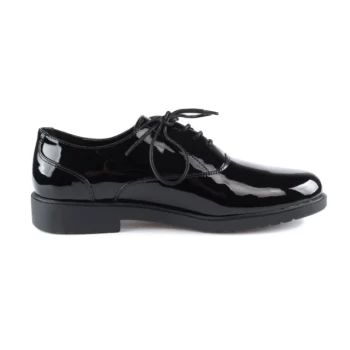
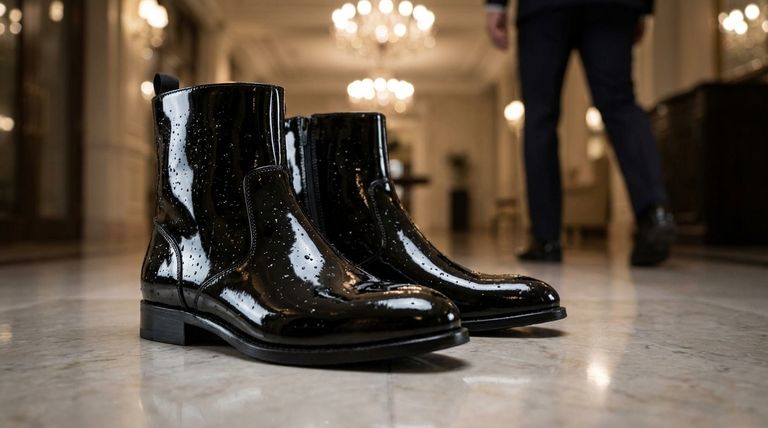
Patent leather boots are known for their signature high-gloss, mirror-like finish. This distinctive look is achieved by applying a varnish or plastic coating to real leather, creating a completely smooth, shiny, and water-resistant surface. Originally developed for formal wear, their unique appearance has made them a lasting staple in both fashion and dress footwear.
The core appeal of patent leather lies in its striking visual polish and easy-to-clean surface. However, this comes at the cost of the natural breathability and foot-molding flexibility found in traditional, uncoated leather boots.
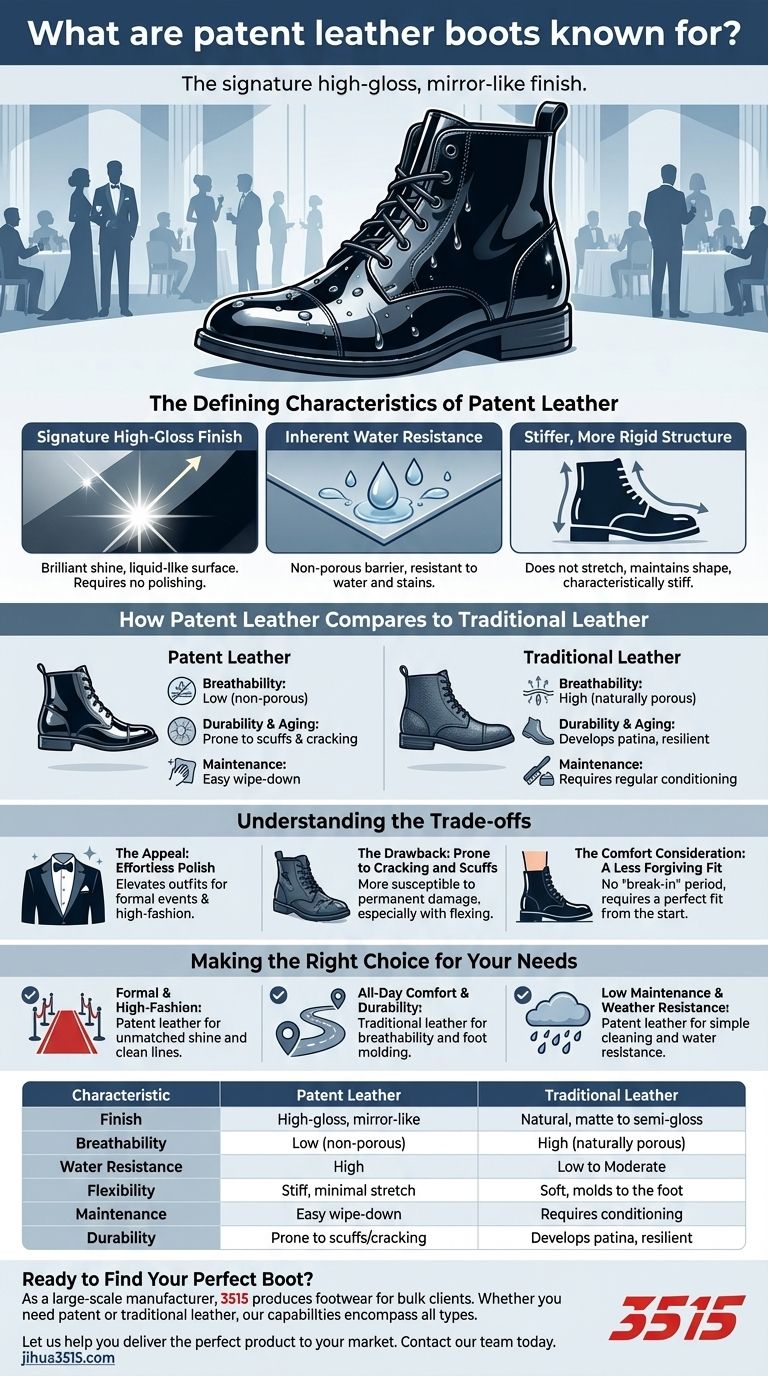
The Defining Characteristics of Patent Leather
Patent leather isn't a different type of hide but rather a unique finishing process. This finish dictates its primary characteristics, setting it apart from other leather types like full-grain or suede.
The Signature High-Gloss Finish
The most recognizable trait is its brilliant shine. The varnish coating creates a smooth, liquid-like surface that reflects light, providing a formal and eye-catching appearance that requires no polishing.
Inherent Water Resistance
The plasticized coating acts as a non-porous barrier over the leather hide. This makes patent leather boots naturally resistant to water and helps protect them from stains, a functional benefit for damp conditions.
A Stiffer, More Rigid Structure
The finishing process gives patent leather a characteristically stiff feel. Unlike untreated leather, it does not stretch or soften significantly with wear, maintaining its original shape over time.
How Patent Leather Compares to Traditional Leather
Understanding the differences between patent and traditional leather is key to choosing the right boot for your needs. The trade-offs center on aesthetics versus functional comfort.
Breathability vs. Impermeability
Traditional leather is a naturally porous material that breathes, allowing moisture from your feet to escape. The coating on patent leather seals these pores, significantly reducing breathability.
Durability and Aging
Full-grain leather is prized for its resilience and ability to develop a unique patina over time with proper care. Patent leather does not age in the same way; its durability is tied to the resilience of its coating, which can be prone to scuffs or cracking.
Maintenance and Care
While traditional leather requires regular conditioning to prevent it from drying out, patent leather is famously easy to maintain. A simple wipe-down is often all that is needed to restore its shine.
Understanding the Trade-offs
Choosing patent leather involves weighing its unique aesthetic benefits against its practical limitations.
The Appeal: Effortless Polish
The primary advantage of patent leather is its polished look. It elevates an outfit instantly, making it a go-to choice for formal events, dress uniforms, and high-fashion ensembles where a sharp appearance is paramount.
The Drawback: Prone to Cracking and Scuffs
The glossy finish, while beautiful, is more susceptible to permanent damage than traditional leather. Scuffs can be very noticeable, and repeated flexing can cause the coating to crack over time, especially around the ankle and toe box.
The Comfort Consideration: A Less Forgiving Fit
Because patent leather doesn't stretch and mold to your foot, achieving a perfect fit from the very beginning is critical. There is no "break-in" period that will soften the material for a custom fit.
Making the Right Choice for Your Needs
Your ideal boot depends entirely on your priority, whether it's style, long-term comfort, or rugged durability.
- If your primary focus is formal events or a high-fashion statement: Patent leather's unmatched shine and clean lines make it the superior choice for a polished, deliberate look.
- If your primary focus is all-day comfort and long-term durability: A high-quality full-grain leather boot will offer better breathability and will mold to your foot over time.
- If your primary focus is low maintenance and weather resistance: Patent leather provides excellent water resistance and is simple to wipe clean, making it a practical choice for occasional wear in damp conditions.
Ultimately, choosing patent leather is about prioritizing a distinct, polished aesthetic over the adaptive comfort and ruggedness of traditional leather.
Summary Table:
| Characteristic | Patent Leather | Traditional Leather |
|---|---|---|
| Finish | High-gloss, mirror-like | Natural, matte to semi-gloss |
| Breathability | Low (non-porous coating) | High (naturally porous) |
| Water Resistance | High | Low to Moderate (requires treatment) |
| Flexibility | Stiff, minimal stretch | Soft, molds to the foot |
| Maintenance | Easy wipe-down | Requires regular conditioning |
| Durability | Prone to scuffs/cracking | Develops a patina, more resilient |
Ready to Find Your Perfect Boot?
As a large-scale manufacturer, 3515 produces a comprehensive range of footwear for distributors, brand owners, and bulk clients. Whether you need the striking, formal look of patent leather or the rugged comfort of traditional leather boots, our production capabilities encompass all types of shoes and boots to meet your exact specifications.
Let us help you deliver the perfect product to your market. Contact our team today to discuss your manufacturing needs.
Visual Guide
Related Products
- Wholesale Patent Oxford Dress Shoes | Custom & Bulk Manufacturing
- Durable Leather Work Boots for Wholesale & Custom OEM Manufacturing
- Durable Leather Work Boots for Wholesale & Custom Manufacturing
- Durable Goodyear Welt Leather Work Boots for Wholesale & Private Label
- Durable Leather Work Boots Wholesale Manufacturer & Custom Factory
People Also Ask
- What are the key characteristics of Oxford dress shoes? A Guide to Timeless Formal Footwear
- How do Oxfords and Derbies differ in terms of lacing and formality? A Guide to Choosing the Right Shoe
- What is the origin of the Oxford shoe? From 1800s University Boots to Modern Elegance
- How do Oxford Shoes differ from other casual shoes? The Ultimate Guide to Lacing & Formality
- What makes Oxford shoes suitable for business casual settings? Master the Art of Professional Style