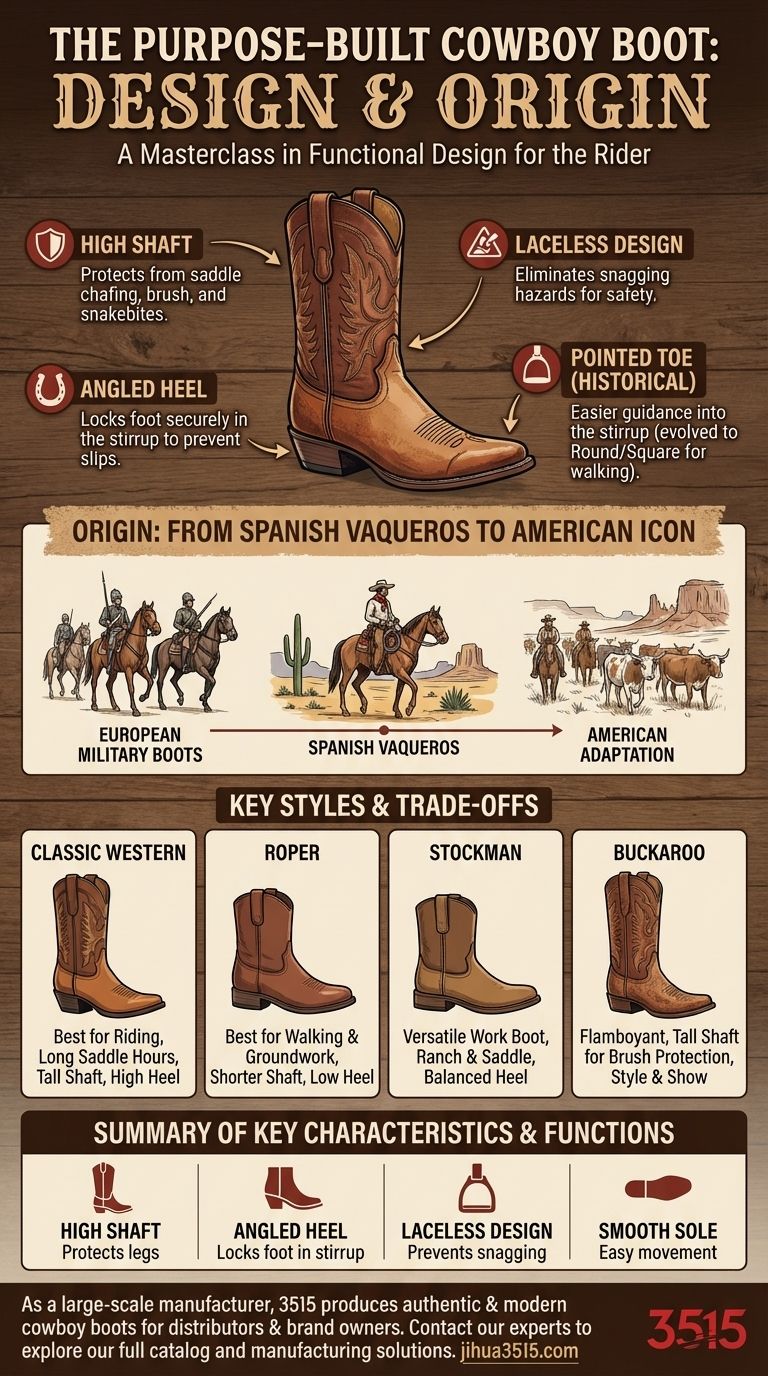
At their core, cowboy boots are a purpose-built tool for horseback riding. Their key characteristics include a high shaft to protect the leg, a distinct heel to secure the foot in a stirrup, a smooth sole for easy movement, and a laceless design for safety. Originating from the riding boots of Spanish vaqueros, which themselves evolved from European military footwear, the American cowboy boot was perfected for the specific demands of managing cattle from a saddle.
The cowboy boot is a masterclass in functional design. Every iconic element, from its tall shaft to its angled heel, was engineered not for style, but for the safety and efficiency of a rider, creating an enduring silhouette where form is a direct result of function.
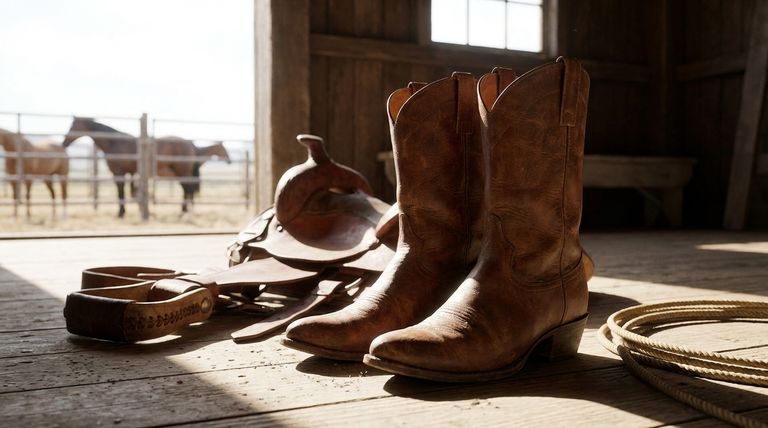
The Anatomy of a Purpose-Built Tool
To understand the cowboy boot, you must first see it as a piece of essential equipment. Each component was meticulously refined to solve a specific problem faced by a person working on horseback.
The High Shaft
The tall leather shaft, extending to the mid-calf, is the boot's most visible feature. Its primary job is to shield the rider's legs from chafing against the saddle and stirrup leathers. It also provides crucial protection from brush, thorns, and snakebites when navigating rough terrain.
The Angled Heel
The boot's heel, typically at least an inch high and angled forward (an "underslung" heel), is a critical safety feature. It is designed to prevent the rider's foot from accidentally slipping all the way through the stirrup, which could be catastrophic in a fall. This design securely "locks" the heel onto the back of the stirrup.
The Toe Shape
Historically, cowboy boots featured a pointed or narrow toe. This wasn't a fashion choice; it helped a rider easily guide their foot into the stirrup without looking down. Over time, as boots became popular for walking, rounded and square toes were introduced to provide more room and comfort.
The Laceless Design
The complete absence of laces is another intentional safety design. Laces can easily snag on branches or, more dangerously, get caught in a stirrup during a fall, dragging the rider. The simple pull-on style eliminates this hazard entirely.
From Spanish Vaqueros to American Icon
The cowboy boot didn't appear overnight. Its lineage is a direct reflection of the history of cattle ranching in the Americas.
European and Spanish Roots
The boot's earliest ancestors were European military riding boots. Spanish colonists and their vaqueros (the original cowboys) brought this style of footwear to the Americas, adapting it for the rugged work of herding cattle on vast, open ranges.
The American Adaptation
Following the American Civil War, the cattle industry boomed, and the boot was perfected in towns like Coffeyville, Kansas. Bootmakers refined the design, creating what we now recognize as the classic "Western" boot, perfectly suited for the long hours of the American cattle drive.
Understanding the Key Styles and Trade-offs
While all cowboy boots share a common DNA, distinct styles have emerged for different tasks, each with its own set of trade-offs between riding function and walking comfort.
The Classic Western
This is the quintessential cowboy boot. It features a tall shaft (12 inches or more), a high and sharply angled "cowboy" heel, and traditionally a pointed or narrow toe. It is the ultimate design for spending long hours in the saddle.
The Roper
Developed for rodeo competitors in events like calf roping, this style prioritizes the ability to run and work on the ground. It has a much shorter shaft, a low and squared-off "roper" heel, and a rounded or square toe, making it significantly more comfortable for walking.
The Stockman
The Stockman is a hybrid designed for ranchers who are frequently in and out of the saddle. It typically has a lower, broader heel than a Classic Western but is more substantial than a Roper's heel. It balances riding security with walking practicality.
The Buckaroo
The Buckaroo is the most flamboyant style, characterized by an extremely tall shaft (often over 14 inches) with elaborate, decorative stitching. The height offers maximum protection for riders in the tall brush of the Great Basin region, but its primary role today is often for show and style.
Making the Right Choice for Your Goal
Selecting a cowboy boot means aligning its specific design features with your intended use.
- If your primary focus is horseback riding: Choose a Classic Western boot for its superior safety and functional design in the stirrup.
- If your primary focus is all-day walking and comfort: A Roper or a modern Square Toe boot is the ideal choice due to the lower heel and wider toe box.
- If your primary focus is a versatile work boot: Look to the Stockman style, which offers a practical compromise between riding and groundwork.
- If your primary focus is making a bold fashion statement: The Classic Western or an ornate Buckaroo in an exotic leather will deliver the most iconic look.
Ultimately, the cowboy boot endures because its design is an authentic reflection of a specific, demanding purpose.
Summary Table:
| Key Characteristic | Primary Function |
|---|---|
| High Shaft | Protects legs from saddle chafing, brush, and snakebites. |
| Angled Heel | Locks foot securely in the stirrup to prevent dangerous slips. |
| Laceless Design | Eliminates snagging hazards for rider safety. |
| Smooth Sole | Allows for easy foot movement in and out of stirrups. |
As a large-scale manufacturer, 3515 produces a comprehensive range of authentic and modern cowboy boots for distributors, brand owners, and bulk clients. Whether you need the classic riding performance of a Western boot or the all-day comfort of a Roper, our production capabilities ensure top-quality footwear tailored to your market. Let's discuss your specific needs — contact our experts today to explore our full catalog and manufacturing solutions.
Visual Guide
Related Products
- Durable Spiked Camouflage Boots Wholesale & Factory Production
- Wholesale High-Traction Camo Boots - Custom Manufacturer for Brands
- High-Traction Suede Tactical Boots Wholesale & Custom Manufacturing
- Wholesale Lightweight Tactical Boots Custom Manufacturer for Desert & Combat Use
- Durable Leather Tactical Boots Wholesale & Custom Manufacturing for Brands
People Also Ask
- How does boot height affect waterproofing? Choose the Right Height for Ultimate Protection
- What are the best types of shoes for different gardening conditions? Find Your Perfect Match.
- What role does camouflage play in hunting boots? It's More Than Just a Pattern
- What should you look for to ensure boots are fully waterproof? The Essential 2-Part System
- How does boot construction affect waterproofing? The Science Behind Truly Dry Feet