
At their core, American western-style boots are defined by their laceless, high-shaft design, an angled "riding" heel, and a distinct toe shape. These characteristics originate from their functional purpose as equipment for horseback riding and ranch work, but have evolved to become iconic elements of style and durability.
The essential identity of a western boot lies in its unique fusion of purpose-built design for horsemanship and expressive, decorative craftsmanship. This blend of function and form is what separates it from other types of rugged footwear.
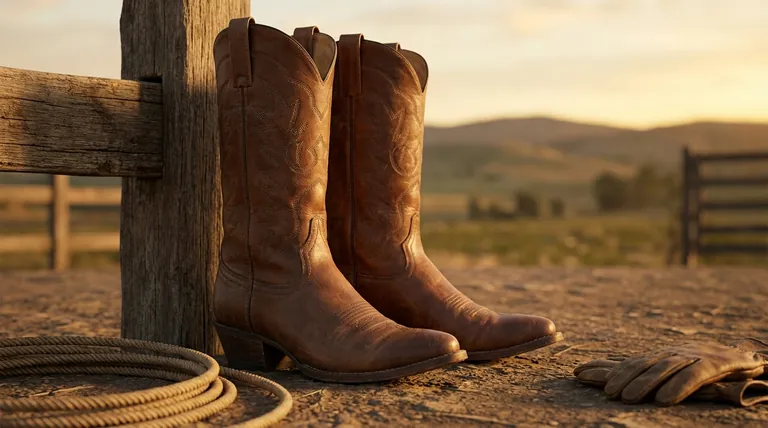
The Anatomy of a Western Boot
To truly understand what makes a western boot, you must look at its individual components, each with a specific and historical purpose.
The High Shaft and Pull-On Design
The shaft of a western boot typically rises to at least mid-calf. This height is not just for style; it was designed to protect the rider's legs from brush, rocks, and snake bites.
The laceless, pull-on design allows for a quick fit and, more importantly, ensures the boot can slip off easily if a rider falls and their foot gets caught in a stirrup, preventing serious injury.
The Angled Riding Heel
The heel is perhaps the most critical functional element. It is traditionally angled and tall (often 1.5 inches or more) to help secure the rider's foot in the stirrup, preventing it from sliding forward.
Heel designs vary, from a heavily angled and tapered "underslung" heel for riding to a wider, "blocky" heel on work-oriented models that provides more stability for walking.
The Distinctive Toe Shape
Western boot toes come in several shapes, each with its own history. Early boots often had a pointed or rounded toe to make it easier to slide the foot into a stirrup.
Today, you will find a wide variety of shapes, including pointed, rounded, and square toes, with the choice now being driven more by style and comfort than pure function.
Materials and Stitching
Authentic western boots are crafted from high-quality leather, ranging from common cowhide to exotic skins. Durability is a primary concern.
The decorative stitching seen on the shaft is not purely aesthetic. It also serves a structural purpose, helping the leather shaft maintain its shape and stiffness without collapsing.
Western Boot vs. Other Work Boots
The western boot silhouette is iconic, but it's important to distinguish it from other forms of functional footwear.
Traditional vs. Western Work Boots
A traditional western boot is built for riding, often featuring a smooth leather sole.
A western work boot maintains the classic shape but incorporates features from general work boots. This can include durable lug soles for traction, protective safety toes (steel or composite), and enhanced water resistance for demanding jobs.
How They Differ from Packer and Farm Boots
Packer boots share a rugged heritage but are easily identified by their sturdy lacing system. This lacing provides superior ankle support, making them ideal for work on uneven terrain where a pull-on boot might feel less secure.
Farm boots are built with a singular focus on protection in agricultural environments. Their key features are being waterproof and chemical-resistant, often with robust, slip-resistant soles and safety toes.
Understanding the Trade-offs
Choosing a western boot involves balancing its intended function with its aesthetic appeal. No single boot is perfect for every situation.
Function vs. Fashion
A classic, smooth-soled western boot is excellent in the stirrup but can lack traction on wet or uneven ground. A western work boot with a lug sole sacrifices some traditional style for superior all-terrain performance.
Protection and Durability
While all western boots are designed to be durable, they may lack the specific safety features required for certain jobs. If you need protection from impact or punctures, you must specifically seek out models with safety toe caps and midsole penetration resistance.
Comfort and Maintenance
High-quality leather boots offer exceptional long-term comfort but often require a break-in period. They also demand proper care—cleaning and conditioning—to ensure they last for years, as intended.
Making the Right Choice for Your Purpose
Your primary goal should dictate the type of boot you choose.
- If your primary focus is horseback riding or authentic style: Select a traditional western boot with a smooth leather sole and an angled riding heel.
- If your primary focus is demanding outdoor work: Choose a western work boot that adds a durable, high-traction sole and certified safety features to the classic silhouette.
- If your primary focus is maximum ankle support on rugged terrain: Consider a lace-up packer boot, which offers a similar aesthetic with enhanced stability.
Understanding these core characteristics empowers you to select a boot that is not just a piece of footwear, but a tool perfectly suited to your needs.
Summary Table:
| Key Characteristic | Primary Function | Common Variations |
|---|---|---|
| High Shaft | Leg protection, easy removal | Mid-calf height, decorative stitching |
| Angled Riding Heel | Secures foot in stirrup | Underslung (riding), block (work) |
| Distinctive Toe | Easy stirrup entry | Pointed, rounded, square |
| Pull-On Design | Quick fit, safety | Laceless, snug fit |
Need durable, high-quality western boots for your customers? As a large-scale manufacturer, 3515 produces a comprehensive range of authentic western and work boots for distributors, brand owners, and bulk clients. Our expertise ensures every pair combines iconic style with the rugged durability your market demands. Contact us today to discuss your production needs and elevate your footwear offerings!
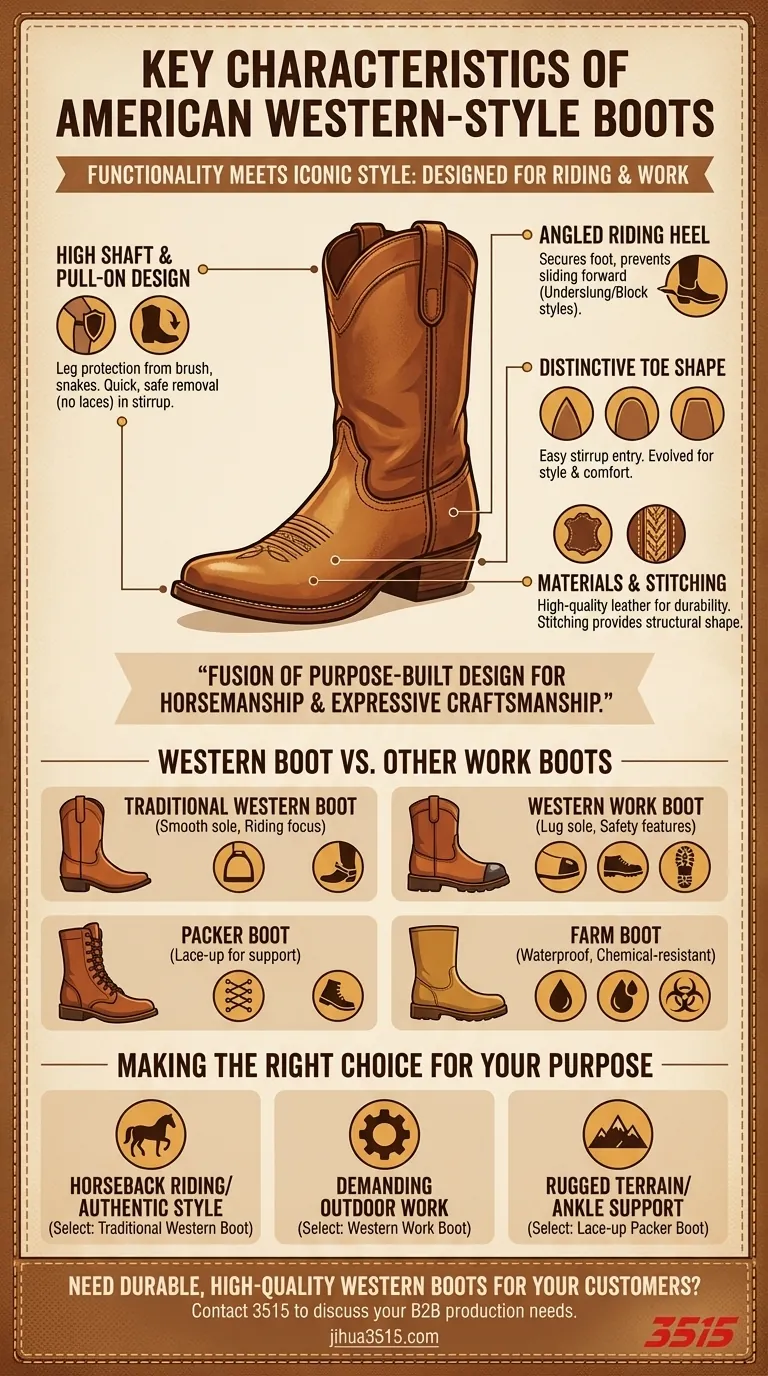
Visual Guide
Related Products
- High-Traction Suede Tactical Boots Wholesale & Custom Manufacturing
- Durable Moc-Toe Wedge Work Boots | Wholesale Manufacturing for Brands
- Wholesale High-Traction Camo Boots - Custom Manufacturer for Brands
- Wholesale Durable Mid-Cut Tactical Boots for Custom & Private Label Brands
- Durable High-Ankle Tactical Boots for Wholesale & Custom Manufacturing
People Also Ask
- Why is sequential analysis utilized to evaluate tactical boots? Master Dynamic Boot Development and Ergonomic Performance
- How does the material of tactical boots affect their performance? Choose the Right Material for Your Mission
- How do tactical boots differ from regular boots? Performance, Durability & Design Explained
- How do military uniforms and tactical boots impact the prediction of thermal risk? Essential Safety Insights
- What are the benefits of integrating FES and sEMG into tactical boots? Safety, Reliability & Field-Ready Performance

















