First, I'm deconstructing the task. I have to address both the obvious question – "What are the benefits?" – and the underlying one: "Are these boots right for me?" I'll do this by weighing the pros and cons and offering practical advice. My writing will be clear, objective, and easy to scan, with bold headings and short paragraphs.
Next, I'm analyzing the provided information. The sources generally agree on some things: PVC boots are waterproof, lightweight, and affordable. They often resist chemicals and are easy to clean. However, there are some contradictions, particularly concerning comfort and durability. Some say PVC is soft; others say it's stiff. One source explicitly mentions that PVC can lose its shape and deteriorate faster than rubber. That's a crucial point.
Here's how I plan to structure my response:
- Hook: I'll start by quickly highlighting the primary benefits.
- Core Takeaway Box: Then, I'll succinctly summarize the key benefits and the important trade-offs, like durability, to manage expectations.
- Main Body: I'll detail the core protective qualities, practical advantages, and most importantly, I'll delve into the trade-offs: PVC's stiffness and potential durability issues compared to other materials like rubber.
- Concluding Advice: Finally, I'll offer specific recommendations based on different user priorities (e.g., budget, chemical resistance, all-day comfort).
The key is to synthesize the information, not just repeat it. I'll address contradictions head-on, adding value with my expertise. For example, I'll clarify the difference between the softness of the material and the stiffness of the boot. The trade-offs section will be critical. I'm going to explicitly acknowledge that PVC may not be the longest-lasting option, but it's an excellent choice for specific use cases. Ultimately, the goal is to empower the user to make the right choice for their work environment. The key benefits of PVC work boots are their complete waterproof protection, resistance to many chemicals, lightweight design, and significant cost-effectiveness. These attributes make them a highly practical choice for a range of industries where keeping feet dry and safe from specific hazards is a primary concern.
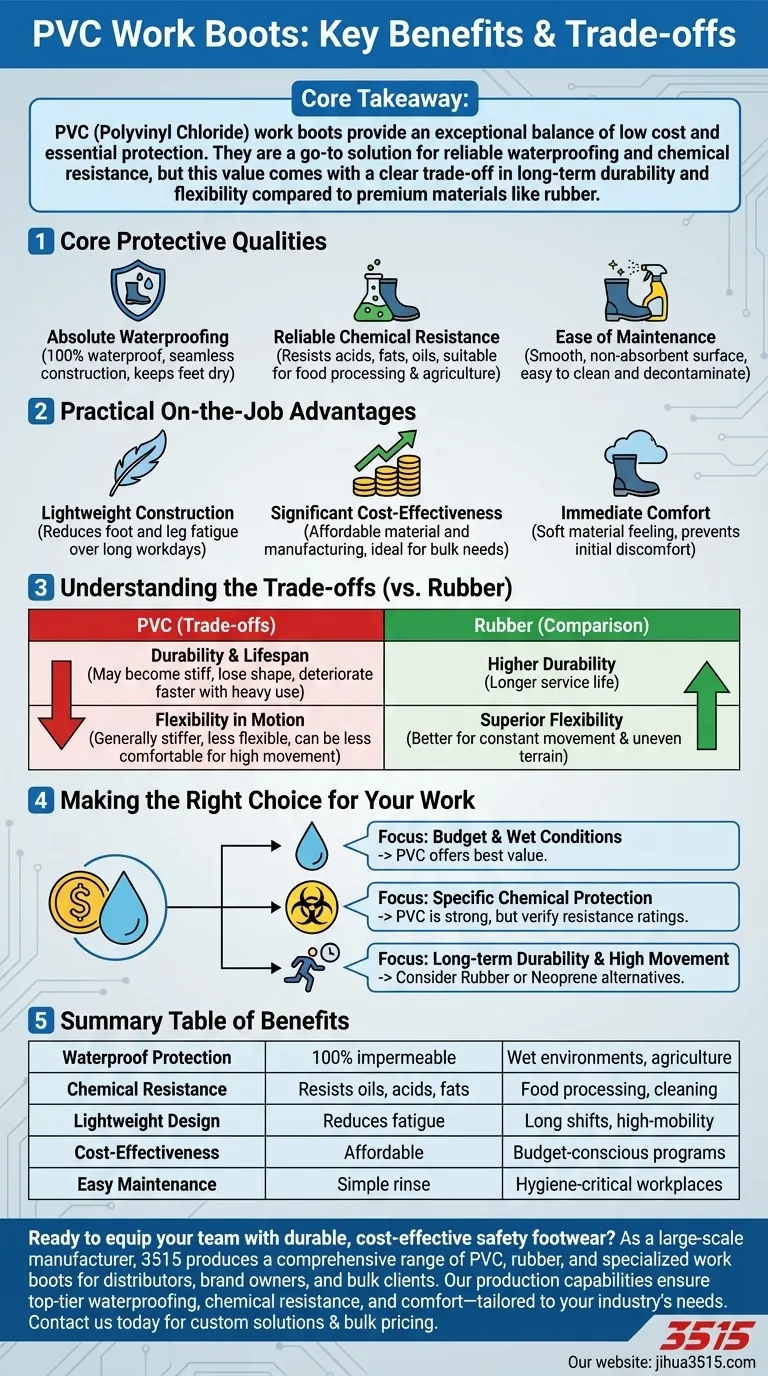
PVC (Polyvinyl Chloride) work boots provide an exceptional balance of low cost and essential protection. They are a go-to solution for reliable waterproofing and chemical resistance, but this value comes with a clear trade-off in long-term durability and flexibility when compared to premium materials like rubber.
Core Protective Qualities
The primary function of a work boot is protection, and PVC excels in specific environments due to its material composition.
Absolute Waterproofing
Because PVC is a non-porous plastic, it offers 100% waterproof protection. The seamless, molded construction of these boots ensures that water, mud, and other liquids cannot penetrate the material, keeping your feet completely dry.
Reliable Chemical Resistance
PVC naturally resists a variety of acids, fats, oils, and other chemicals. This makes it a suitable choice for work in food processing, agriculture, and industrial cleaning where such exposures are common.
Ease of Maintenance
The smooth, non-absorbent surface of PVC boots makes them extremely easy to clean and decontaminate. A simple rinse is often all that is needed to remove dirt and hazardous materials, ensuring better hygiene and safety.
Practical On-the-Job Advantages
Beyond pure protection, PVC boots offer practical benefits that impact daily work life, from physical comfort to financial accessibility.
Lightweight Construction
Compared to traditional leather or even some rubber boots, PVC is remarkably lightweight. This reduction in weight directly translates to less foot and leg fatigue over the course of a long workday.
Significant Cost-Effectiveness
One of the most compelling benefits of PVC is its affordability. The material and manufacturing processes are less expensive, making these boots a highly accessible option for individuals and companies needing to outfit a workforce without a large capital investment.
Immediate Comfort
The material itself is often described as soft, lacking the hard or rigid feel of some other boot materials. This can contribute to initial comfort and help prevent immediate discomfort or foot pain.
Understanding the Trade-offs
No material is perfect. To make an informed decision, it's crucial to weigh the advantages of PVC against its inherent limitations, especially when compared to materials like rubber.
Durability and Lifespan
The primary trade-off for PVC's low cost is its durability. Over time and with heavy use, PVC can become stiff, lose its original shape, and may deteriorate faster than premium rubber boots.
Flexibility in Motion
While the material can feel soft, PVC boots are generally stiffer and less flexible than their rubber counterparts. For jobs requiring constant squatting or walking on uneven terrain, this reduced flexibility can become a comfort issue.
Making the Right Choice for Your Work
Selecting the correct boot requires matching its characteristics to your specific job demands and priorities.
- If your primary focus is budget and wet-condition work: PVC offers the best value for keeping your feet dry without a significant financial investment.
- If your primary focus is protection from specific chemicals: PVC is a strong contender, but you must verify the boot's resistance rating for the specific chemicals you handle.
- If your primary focus is long-term durability and all-day comfort in high-movement roles: You should consider rubber or neoprene alternatives, which typically offer superior flexibility and a longer service life.
Ultimately, choosing the right boot means aligning its material strengths with the precise demands of your job.
Summary Table:
| Benefit | Key Feature | Ideal For |
|---|---|---|
| Waterproof Protection | 100% impermeable, seamless construction | Wet environments, agriculture, fisheries |
| Chemical Resistance | Resists oils, acids, and fats | Food processing, cleaning, industrial work |
| Lightweight Design | Reduces foot and leg fatigue | Long shifts, high-mobility tasks |
| Cost-Effectiveness | Affordable for individuals and bulk buyers | Budget-conscious safety programs |
| Easy Maintenance | Simple rinse cleans dirt and contaminants | Hygiene-critical workplaces |
Ready to equip your team with durable, cost-effective safety footwear?
As a large-scale manufacturer, 3515 produces a comprehensive range of PVC, rubber, and specialized work boots for distributors, brand owners, and bulk clients. Our production capabilities ensure top-tier waterproofing, chemical resistance, and comfort—tailored to your industry's needs.
Contact us today to discuss custom solutions, bulk pricing, and samples. Let's enhance your safety standards together.
Get a Quote & Discuss Your Needs
Visual Guide
Related Products
- Wholesale Customizable Safety Boots Durable & Protective Footwear Manufacturing
- Wholesale Heavy-Duty Waterproof Steel Toe Work Boots OEM Manufacturer
- Durable Leather Moc Toe Work Boots for Wholesale & Custom Manufacturing
- Durable Leather Work Boots for Wholesale & Custom Manufacturing
- Durable Leather Work Boots for Wholesale & Custom OEM Manufacturing
People Also Ask
- Why are industrial safety boots with steel toes necessary for machine operators? Essential Foot Protection for Safety
- What is the history of steel toe work boots? From German Invention to Modern Safety Standard
- What are the different types of steel toe work boots? Choose the Right Boot for Your Job
- What are the pros and cons of steel toe work boots? A Guide to Maximum Protection vs. Comfort
- What industries are safety toe work boots best suited for? Protect Your Feet in High-Risk Environments