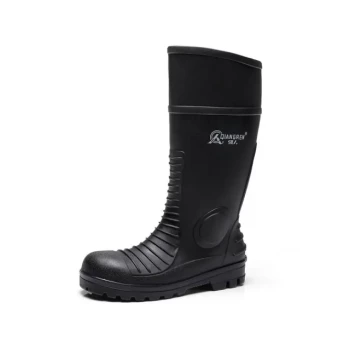
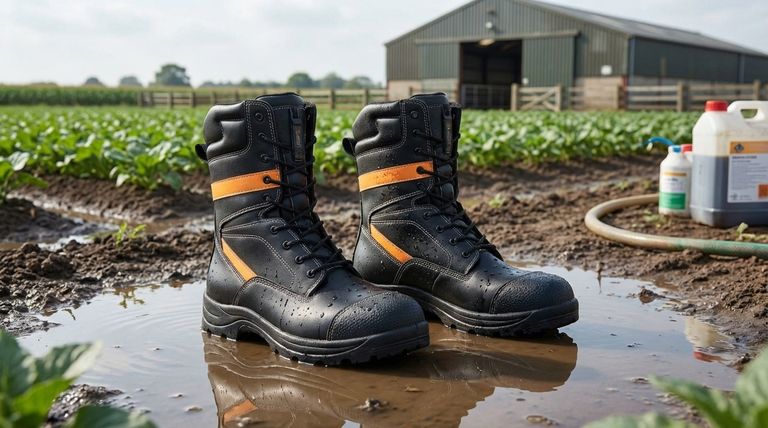
The key advantages of PVC work boots are their exceptional waterproofness, resistance to chemicals, and significantly lower cost compared to materials like rubber or neoprene. Their lightweight construction also makes them a practical choice for reducing fatigue during long periods of wear in wet or hazardous environments.
PVC work boots offer an unbeatable combination of affordability and specialized protection. They are the go-to solution for environments where water and chemical hazards are the primary concern, but this value comes with important trade-offs in long-term durability and flexibility.
The Core Strengths of PVC Boots
Polyvinyl chloride (PVC) is a synthetic plastic polymer with inherent properties that make it highly suitable for protective footwear in specific industries. These advantages are directly tied to the nature of the material itself.
### Unmatched Waterproof Protection
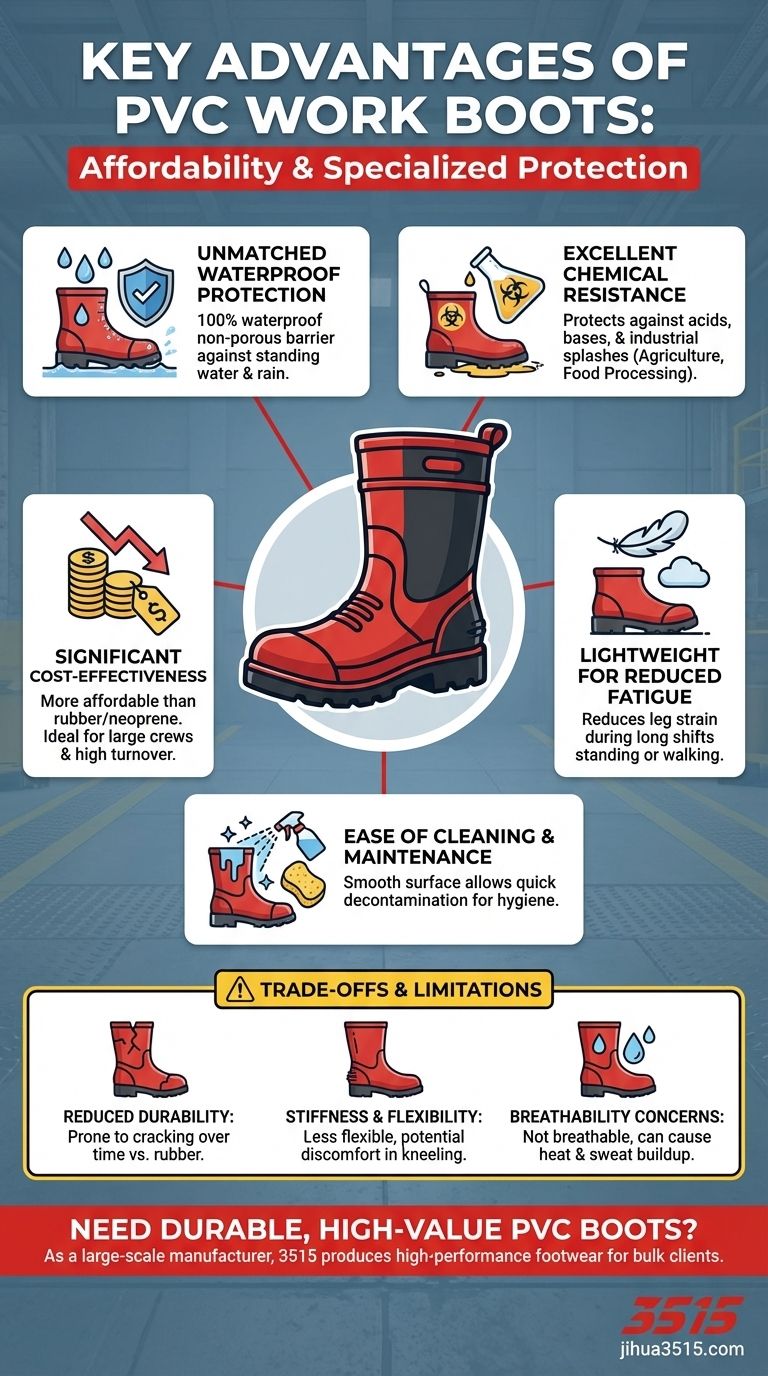
Because PVC is a non-porous plastic, boots made from it are 100% waterproof. This isn't just water resistance; the material forms a complete barrier, ensuring feet remain entirely dry in standing water or heavy rain.
### Excellent Chemical Resistance
PVC offers strong protection against a variety of chemicals, acids, and bases. This makes it a standard choice in agriculture, food processing, and industrial cleaning where incidental splashes are a daily risk.
### Significant Cost-Effectiveness
One of the most compelling advantages of PVC is its affordability. These boots are consistently less expensive than their rubber and neoprene counterparts, making them an excellent economical choice for large crews or for roles with high footwear turnover.
### Lightweight for Reduced Fatigue
PVC is a remarkably lightweight material. This reduces the strain and fatigue on your legs and feet, providing a clear benefit for anyone who spends the entire day standing or walking.
### Ease of Cleaning and Maintenance
The smooth, uniform surface of a PVC boot is incredibly easy to clean and decontaminate. A simple rinse is often all that is needed to remove mud, chemicals, and other contaminants, which is a critical feature for hygiene and safety.
Understanding the Trade-offs and Limitations
While PVC offers clear benefits, its advantages come with equally clear compromises. Understanding these limitations is critical to determining if it's the right material for your specific needs.
### Durability and Longevity
The primary trade-off for PVC's low cost is reduced durability. Compared to high-quality rubber, PVC is more prone to losing its shape, cracking, or deteriorating over time, especially with heavy, constant use.
### Flexibility and Stiffness
PVC is generally stiffer and less flexible than natural rubber. This can sometimes translate to less comfort during tasks that require frequent squatting or kneeling, as the material may not bend as easily with the foot.
### Breathability Concerns
Like any fully waterproof material, PVC is not breathable. In warm conditions or during strenuous activity, this can lead to an accumulation of sweat and heat inside the boot, potentially causing discomfort.
Making the Right Choice for Your Needs
Selecting the right boot material depends entirely on balancing your budget against the demands of your work environment.
- If your primary focus is budget and wet-environment protection: PVC is the ideal choice, offering reliable waterproofing and chemical resistance at the lowest price point.
- If your primary focus is long-term durability and flexibility: You should consider investing more in rubber boots, which will offer a longer lifespan and better comfort for active roles.
- If your primary focus is all-day comfort in varied temperatures: A boot with a breathable lining or a more flexible material like rubber may be a more suitable option than standard PVC.
Ultimately, PVC work boots provide essential protection for specific hazards in an incredibly cost-effective package.
Summary Table:
| Key Advantage | Description | Ideal For |
|---|---|---|
| 100% Waterproof | Non-porous PVC forms a complete barrier against water. | Work in standing water, rain, or wet conditions. |
| Chemical Resistance | Protects against acids, bases, and industrial splashes. | Agriculture, food processing, cleaning. |
| Cost-Effective | Significantly more affordable than rubber or neoprene. | Large crews, high turnover roles, budget-conscious buyers. |
| Lightweight | Reduces leg and foot fatigue during long shifts. | Jobs requiring all-day standing or walking. |
| Easy to Clean | Smooth surface allows for quick decontamination. | Environments where hygiene is a priority. |
Need Durable, High-Value PVC Work Boots for Your Team?
As a large-scale manufacturer, 3515 produces a comprehensive range of footwear, including high-performance PVC work boots for distributors, brand owners, and bulk clients. We deliver the unbeatable combination of affordability and specialized protection your business needs.
Contact 3515 today to discuss your requirements and get a competitive quote!
Visual Guide
Related Products
- Wholesale Customizable Safety Boots Durable & Protective Footwear Manufacturing
- Wholesale Heavy-Duty Waterproof Steel Toe Work Boots OEM Manufacturer
- Durable Leather Moc Toe Work Boots for Wholesale & Custom Manufacturing
- Durable Leather Work Boots for Wholesale & Custom Manufacturing
- Durable Leather Work Boots for Wholesale & Custom OEM Manufacturing
People Also Ask
- Why are industrial safety boots with steel toes necessary for machine operators? Essential Foot Protection for Safety
- What is the history of steel toe work boots? From German Invention to Modern Safety Standard
- What are the different types of steel toe work boots? Choose the Right Boot for Your Job
- What are the pros and cons of steel toe work boots? A Guide to Maximum Protection vs. Comfort
- What common features do safety toe work boots share regardless of style? Essential Protection Explained