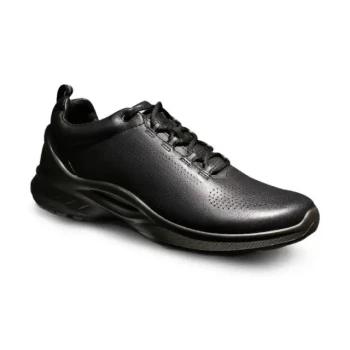
To understand a hiking shoe, think of it not as a single item, but as an integrated system of three core components working together. The main structural parts are the Upper, which protects the foot; the Midsole, which provides cushioning and stability; and the Outsole, which delivers traction on the trail. Features like stone guards and locking lace hooks are critical enhancements to these primary components.
While individual features are important, the true performance of a hiking shoe comes from the interplay between its three foundational layers: the Upper, Midsole, and Outsole. Understanding how each layer contributes to protection, support, and grip is the key to selecting the right footwear for your specific needs.
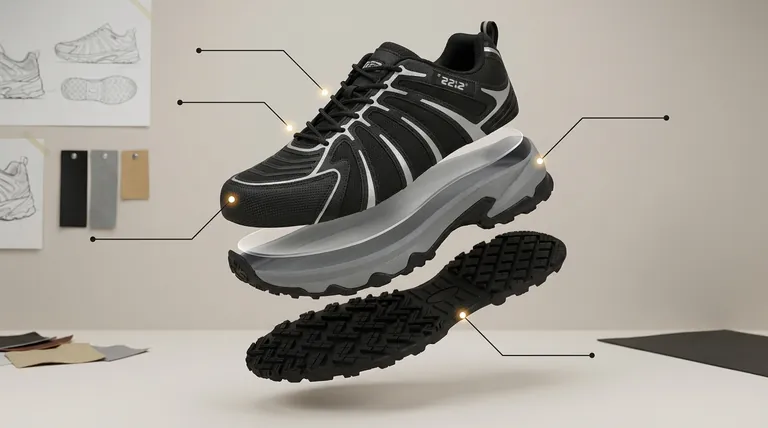
Deconstructing the Hiking Shoe: The Core Components
A hiking shoe is engineered from the ground up to handle stress and terrain far beyond what a typical sneaker can manage. Each major component is designed to solve a specific problem you'll encounter on the trail.
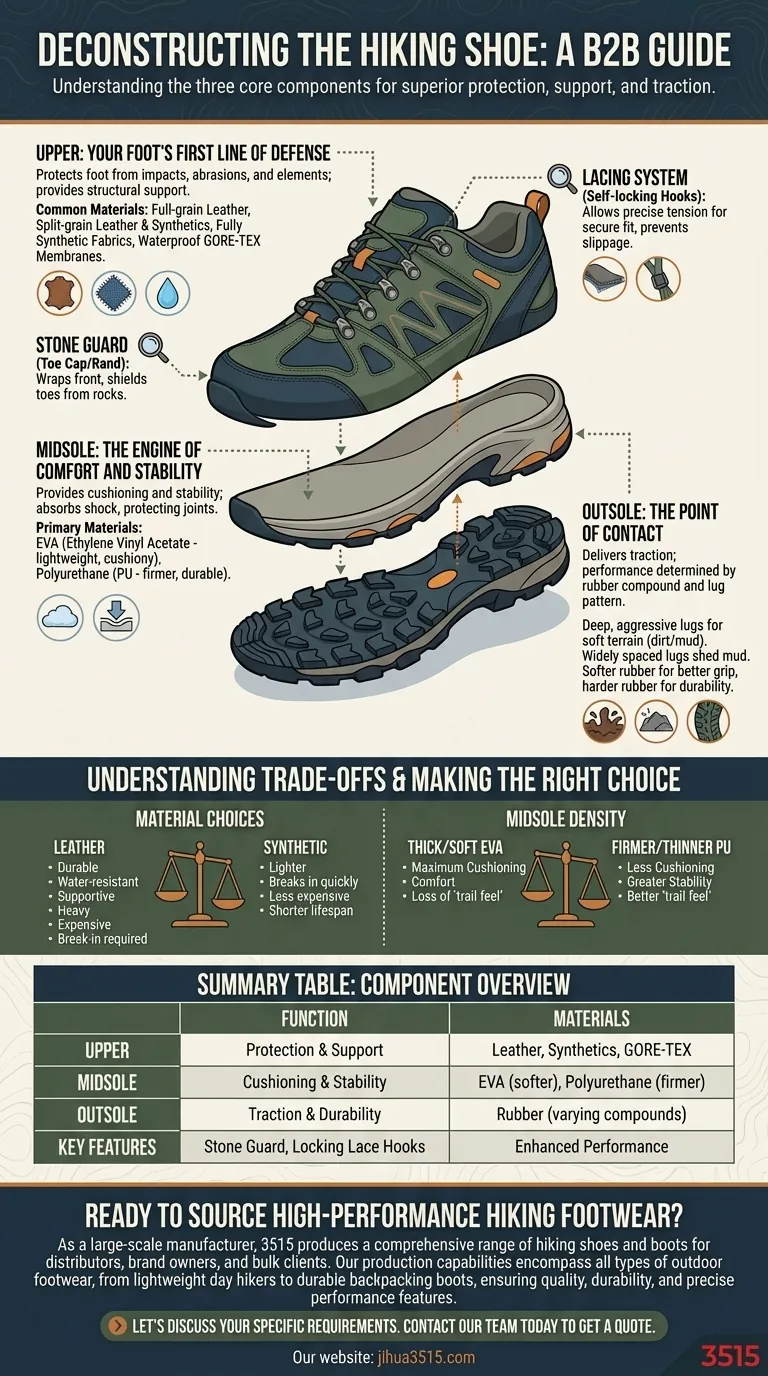
The Upper: Your Foot's First Line of Defense
The upper is everything above the sole. Its primary job is to protect your foot from impacts, abrasions, and the elements while providing structural support.
Uppers are typically made from full-grain leather, split-grain leather combined with synthetics, or fully synthetic fabrics. Many also incorporate a waterproof, breathable membrane like GORE-TEX.
Key Features of the Upper
Two critical features are often built into the upper to enhance its performance.
The stone guard, also called a toe cap or rand, is a rubber or highly durable material that wraps around the front of the shoe. It shields your toes from painful impacts with rocks and roots.
The lacing system, which includes elements like self-locking hooks, is crucial for security. These hooks clamp down on the laces, allowing you to create different tensions in the lower and upper sections of the shoe for a precise, stable fit that prevents foot slippage.
The Midsole: The Engine of Comfort and Stability
The midsole is a layer of material sandwiched between the insole your foot rests on and the rubber outsole that hits the ground. This is the shoe's primary source of cushioning.
Midsoles absorb shock, protecting your joints over long distances. They are most commonly made from EVA (ethylene vinyl acetate), which is lightweight and cushiony, or Polyurethane (PU), which is firmer and more durable.
The Outsole: The Point of Contact
The outsole is the rubber layer at the bottom of the shoe that provides traction. Its performance is determined by the rubber compound and the pattern of its "lugs."
Deep, aggressive lugs are designed to bite into soft terrain like dirt and mud. Widely spaced lugs help shed mud easily. Softer rubber provides better grip on rock but wears down faster, while harder rubber is more durable but can be slick on wet surfaces.
Understanding the Trade-offs: Durability vs. Weight
Every design choice in a hiking shoe represents a trade-off. There is no single "best" shoe, only the best shoe for a particular type of terrain and hiker.
Material Choices: Leather vs. Synthetic
Full-grain leather uppers are exceptionally durable, water-resistant, and supportive, making them ideal for rugged, off-trail use. However, they are heavy, expensive, and require a significant break-in period.
Synthetic uppers are lighter, break in quickly, and are often less expensive. Their primary downside is a shorter lifespan, as stitching and fabrics can wear out faster than solid leather.
Midsole Density: Cushioning vs. Trail Feel
A thick, soft EVA midsole provides maximum cushioning, which is excellent for comfort on long days with a heavy pack. The trade-off is a loss of "trail feel," making it harder to sense the terrain underfoot.
A firmer, thinner midsole offers less cushioning but provides greater stability and a more direct connection to the trail, which many hikers prefer for technical or uneven ground.
Making the Right Choice for Your Goal
Select your footwear by matching its construction to the demands of your intended hike.
- If your primary focus is day hiking on maintained trails: A lightweight shoe with a flexible synthetic upper and a cushioned EVA midsole will provide all-day comfort.
- If your primary focus is multi-day backpacking with a heavy pack: A durable leather boot with a firm polyurethane (PU) midsole and robust ankle support is necessary to manage the load.
- If your primary focus is moving fast and light on technical terrain: A shoe with a sticky rubber outsole, a protective stone guard, and a precise lacing system will deliver the needed grip and security.
Ultimately, knowing how a shoe is built empowers you to look past marketing and choose the tool that will keep you safe, comfortable, and stable on the trail.
Summary Table:
| Component | Primary Function | Common Materials |
|---|---|---|
| Upper | Protection & Support | Leather, Synthetics, GORE-TEX |
| Midsole | Cushioning & Stability | EVA (softer), Polyurethane (firmer) |
| Outsole | Traction & Durability | Rubber (varying compounds) |
| Key Features | Enhanced Performance | Stone Guard, Locking Lace Hooks |
Ready to Source High-Performance Hiking Footwear?
As a large-scale manufacturer, 3515 produces a comprehensive range of hiking shoes and boots for distributors, brand owners, and bulk clients. Our production capabilities encompass all types of outdoor footwear, from lightweight day hikers to durable backpacking boots, ensuring quality, durability, and the precise performance features your customers need.
Let's discuss your specific requirements and how we can support your business.
Contact our team today to get a quote
Visual Guide
Related Products
- Durable Rubber Sole Outdoor Shoes Wholesale & Custom Manufacturing
- Wholesale High-Traction Camo Boots - Custom Manufacturer for Brands
- Wholesale Durable Camouflage Canvas Shoes with High-Traction Cleated Rubber Sole
- Advanced KPU Athletic Safety Shoe with Steel Toe Cap Anti-Slip Rotary Lacing System
- Wholesale Durable Camo Canvas Shoes with High-Traction Rubber Soles
People Also Ask
- What is the function of the sole in outdoor shoes? Find the Perfect Grip and Support
- What role do outdoor shoes and sneakers play in navigating external terrains? Engineered Stability for Every Surface
- How is AI utilized in the design of outdoor and safety footwear? Harnessing Big Data for Market-Driven Shoe Innovation
- Why is durability important when selecting outdoor shoes? A Guide to Safety & Long-Term Value
- What are the key components of outdoor shoes that affect comfort and sturdiness? A Guide to Durable, High-Performance Footwear