The finishing touches in Goodyear welt construction are a series of final quality control and aesthetic steps that occur after the shoe is fully assembled. These critical procedures include detailed cleaning of any manufacturing residue, meticulous polishing and burnishing of the leather, and a final, rigorous inspection to ensure the product meets the highest standards of craftsmanship.
While the core Goodyear welt process ensures a shoe's structural integrity and longevity, the finishing touches are what elevate it from a durable product to a refined piece of footwear. They are the final signal of a craftsman's attention to detail.
The Foundation: Why the Welt Matters
Before appreciating the finish, it's essential to understand the robust construction it completes. The Goodyear welt is a method prized for its durability and repairability.
The Upper, Insole, and Welt Connection
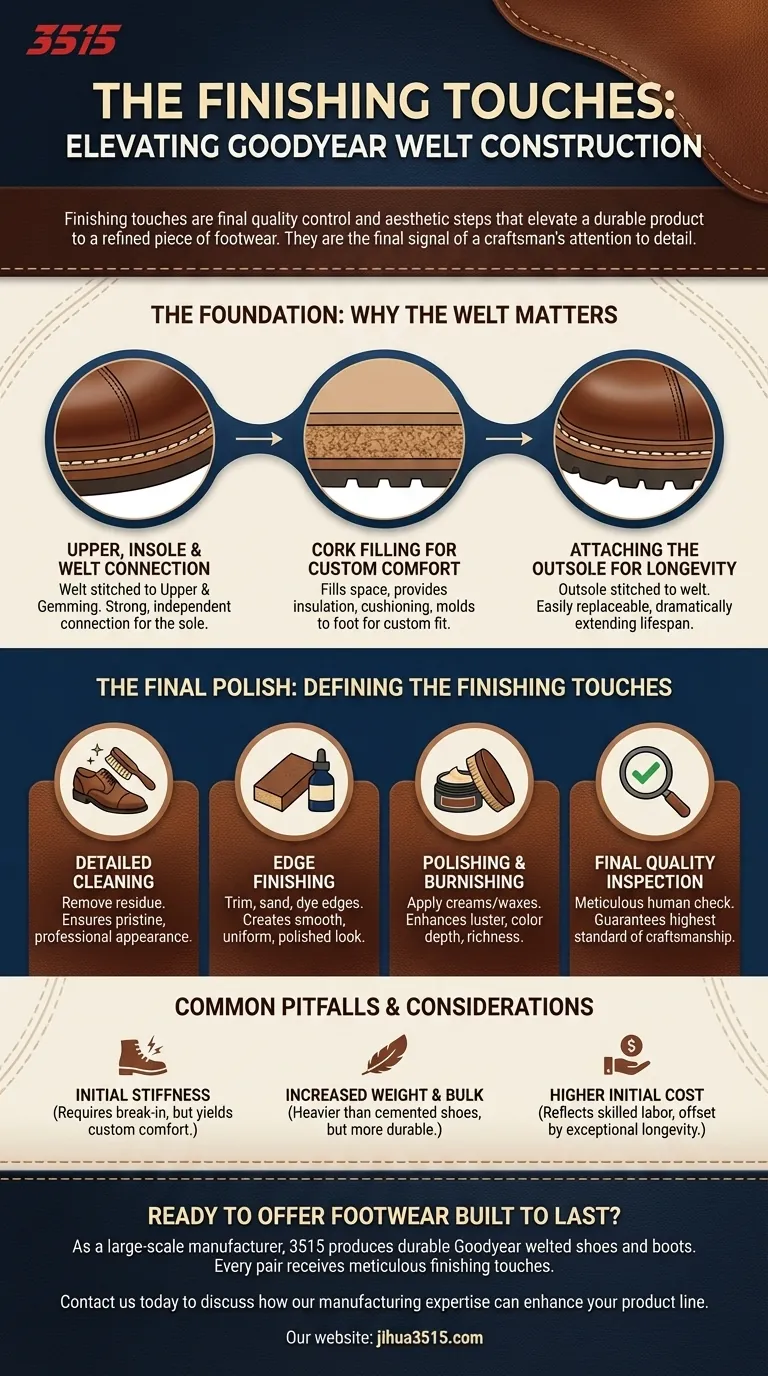
The process begins by stitching a strip of leather, known as the welt, to both the shoe's upper and a canvas rib (the "gemming") that is cemented to the insole. This creates a strong, independent connection point for the sole.
The Cork Filling for Custom Comfort
The space created between the insole and the outsole is then filled with a layer of cork or a similar filler. This material provides insulation, cushioning, and, most importantly, molds to the shape of your foot over time for a truly custom fit.
Attaching the Outsole for Longevity
Finally, the outsole is stitched directly to the welt. Because the outsole is not stitched through to the upper, a cobbler can easily remove and replace it multiple times without compromising the shoe's core structure, dramatically extending its lifespan.
The Final Polish: Defining the Finishing Touches
Once the shoe is structurally complete, it undergoes a final transformation from a well-made object to a finished product ready for the discerning owner.
Detailed Cleaning and Edge Finishing
The shoe is thoroughly cleaned to remove any dust, glue, or marks from the manufacturing process. The edges of the leather sole and welt are trimmed, sanded, and dyed for a smooth, uniform appearance.
Polishing and Burnishing
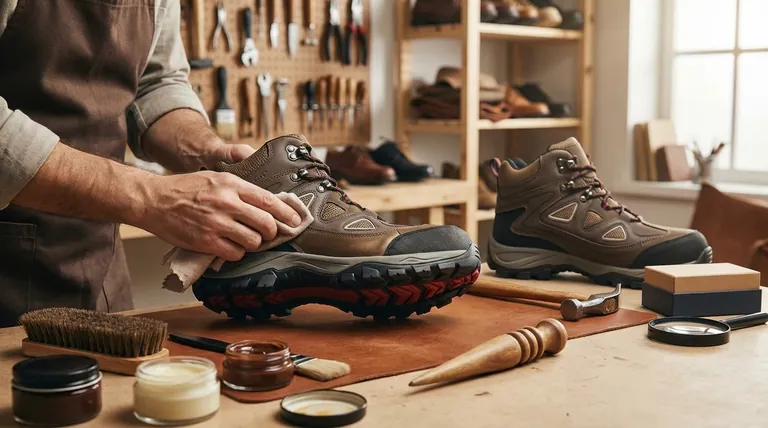
The leather upper is conditioned and polished to bring out its natural luster and color. This isn't just a simple shine; it often involves multiple layers of creams and waxes, sometimes burnished by hand or machine to create a rich, deep finish.
Final Quality Inspection
The last step is a meticulous human inspection. An expert checks every detail: the evenness of the stitching, the smoothness of the finish, the proper attachment of the heel, and the overall aesthetic quality. Only shoes that pass this final check are approved.
Common Pitfalls and Considerations
The Goodyear welt method is the gold standard for quality, but it's important to understand the inherent characteristics of this construction.
Initial Stiffness
The multi-layered construction and durable materials often result in a stiff shoe that requires a "break-in" period. This is the trade-off for the eventual custom-molded comfort.
Increased Weight and Bulk
The additional layers of the welt and cork filling make Goodyear-welted shoes heavier and less flexible than more lightweight constructions, like a cemented or Blake-stitched shoe.
Higher Initial Cost
The complexity of the process and the skilled labor required mean that Goodyear-welted footwear comes at a higher initial price point, though this is often offset by its exceptional longevity.
Making the Right Choice for Your Goal
Understanding these final steps helps you appreciate what you are paying for in a high-quality shoe.
- If your primary focus is longevity and value: Goodyear welt construction is the benchmark, as its repairability means a single pair can last for decades.
- If your primary focus is a custom fit: The cork footbed is a key advantage, but you must be patient through the initial break-in period.
- If your primary focus is visible craftsmanship: The finishing touches, from the polished leather to the perfectly trimmed sole edges, are the clearest indicators of a superior shoe.
Ultimately, these finishing details are the final promise of quality delivered on the foundation of a superior construction method.
Summary Table:
| Finishing Touch | Purpose | Key Benefit |
|---|---|---|
| Detailed Cleaning | Remove manufacturing residue (dust, glue) | Ensures a pristine, professional appearance |
| Edge Finishing | Trim, sand, and dye the sole and welt edges | Creates a smooth, uniform, and polished look |
| Polishing & Burnishing | Apply creams/waxes to the leather upper | Enhances luster, color depth, and richness |
| Final Quality Inspection | Meticulous human check of all details | Guarantees the highest standard of craftsmanship |
Ready to offer your customers footwear built to last?
As a large-scale manufacturer, 3515 produces a comprehensive range of durable Goodyear welted shoes and boots for distributors, brand owners, and bulk clients. Our production capabilities ensure every pair receives the meticulous finishing touches that signal superior quality and craftsmanship.
Contact us today to discuss how our manufacturing expertise can enhance your product line and deliver exceptional value to your customers.
Visual Guide
Related Products
- Durable Goodyear Welt Leather Work Boots for Wholesale & Private Label
- Wholesale Durable Leather Work Boots | 8-Inch Goodyear Welt Manufacturer
- Wholesale Durable & Breathable Training Shoes for Custom Brands
- Wholesale Breathable Training Shoes Custom Athletic Footwear Manufacturer
- Custom OEM Training Shoes Wholesale Manufacturer Durable & Breathable
People Also Ask
- What is the difference between full-grain and top-grain leather? Premium Material Guide for Boot Manufacturers
- What are the advantages of leather as an upper material for work boots? Unmatched Durability & Custom Comfort
- Why is it important to waterproof leather work boots? Protect Your Investment and Performance
- How should new leather work boots be broken in? A Guide to Comfort and Durability
- What are the advantages of leather uppers in work boots? Unmatched Durability & Protection