
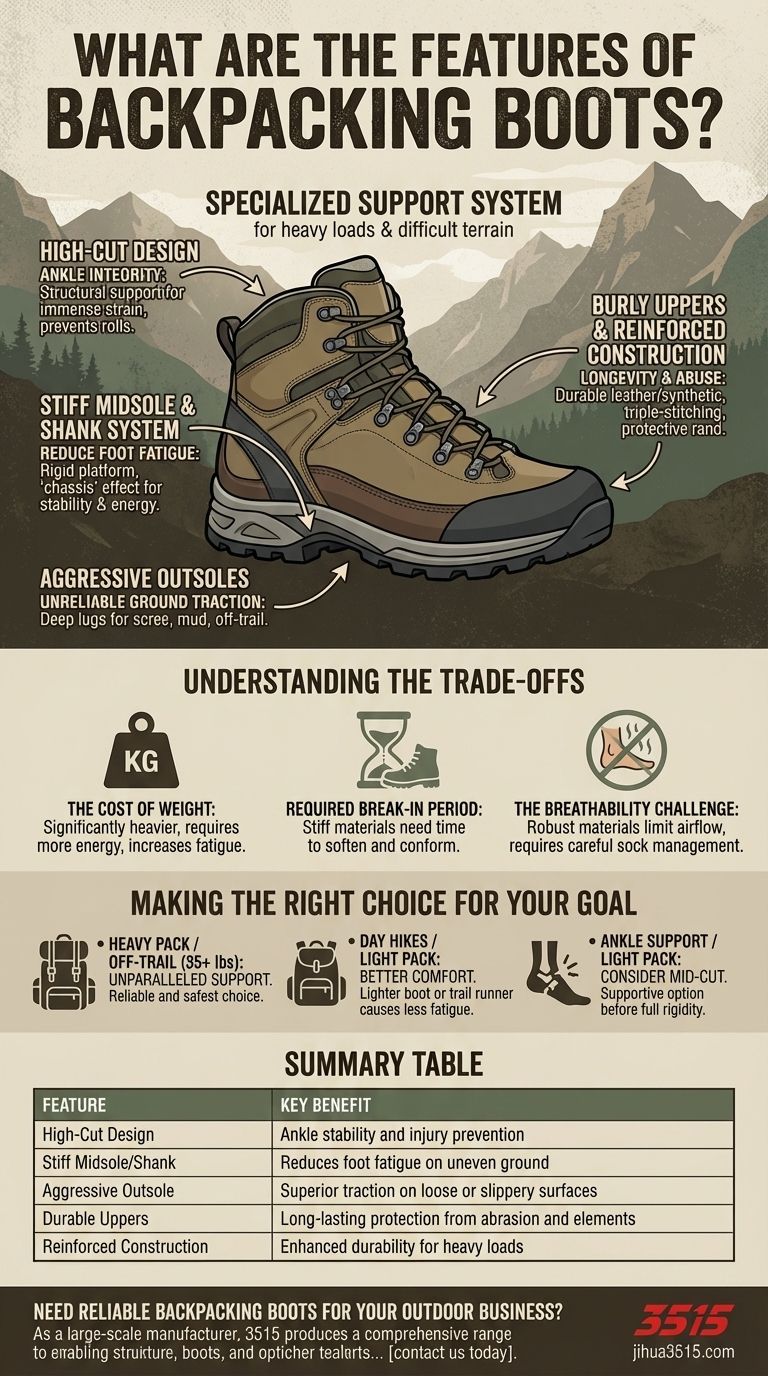
At their core, backpacking boots are a specialized support system designed to help you carry heavy loads over long distances and difficult terrain. Their defining features are a high cut for ankle stability, a stiff midsole to prevent foot fatigue, and exceptionally durable construction to withstand the rigors of backcountry travel.
A backpacking boot is less a piece of footwear and more a chassis for your foot and ankle. Its primary purpose is to provide the structural integrity needed to remain stable and prevent injury when carrying the significant weight of a multiday pack over unpredictable ground.

The Anatomy of a Backpacking Boot
To understand if a backpacking boot is right for you, it's essential to look at how each component serves its specific purpose. These are not all-purpose hiking boots; they are purpose-built tools.
High-Cut Design for Ankle Integrity
The most visible feature is the high collar that wraps above the ankle. This is not just for deflecting rocks or water.
Its main function is to provide structural support to the ankle joint, which is placed under immense strain when you're carrying a heavy pack on uneven terrain. This support helps prevent dangerous and painful ankle rolls far from the trailhead.
The Stiff Midsole and Shank System
Unlike flexible trail shoes, backpacking boots feature extremely stiff midsoles, often reinforced with a full-length plate called a shank.
This rigidity is intentional. It creates a stable platform that prevents your foot from bending and fatiguing over every rock and root. This "chassis" effect is critical for maintaining stability and conserving energy on long days.
Aggressive Outsoles for Unreliable Ground
The outsoles of backpacking boots are built with deep, aggressive lugs made from durable rubber compounds.
This design provides superior traction on a wide range of surfaces, from loose scree and slick mud to off-trail vegetation. They are engineered to bite into the ground and provide confidence when the footing is uncertain.
Burly Uppers and Reinforced Construction
Backpacking boots are built for longevity and abuse. Uppers are typically made of durable leather or synthetic materials, often with triple-stitching at key stress points.
Many feature a rubber or polyurethane-coated rand, which is a protective strip that wraps around the boot where the upper meets the sole. This guards against abrasion from rocks and ice and enhances water resistance.
Understanding the Trade-offs
The stability and durability of backpacking boots come at a cost. Understanding these compromises is key to making an informed decision.
The Cost of Weight
These boots are significantly heavier than any other category of hiking footwear. That extra weight requires more energy to lift with every single step, which adds up to significant fatigue over a long journey.
The Required Break-In Period
Due to their stiff materials and rigid construction, true backpacking boots are rarely comfortable out of the box. They require a dedicated break-in period to allow the materials to soften and conform to the shape of your foot.
The Breathability Challenge
The same robust, water-resistant materials that protect your feet from the elements also limit breathability. This can lead to excessive sweat and moisture buildup inside the boot, which requires careful sock management to prevent blisters.
Making the Right Choice for Your Goal
Ultimately, the decision to use a backpacking boot should be determined by your specific activity and needs, not just the "hike" itself.
- If your primary focus is multiday trips with a heavy pack (35+ lbs) or extensive off-trail travel: A true backpacking boot is your most reliable and safest choice for its unparalleled support.
- If your primary focus is day hikes or weekend trips with a light pack on well-maintained trails: A lighter hiking boot or trail running shoe will provide better comfort and cause less fatigue.
- If your primary focus is ankle support due to a past injury, but your pack remains light: Consider a supportive mid-cut hiking boot before committing to the weight and rigidity of a full backpacking boot.
Choosing the right footwear is about matching the tool to the task, and a backpacking boot is the specialized tool for carrying heavy burdens into wild places.
Summary Table:
| Feature | Key Benefit |
|---|---|
| High-Cut Design | Ankle stability and injury prevention |
| Stiff Midsole/Shank | Reduces foot fatigue on uneven ground |
| Aggressive Outsole | Superior traction on loose or slippery surfaces |
| Durable Uppers | Long-lasting protection from abrasion and elements |
| Reinforced Construction | Enhanced durability for heavy loads |
Need reliable backpacking boots for your outdoor business? As a large-scale manufacturer, 3515 produces a comprehensive range of durable, high-performance footwear for distributors, brand owners, and bulk clients. Our production capabilities cover all types of boots designed for heavy loads and rugged terrain. Let us help you equip your customers with the right support—contact us today to discuss your needs!
Visual Guide
Related Products
- Wholesale High-Traction Camo Boots - Custom Manufacturer for Brands
- Durable Rubber Sole Outdoor Shoes Wholesale & Custom Manufacturing
- Wholesale Lightweight Tactical Boots Custom Manufacturer for Desert & Combat Use
- Wholesale Waterproof Tactical Boots Custom Suede & High-Traction Soles
- High Performance Fire-Retardant Waterproof Safety Boots
People Also Ask
- What are the key features of the new line of camo boots? Built for Extreme Cold & Rugged Terrain
- Are camo boots necessary for hunting success? Prioritize Performance Over Pattern
- How does the Rank Score Test identify the primary causes of premature failure in tactical and work boots? Key Insights
- What is the technical logic behind using closed-eye testing for tactical boots? Unlocking Peak Footwear Stability
- What shoes to wear for a security job? Durable, Protective Footwear for Long Shifts



















