
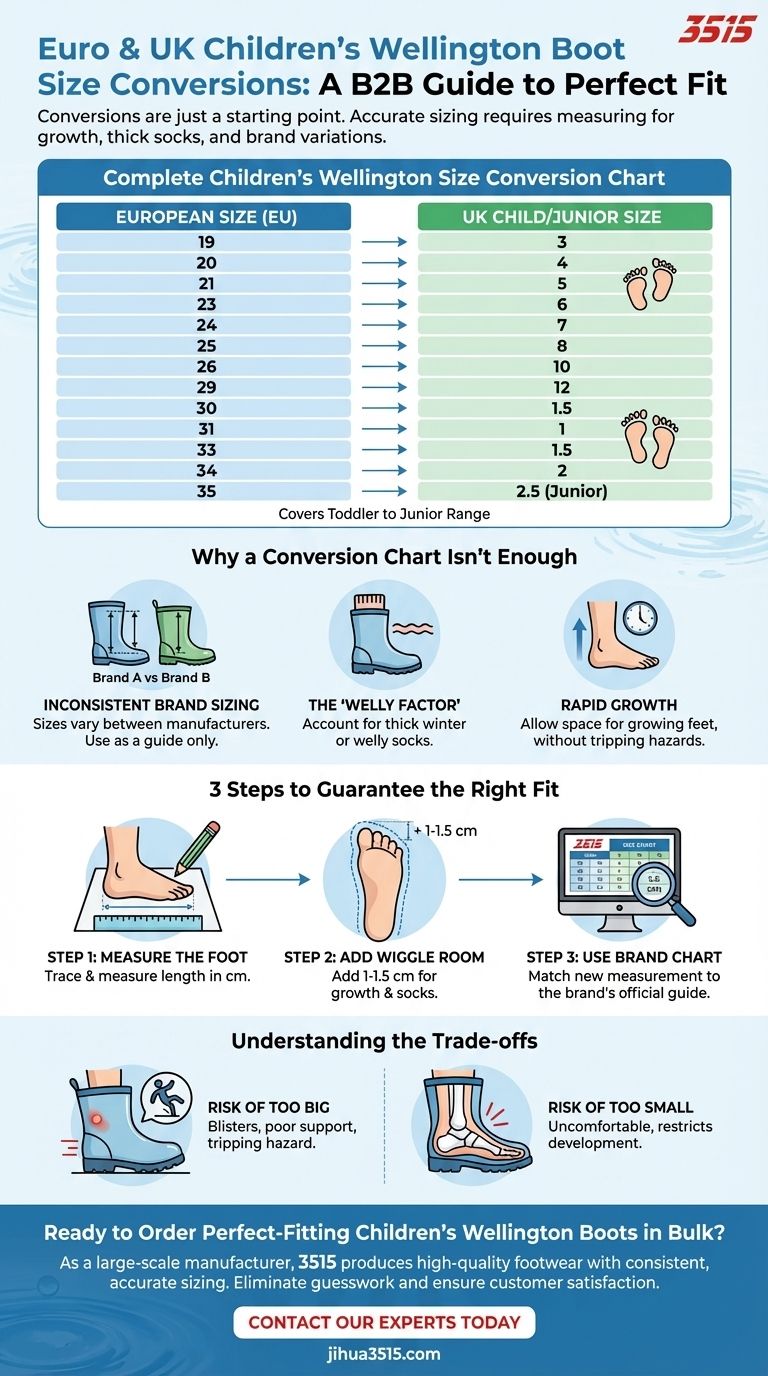
To convert children's wellington boot sizes from European to UK measurements, you must use a standard conversion scale where sizing increases incrementally. For example, a European size 19 is equivalent to a UK child size 3, a Euro 20 is a UK 4, and the scale continues up to a Euro 35, which is a UK junior size 2.5.
The critical takeaway is that a direct size conversion is only a starting point. Achieving a proper, comfortable fit for a child's growing feet requires measuring their foot and accounting for factors like thick socks and brand-specific sizing.
The Complete Children's Wellington Size Conversion Chart
This chart provides a reliable conversion between European (EU) and United Kingdom (UK) children's shoe sizes. It covers the typical range for toddlers and young children, progressing from infant to junior sizes.
| European Size (EU) | UK Child/Junior Size |
|---|---|
| 19 | 3 |
| 20 | 4 |
| 21 | 4.5 |
| 22 | 5 |
| 23 | 6 |
| 24 | 7 |
| 25 | 8 |
| 26 | 8.5 |
| 27 | 9 |
| 28 | 10 |
| 29 | 11 |
| 30 | 11.5 |
| 31 | 12 |
| 32 | 13 |
| 33 | 1 |
| 34 | 2 |
| 35 | 2.5 |
Why a Conversion Chart Isn't Enough
Relying solely on a conversion chart can lead to a poor fit. Wellington boots present unique challenges, and children's feet require special consideration.
The Problem with Sizing Inconsistency
Not all brands are created equal. A UK size 10 from one manufacturer may fit differently than a UK size 10 from another. Always treat a general conversion chart as a guide, not an absolute rule.
The 'Welly Factor'
Wellington boots are almost always worn with thicker-than-normal socks. Failing to account for this is a common mistake that leads to a fit that is too snug and uncomfortable.
Accommodating Rapid Growth
Children's feet grow quickly. The goal is to find a size that allows for some growth without being so large that it becomes a tripping hazard.
How to Guarantee the Right Fit
To move beyond guesswork, follow a simple, three-step measurement process. This ensures comfort, safety, and better value for your purchase.
Step 1: Measure the Child's Foot
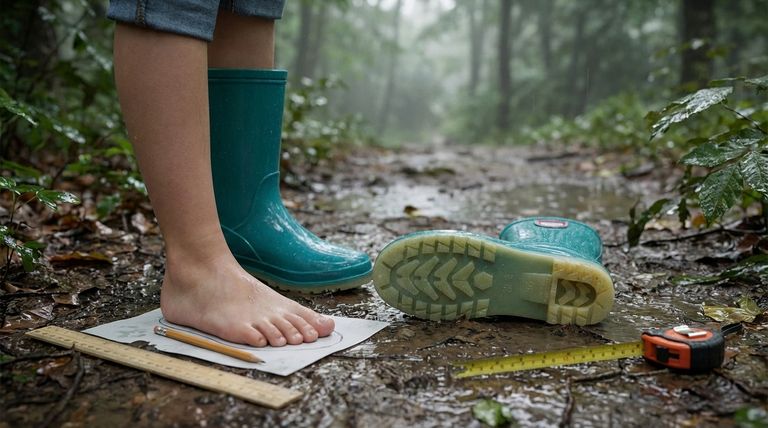
Have your child stand on a piece of paper, placing their full weight on their foot. Trace the outline of the foot with a pen or pencil held vertically.
Measure the distance from the back of the heel to the tip of the longest toe. This measurement in centimeters gives you the most accurate data.
Step 2: Add 'Wiggle Room'
Once you have the length, add approximately 1-1.5 cm. This extra space accounts for growth and the thickness of winter or welly socks.
Step 3: Use the Brand's Specific Chart
Navigate to the website of the brand you intend to buy. Find their official size chart and use your new measurement (foot length + wiggle room) to find their recommended size. This is the most reliable way to make a final decision.
Understanding the Trade-offs
Choosing the wrong size has clear consequences that go beyond simple inconvenience.
The Risk of Buying Too Big
While tempting for longevity, boots that are too large can cause the foot to slide around. This leads to blisters, poor ankle support, and a significant tripping hazard for active children.
The Danger of Buying Too Small
A fit that is too tight is not only uncomfortable but can also restrict proper foot development. It causes pinching and discomfort, ensuring the wellies will be quickly rejected by the child.
Making the Right Choice for Your Goal
- If your primary focus is a quick online purchase: Use the conversion chart as your initial guide, but always cross-reference it with the retailer's specific size guide before checkout.
- If your primary focus is the most comfortable and accurate fit: Measure your child’s foot at home and add 1.5 cm to determine the ideal internal boot length you need.
- If your primary focus is safety and long-term value: Choose a size with adequate wiggle room, but ensure the boot does not slip excessively at the heel during a test walk.
Armed with accurate measurements and an understanding of sizing nuances, you can choose the perfect pair of wellies with confidence.
Summary Table:
| European Size (EU) | UK Child/Junior Size |
|---|---|
| 19 | 3 |
| 20 | 4 |
| 21 | 4.5 |
| 22 | 5 |
| 23 | 6 |
| 24 | 7 |
| 25 | 8 |
| 26 | 8.5 |
| 27 | 9 |
| 28 | 10 |
| 29 | 11 |
| 30 | 11.5 |
| 31 | 12 |
| 32 | 13 |
| 33 | 1 |
| 34 | 2 |
| 35 | 2.5 |
Ready to Order Perfect-Fitting Children's Wellington Boots in Bulk?
As a large-scale manufacturer, 3515 produces a comprehensive range of high-quality footwear for distributors, brand owners, and bulk clients. Our production capabilities encompass all types of children's shoes and boots, including durable wellingtons with consistent, accurate sizing.
We help you eliminate sizing guesswork and ensure customer satisfaction. Contact our experts today to discuss your specific requirements, request samples, and get a competitive quote for your next order.
Visual Guide
Related Products
- Durable Waterproof Rain Boots | Custom Manufacturer for Wholesale & Brands
- Durable High-Ankle Tactical Boots Wholesale Manufacturer for Custom & Bulk Orders
- Durable Leather High-Ankle Tactical Boots for Wholesale & Custom Manufacturing
- Wholesale Lightweight Tactical Boots with Dial Closure OEM & Bulk Orders
- Premium Wholesale Tactical Style Safety Shoes Boots with Quick Lacing
People Also Ask
- What are the main materials for waterproof rain boots? Choose the Right Material for Durability & Comfort
- What is the overall recommendation for choosing rain boot materials? A Guide to Rubber vs. PVC
- How does boot height affect waterproofing? Choose the Right Height for Ultimate Protection
- Why are rain boots more flexible and comfortable than snow boots? The Key Differences Explained
- What are the best types of shoes for different gardening conditions? Find Your Perfect Match.










