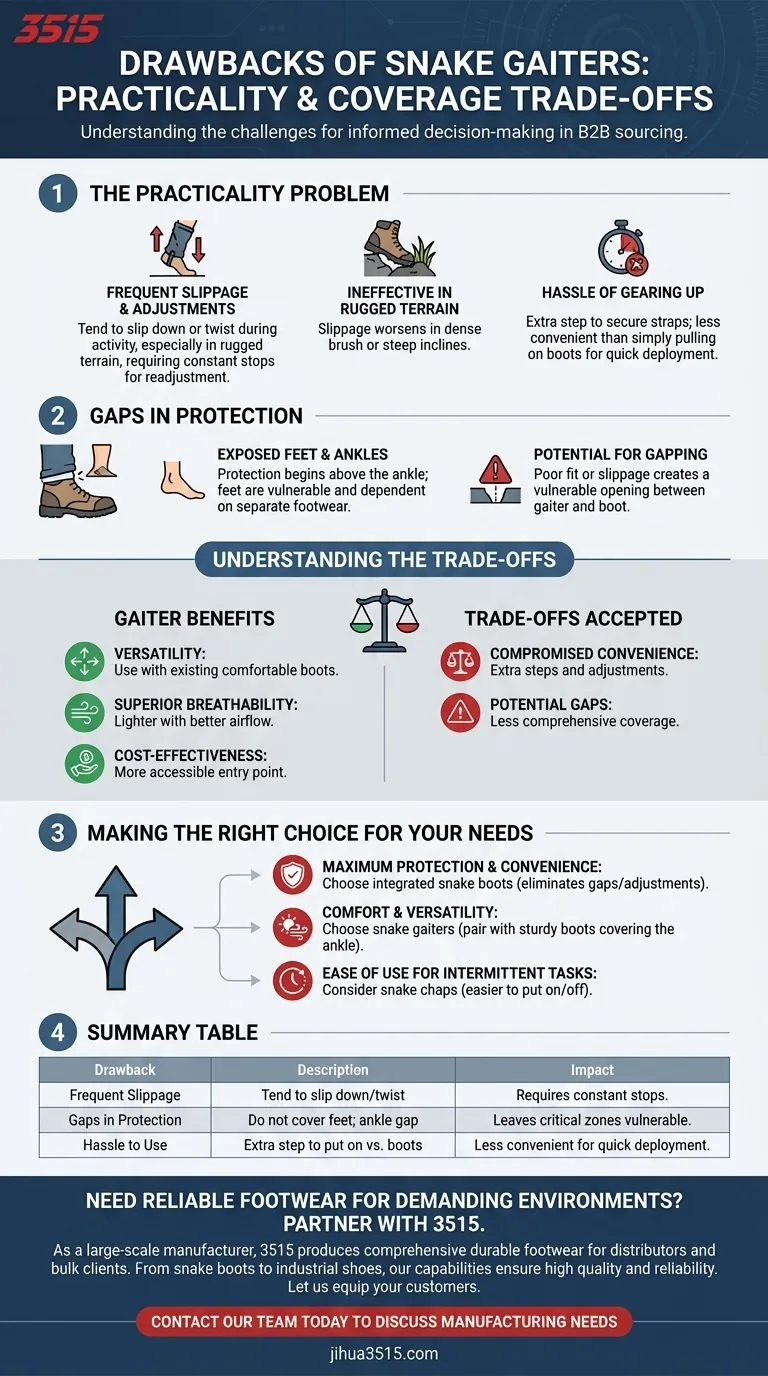
The primary drawbacks of using snake gaiters are issues with practicality and coverage. Users often find they require frequent adjustments to prevent slipping, can be a hassle to put on and take off, and offer less comprehensive protection around the foot and ankle area compared to dedicated snake boots.
While snake gaiters offer excellent breathability and versatility, their core drawbacks revolve around a trade-off: you gain comfort and flexibility at the potential cost of convenience and complete, gap-free protection.
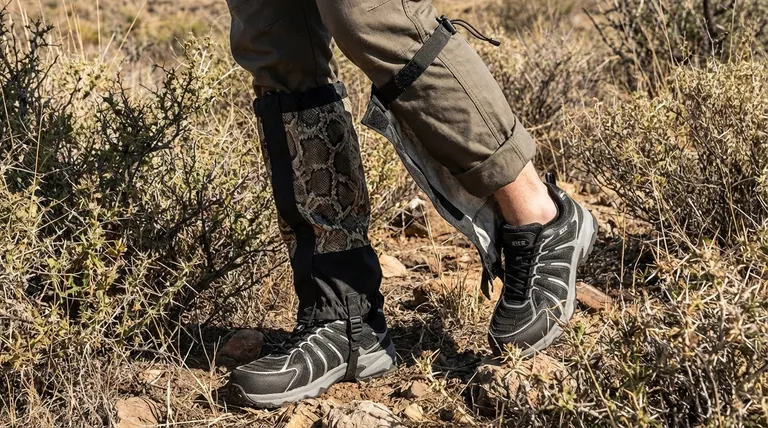
The Practicality Problem: Daily Use and Adjustments
One of the most common complaints about snake gaiters isn't about their protective material, but the experience of using them in the field.
The Slippage Issue
Snake gaiters have a tendency to slip down or twist around your leg during strenuous activity. This requires you to stop and make frequent adjustments to ensure they stay in place and provide proper coverage.
Ineffectiveness in Rugged Terrain
This slippage problem is often worse in rugged or dense environments. Navigating thick brush, steep inclines, or uneven ground increases the likelihood that gaiters will shift out of position.
Hassle of Gearing Up
Compared to simply pulling on a pair of boots, putting on gaiters is an extra step. Securing the straps and ensuring a snug fit takes time and can feel cumbersome, especially when you need to get going quickly. Some users find snake chaps to be a more user-friendly alternative for this reason.
Gaps in Protection: Where Gaiters Fall Short
While effective for the calf area, gaiters inherently create potential vulnerabilities that integrated snake boots do not have.
Exposed Feet and Ankles
The most significant limitation is that gaiters do not cover your feet. Their protection begins above the ankle, meaning you are entirely dependent on the quality of your separate footwear for protection in that critical strike zone.
Potential for Gapping
A poor fit or slippage can create a gap between the bottom of the gaiter and the top of your boot. This small opening can be a potential point of failure, exposing your ankle to a threat.
Understanding the Trade-offs
Despite these drawbacks, thousands of people choose gaiters for valid reasons. Understanding the benefits clarifies why these trade-offs are acceptable for many users.
The Benefit of Versatility
Gaiters can be worn over your preferred hiking boots or work shoes. This allows you to use comfortable, broken-in footwear you already trust, rather than being locked into a single pair of potentially less comfortable snake boots.
Superior Breathability and Weight
Gaiters are significantly lighter and allow for much better airflow than tall, non-breathable snake boots. In hot and humid climates, this increase in comfort is a major advantage that can reduce fatigue.
Cost-Effectiveness
Generally, a high-quality pair of snake gaiters is less expensive than an equivalent-quality pair of snake boots. This makes them a more accessible entry point for reliable snake protection.
Making the Right Choice for Your Needs
The decision between gaiters and other options depends entirely on your specific activity, environment, and priorities.
- If your primary focus is maximum protection and convenience: Choose integrated snake boots, which eliminate gaps and the need for adjustment.
- If your primary focus is comfort in hot weather and versatility: Choose snake gaiters, but ensure they are paired with thick, sturdy boots that cover the ankle.
- If your primary focus is ease of use for intermittent tasks: Consider snake chaps, which can be easier to put on and take off for short-term use.
Ultimately, choosing the right protection is about making an informed decision that best matches your specific terrain and activity level.
Summary Table:
| Drawback | Description | Impact |
|---|---|---|
| Frequent Slippage | Tend to slip down or twist during activity. | Requires constant stops for readjustment. |
| Gaps in Protection | Do not cover feet; potential gap at ankle. | Leaves critical strike zones vulnerable. |
| Hassle to Use | Extra step to put on/secure vs. boots. | Less convenient for quick deployment. |
| Trade-off | Gain versatility and breathability. | Compromise on convenience and coverage. |
Need Reliable Footwear for Demanding Environments? Partner with 3515.
As a large-scale manufacturer, 3515 produces a comprehensive range of durable footwear for distributors, brand owners, and bulk clients. Whether you need snake boots for maximum protection or other types of industrial and outdoor shoes, our production capabilities ensure high quality and reliability.
Let us help you equip your customers with the right gear. Contact our team today to discuss your manufacturing needs.
Visual Guide
Related Products
- Lightweight Breathable Sneakers with Wet-Traction Grip for Wholesale & Private Label
- Wholesale Breathable Athletic Sneakers - Custom Lightweight Cushioned Footwear Manufacturer
- Wholesale Lightweight Cushioned Athletic Sneakers for Custom Bulk Production
- Durable High-Ankle Tactical Boots Wholesale Manufacturer for Custom & Bulk Orders
- Wholesale Durable Camouflage Canvas Shoes with High-Traction Cleated Rubber Sole
People Also Ask
- Why are breathable sneakers necessary for tropical commuting? Stay Cool and Dry in High Humidity
- What role do lightweight training shoes play in urban traffic? Boost Agility and Reaction for Safer City Navigation
- How do lightweight shoes provide support? The Science of Efficient Cushioning & Stability
- How do lightweight shoes improve breathability? Discover the Science of Cool, Dry Feet
- What are the style advantages of lightweight shoes? Sleek, Versatile & Modern Comfort