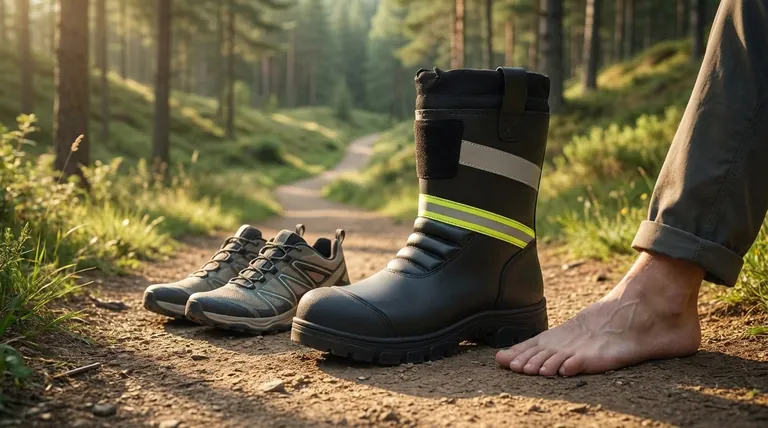
The primary downsides of stiff-soled hiking boots are their reduced flexibility, increased weight, and lack of breathability. This rigidity can restrict your foot's natural movement, leading to discomfort on less demanding trails and requiring a significant break-in period before they feel comfortable.
The core trade-off with stiff-soled boots is sacrificing everyday comfort and ground-feel for specialized support and protection. While essential for extreme conditions, this stiffness becomes a liability on common, well-maintained trails.
The Problem of Rigidity
Stiff boots are a specialized tool. Using them outside of their intended environment creates several distinct disadvantages related directly to their lack of flexibility and robust construction.
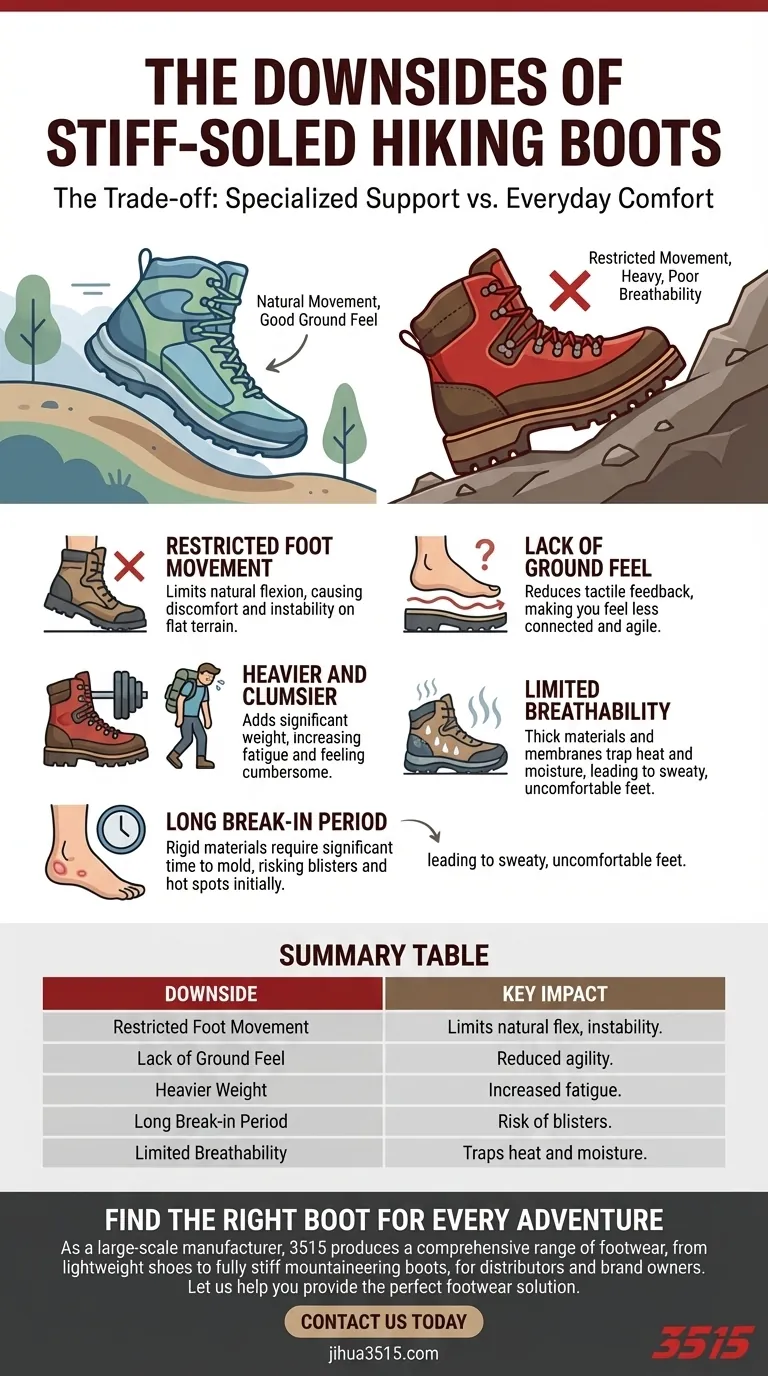
Restricted Foot Movement
A stiff sole is designed to prevent your foot from flexing. While this is beneficial when kicking steps into snow or edging on rock, it's a disadvantage on flat or rolling terrain.
Your foot is designed to bend and adapt to surfaces. A rigid platform prevents this natural motion, which can sometimes lead to a feeling of instability as your foot fights the boot.
Lack of Ground Feel
Flexible shoes allow you to feel the contours of the trail beneath your feet. This helps with balance and making micro-adjustments to your stride.
Stiff boots create a thick, unyielding barrier between you and the ground. You lose this tactile feedback, which can make you feel less connected and agile on the trail.
Heavier and Clumsier
The materials required to make a boot sole stiff—such as dense rubber, shanks, and thick midsoles—add significant weight.
This extra weight requires more energy to lift with every step, contributing to fatigue over a long day. The bulky nature of these boots can also feel cumbersome compared to lighter, more nimble footwear.
Understanding the Trade-offs
Choosing a stiff boot means accepting certain compromises in comfort and versatility in exchange for performance in specific, demanding situations.
The Break-in Period
Unlike flexible trail runners that are often comfortable out of the box, stiff boots almost always require a break-in period.
The rigid materials, particularly leather, need time to mold to the shape of your foot. Skipping this process can lead to significant discomfort, blisters, and hot spots on your first few hikes.
Limited Breathability
Heavy-duty, stiff-soled boots prioritize durability and water resistance over airflow.
Their thick construction and waterproof membranes trap heat and moisture. This can lead to sweaty, uncomfortable feet, especially during warm weather or high-exertion activities.
Making the Right Choice for Your Goal
The "best" boot is the one that matches the terrain and the load you plan to carry.
- If your primary focus is day hiking on established trails: A stiff-soled boot is likely overkill and will feel heavy and restrictive; a flexible hiking shoe or trail runner is a better choice.
- If your primary focus is multi-day backpacking with a heavy pack: A semi-stiff boot provides a good balance of support under load without being completely rigid.
- If your primary focus is mountaineering or off-trail scrambling: The protection, edging capability, and crampon compatibility of a fully stiff boot are essential for safety and performance.
Ultimately, understanding the purpose behind a boot's design empowers you to select the right tool for your adventure.
Summary Table:
| Downside | Key Impact |
|---|---|
| Restricted Foot Movement | Limits natural foot flexion, can cause instability on flat terrain. |
| Lack of Ground Feel | Reduces tactile feedback, making you feel less agile. |
| Heavier Weight | Increases fatigue over long distances due to more energy required per step. |
| Long Break-in Period | Rigid materials require time to mold to your foot, risking blisters initially. |
| Limited Breathability | Traps heat and moisture, leading to sweaty, uncomfortable feet. |
Ready to Find the Perfect Boot for Your Adventure?
As a large-scale manufacturer, 3515 produces a comprehensive range of footwear for distributors, brand owners, and bulk clients. Our production capabilities encompass all types of shoes and boots, from lightweight hiking shoes for established trails to the fully stiff, protective boots required for mountaineering.
Let us help you provide the right footwear for every customer and every terrain.
Contact us today to discuss your specific needs and leverage our expertise in crafting the perfect footwear solution.
Visual Guide
Related Products
- Durable Rubber Sole Outdoor Shoes Wholesale & Custom Manufacturing
- Durable Spiked Camouflage Boots Wholesale & Factory Production
- Wholesale High-Traction Camo Boots - Custom Manufacturer for Brands
- Wholesale Waterproof Tactical Boots Custom Suede & High-Traction Soles
- Wholesale Leather Ankle Boots with Lug Soles for Custom Brand Manufacturing
People Also Ask
- What is the function of the sole in outdoor shoes? Find the Perfect Grip and Support
- What role do outdoor shoes and sneakers play in navigating external terrains? Engineered Stability for Every Surface
- How is AI utilized in the design of outdoor and safety footwear? Harnessing Big Data for Market-Driven Shoe Innovation
- Why is durability important when selecting outdoor shoes? A Guide to Safety & Long-Term Value
- What are the key components of outdoor shoes that affect comfort and sturdiness? A Guide to Durable, High-Performance Footwear