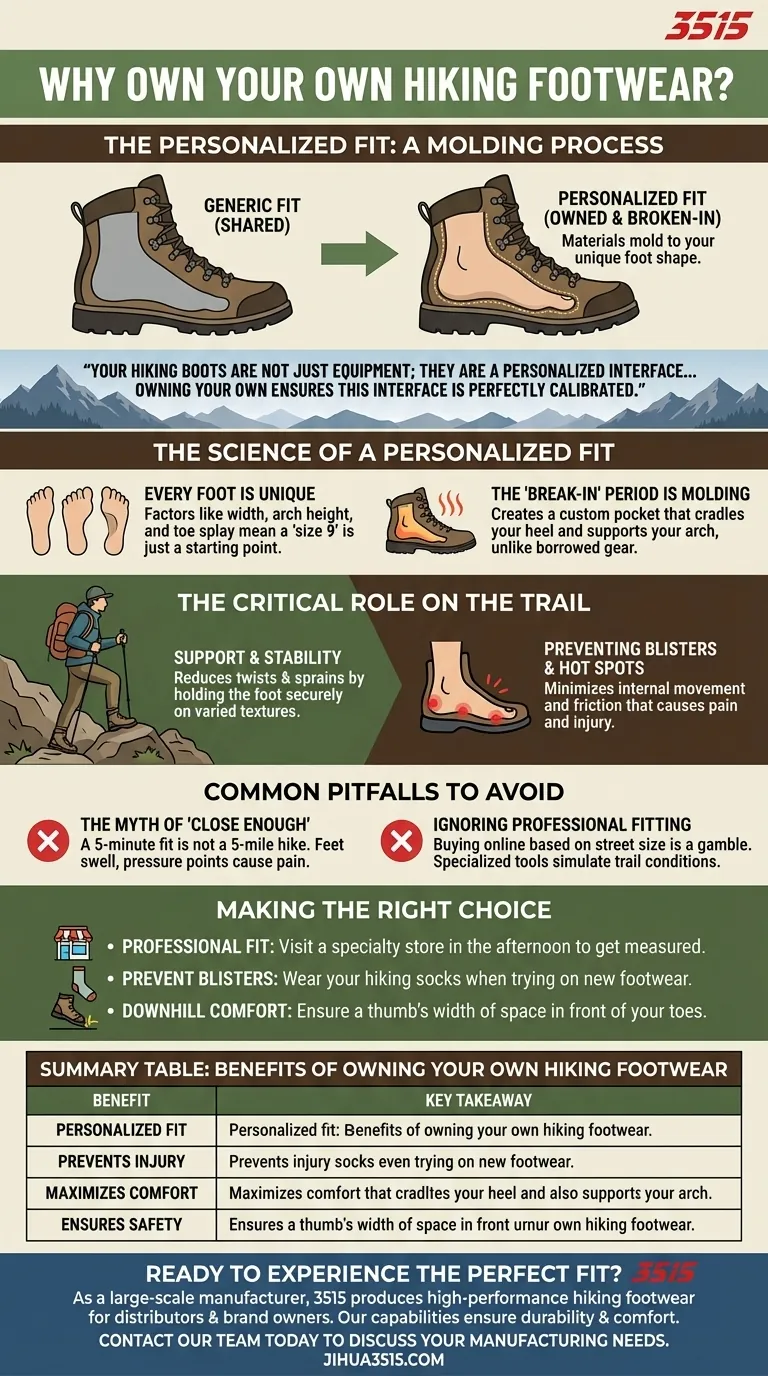
The single most important reason to own your own hiking footwear is that shoes physically conform to the unique shape of their owner's feet. During the "break-in" period, the materials mold around every contour, creating a custom fit. Using a borrowed or rented pair means forcing your feet into a shape meant for someone else, which is a direct cause of discomfort, blisters, and potential injury on the trail.
Your hiking boots are not just equipment; they are a personalized interface between your body and the terrain. Owning your own ensures that this interface is perfectly calibrated for your specific anatomy, maximizing both comfort and safety.
The Science of a Personalized Fit
Your feet are unlike anyone else's, with unique dimensions, arch heights, and pressure points. Hiking footwear is designed to adapt to this uniqueness over time, a process that is fundamental to its performance.
Why Every Foot is Unique
No two sets of feet are identical. Factors like foot width, arch length, and toe splay mean that a shoe that feels perfect for one person can be painful for another.
This is why a generic "size 9" is only a starting point. True fit accounts for the three-dimensional shape of your foot, which is something only a shoe that you have personally broken in can provide.
The "Break-In" Period is a Molding Process
The break-in period is not about softening a stiff boot. It is the process of the shoe's footbed and upper materials permanently molding to your specific foot shape.
This creates a custom pocket that cradles your heel, supports your arch, and gives your toes the right amount of space. A borrowed shoe has already completed this process for a different person, making it fundamentally mismatched for your anatomy.
The Critical Role of Footwear on the Trail
Properly fitted footwear is your primary defense against the challenges of uneven and unpredictable terrain. It moves from being simple gear to becoming a critical component of your safety system.
Support and Stability on Uneven Ground
Hiking trails are not smooth sidewalks. The varied textures and inclines put immense stress on your ankles and feet.
Well-fitted shoes, molded to your foot, provide superior stability. They reduce the likelihood of twists and sprains by holding your foot securely, preventing the micro-movements inside the shoe that can lead to a loss of balance.
Preventing Blisters, Hot Spots, and Bruises
The vast majority of hiking-related foot pain comes from ill-fitting shoes. Blisters are caused by friction, which happens when your foot slides inside the boot.
Owning and breaking in your own pair minimizes this internal movement. This drastically reduces the friction that causes painful blisters, hot spots, and even bruised toenails (hematomas) from your toes hitting the front of the boot on downhills.
Common Pitfalls to Avoid
Many hikers underestimate the importance of footwear, leading to preventable pain and misery. Understanding the risks associated with a poor fit reinforces the need for personal ownership.
The Myth of "Close Enough"
A shoe that feels acceptable when you try it on for five minutes can become an instrument of torture after five miles. Feet swell during a hike, and small pressure points become intensely painful over time.
Relying on a borrowed pair that feels "close enough" ignores the dynamic stresses of a real hike.
Ignoring the Importance of a Professional Fitting
Simply buying shoes online based on your street shoe size is a significant gamble. Outdoor specialty stores have trained staff and tools, like incline boards, to simulate trail conditions.
A professional fitting ensures you have the correct length and width, accounting for foot swell and the need for a thumb's width of space between your longest toe and the end of the shoe.
Making the Right Choice for Your Hike
Investing in your own hiking footwear is an investment in your personal safety and enjoyment on the trail. The goal is to make your shoes feel like a natural extension of your feet.
- If your primary focus is a perfect, long-term fit: Visit an outdoor specialty store in the afternoon (when your feet are largest) to get professionally measured.
- If your primary focus is preventing blisters: Wear the exact type of socks you plan to hike in when trying on new footwear to get a true sense of the fit.
- If your primary focus is downhill comfort: Ensure there is a thumb's width of space in front of your toes to prevent them from slamming into the front of the boot.
Ultimately, owning your own hiking footwear is the foundational step for a successful and comfortable experience in the outdoors.
Summary Table:
| Benefit of Owning Your Own Hiking Footwear | Key Takeaway |
|---|---|
| Personalized Fit | Shoes mold to your unique foot shape during the break-in period. |
| Prevents Injury | Reduces blisters, hot spots, and ankle twists on uneven terrain. |
| Maximizes Comfort | Eliminates internal friction and provides superior stability. |
| Ensures Safety | A properly fitted boot is a critical component of your trail safety system. |
Ready to experience the perfect fit?
As a large-scale manufacturer, 3515 produces a comprehensive range of high-performance hiking footwear for distributors, brand owners, and bulk clients. Our production capabilities ensure durability, support, and comfort for every type of adventure.
Let us help you provide your customers with the superior, personalized fit they need. Contact our team today to discuss your manufacturing needs.
Visual Guide
Related Products
- Wholesale High-Traction Camo Boots - Custom Manufacturer for Brands
- Durable Rubber Sole Outdoor Shoes Wholesale & Custom Manufacturing
- Durable Spiked Camouflage Boots Wholesale & Factory Production
- Wholesale Lightweight Tactical Boots Custom Manufacturer for Desert & Combat Use
- Wholesale Waterproof Tactical Boots Custom Suede & High-Traction Soles
People Also Ask
- What are the key features of the new line of camo boots? Built for Extreme Cold & Rugged Terrain
- Are camo boots necessary for hunting success? Prioritize Performance Over Pattern
- How does the Rank Score Test identify the primary causes of premature failure in tactical and work boots? Key Insights
- What is the technical logic behind using closed-eye testing for tactical boots? Unlocking Peak Footwear Stability
- What shoes to wear for a security job? Durable, Protective Footwear for Long Shifts