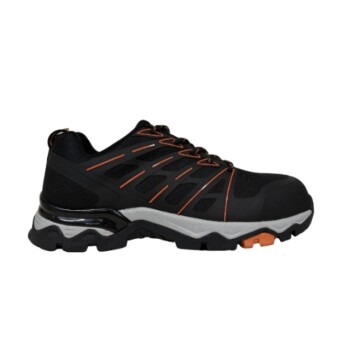
The systematic screening of polyester (PET) and polyamide (PA) blend ratios is the defining factor in creating safe, anti-static footwear. By utilizing professional electrostatic measurement equipment, developers can identify the precise mixture where the polyamide content effectively neutralizes the negative charges naturally generated by polyester. This scientific approach ensures that safety shoe linings can achieve zero charge accumulation, preventing hazardous electrostatic discharge (ESC) during use.
By quantifying how increased PA content regulates PET charges, manufacturers can engineer eco-friendly materials that balance strictly regulated safety standards with wearer comfort.
The Mechanics of Electrostatic Regulation
Balancing Charge Polarity
Polyester (PET) naturally tends to generate negative electrostatic charges. The primary function of screening blend ratios is to determine how much Polyamide (PA) is required to counteract this effect.
Achieving Zero Charge Accumulation
Through precise measurement, developers can pinpoint the exact ratio that leads to a net-zero charge state. This prevents the buildup of static electricity that typically occurs through friction during walking or movement.
Critical Benefits for Safety Footwear
Enhanced Safety in Dry Environments
Static buildup is particularly dangerous in complex, dry environments where charge does not dissipate naturally. Optimized linings are essential for professional labor shoes and tactical boots used in these volatile conditions.
Maintaining Comfortable Friction Levels
Safety often comes at the cost of comfort, but accurate screening eliminates this compromise. The data ensures the material maintains appropriate friction levels for wearability while still performing its anti-static function.
Supporting Eco-Friendly Development
This screening process facilitates the creation of eco-friendly safety materials. It allows manufacturers to utilize sustainable versions of PET and PA without fearing that the material changes will degrade anti-static performance.
Understanding the Trade-offs
The Precision Requirement
Reliance on professional measurement equipment implies that "estimating" blend ratios is no longer viable for high-stakes safety gear. A minor deviation in the PA content could fail to regulate the PET's negative charge, compromising safety.
Material Complexity vs. Performance
Achieving the "optimal" blend for zero charge accumulation may require specific material grades that differ from standard textiles. Developers must accept that achieving superior safety and comfort simultaneously requires a rigorous, data-driven selection process rather than using generic off-the-shelf blends.
Making the Right Choice for Your Goal
To apply these findings effectively to your material development process:
- If your primary focus is Maximum Safety: Prioritize the blend ratio that data shows achieves absolute zero charge accumulation to protect users in volatile environments.
- If your primary focus is User Experience: Use the electrostatic measurements to ensure that increasing anti-static properties does not negatively alter the textile's friction and comfort profile.
Data-driven material screening turns the complex physics of static electricity into a controllable, reproducible safety feature.
Summary Table:
| Feature | Polyester (PET) Characteristics | Polyamide (PA) Role | Result of Optimal Blend |
|---|---|---|---|
| Electrostatic Charge | Naturally generates negative charges | Neutralizes/Counteracts PET charges | Achieves Net-Zero charge state |
| Static Accumulation | High risk through friction | Regulates and dissipates buildup | Prevents hazardous discharge (ESC) |
| Material Performance | High durability, low cost | Enhances conductivity & comfort | Balanced eco-friendly safety material |
| Environment Suitability | High risk in dry conditions | Stabilizes charge in dry climates | Reliable performance in volatile areas |
Elevate Your Footwear Safety with 3515’s Advanced Material Engineering
As a leading large-scale manufacturer serving global distributors and brand owners, 3515 leverages scientific data and professional measurement to deliver high-performance footwear solutions. We understand that precision in PET/PA blend ratios is critical for the anti-static integrity of safety shoe linings.
Our comprehensive production capabilities allow us to anchor our flagship Safety Shoes series with cutting-edge anti-static technology, ensuring zero charge accumulation in the most demanding dry environments. Beyond safety, our extensive portfolio—including work and tactical boots, outdoor shoes, training shoes, sneakers, and Dress & Formal shoes—meets diverse bulk requirements with a focus on durability and wearer comfort.
Partner with a manufacturer that turns complex physics into reproducible safety features. Contact us today to discuss your bulk production needs and see how our expertise can strengthen your brand's product lineup.
References
- REDUCING THE ELECTROSTATIC DISCHARGE GENERATED FROM THE CONTACT AND SEPARATION AS WELL AS SLIDING OF POLYMERIC TEXTILES ON COTTON. DOI: 10.21608/jest.2022.266535
This article is also based on technical information from 3515 Knowledge Base .
Related Products
- Premium Suede Sport Safety Shoes for Wholesale & Bulk Orders
- Premium Lightweight Safety Shoes for Wholesale & Bulk Orders
- Premium KPU Injection Athletic Style Safety Shoes
- Premium Safety Shoes with Rotating Buckle Safety Sneakers
- Premium Wholesale Tactical Style Safety Shoes Boots with Quick Lacing
People Also Ask
- What industries have specific OSHA footwear requirements? Ensure Compliance & Protect Your Workforce
- What are the primary functions of professional safety shoes? Maximize Safety in Water Supply Confined Spaces
- What role do specialized safety shoes play in preventing falls? Engineering Stability in Industrial Environments
- What are the main components of safety shoes? A Guide to Protective Footwear Design
- How does professional industrial cleaning equipment maintain the performance stability of safety shoes? Pro Maintenance