At the foundation of every cowboy boot is a design choice that defines its purpose. Cowboy boots feature three primary heel types: the tall and angled Cowboy (or Riding) heel for stability in the saddle, the low and flat Roper heel for practical everyday wear, and the hybrid Walking heel that balances style with comfort. Each is engineered for a specific function, moving beyond simple aesthetics.
The heel of a cowboy boot is not merely a stylistic flourish; it is a critical functional component. Understanding the difference between a Riding, Walking, and Roper heel is the key to choosing a boot that serves your specific needs, whether in the stirrup or on the street.
The Purpose-Driven Design of the Heel
Before comparing types, it's essential to understand why the cowboy boot heel exists in the first place. This knowledge provides the context for each design variation.
From Saddle to Sidewalk
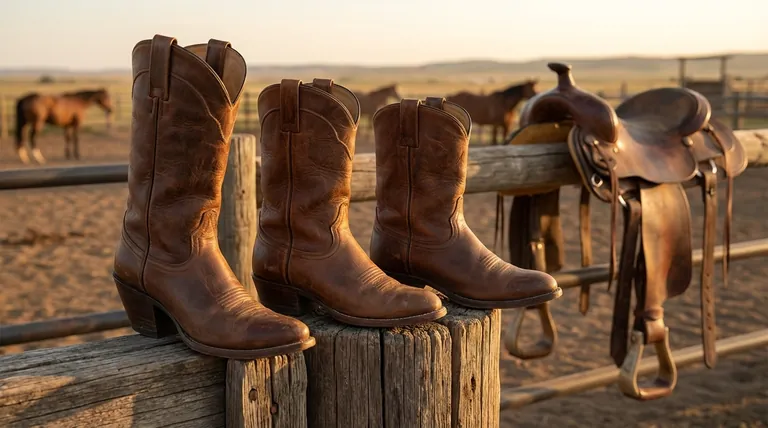
The original cowboy boot was a tool for horseback riders. Its most critical safety feature was a high, angled heel designed to hook onto the stirrup.
This design prevented a rider's foot from accidentally slipping forward through the stirrup, a dangerous situation that could lead to being dragged. Every heel variation today is an evolution of this original, purpose-built concept.
Key Heel Characteristics
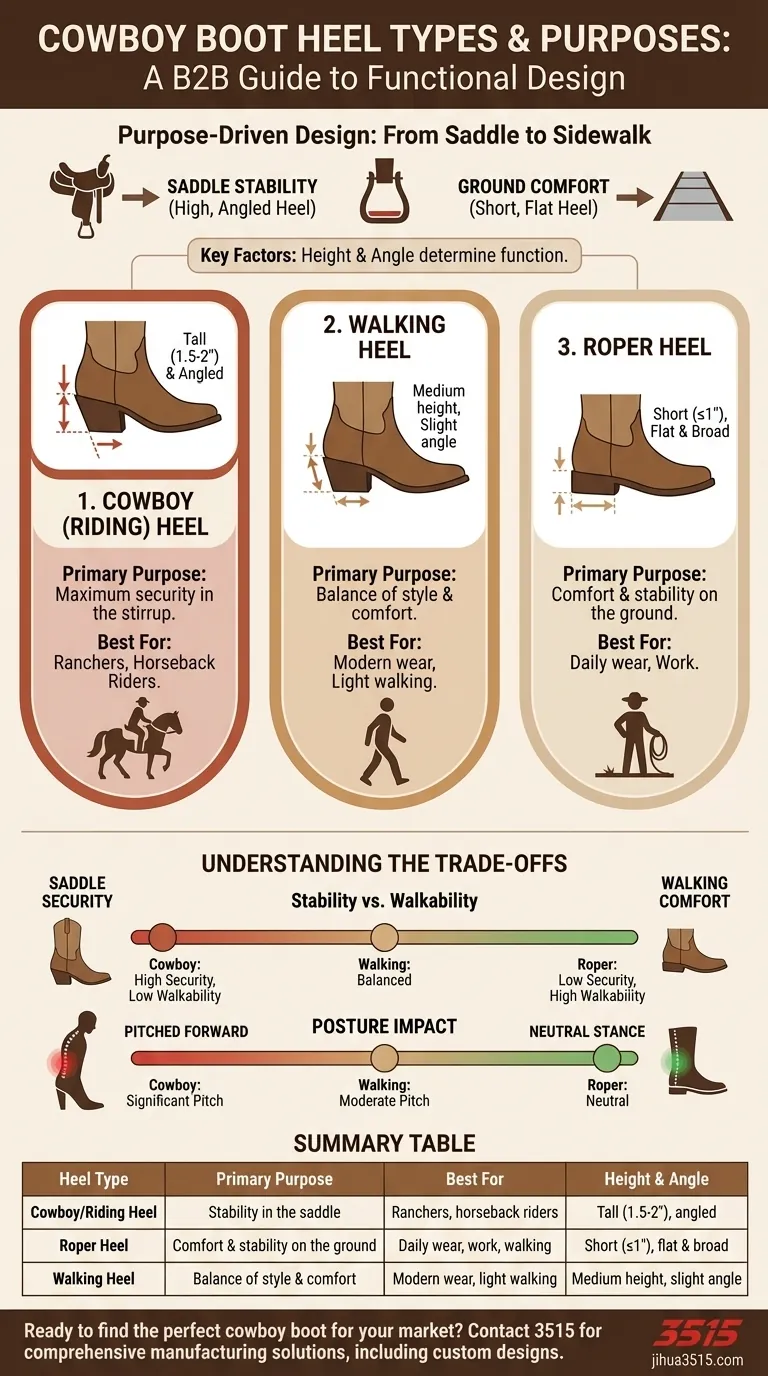
Two main factors determine a heel's function: height and angle (or "pitch"). A taller, more angled heel is built for the saddle. A shorter, flatter heel is built for the ground.
The Three Core Heel Types Explained
Each of the main heel types represents a different point on the spectrum between pure riding function and pure walking comfort.
The Classic "Cowboy" or Riding Heel
This is the most traditional and recognizable style. It is typically taller (1.5 to 2 inches) and features a significant, forward-slanted angle.
Its sole purpose is to provide maximum security in the stirrup, making it the definitive choice for ranchers and horseback riders. While iconic, its height and pitch make it the least comfortable for extended walking.
The "Roper" Heel
The Roper heel is the lowest and most practical design. It is short (typically 1 inch or less), broad, and squared-off, much like the heel on a traditional work boot.
This style was developed for rodeo events like calf roping, where a cowboy needs to dismount quickly and run. It prioritizes walking comfort and stability on the ground, making it an excellent choice for everyday wear.
The "Walking" Heel
As the name implies, this heel is a compromise between the two extremes. It is shorter and broader than a Riding heel but maintains a slight angle for a classic look.
The Walking heel offers a versatile balance. It provides a more traditional Western silhouette than a Roper heel but delivers significantly more comfort for walking than a high Riding heel, making it a popular modern choice.
Understanding the Trade-offs
Choosing a boot heel involves a direct trade-off between its intended functions. Understanding this is crucial to avoid a mismatch between your boot and your lifestyle.
Stability vs. Walkability
The core conflict is between stirrup security and walking comfort. The high, angled heel that keeps you safe in the saddle is the very feature that can make walking on flat ground feel awkward. Conversely, the stable Roper heel offers no real security advantage for riding.
The Impact on Posture
A taller heel pitches your body weight forward. In a saddle, this can be a comfortable and functional posture. For all-day walking, however, it can place strain on the balls of your feet and your lower back.
Versatility in Daily Life
For those who are not on horseback, the low Roper heel offers the most versatility. Its stable, flat profile is suitable for driving, working, and navigating urban environments without the pronounced gait change required by a high riding heel.
Making the Right Choice for Your Goal
Select your boot's heel based on its primary intended function, not just its appearance.
- If your primary focus is horseback riding: The classic Cowboy heel offers unparalleled stability and safety in the stirrup.
- If your primary focus is all-day walking comfort and versatility: The low-profile Roper heel is the most practical and comfortable choice for daily wear.
- If your primary focus is a balance of classic style and moderate walking: The Walking heel provides the ideal compromise between authentic looks and functional comfort.
Choosing the right heel is the first step in finding a boot that not only looks authentic but performs precisely as you need it to.
Summary Table:
| Heel Type | Primary Purpose | Best For | Height & Angle |
|---|---|---|---|
| Cowboy/Riding Heel | Stability in the saddle | Ranchers, horseback riders | Tall (1.5-2"), angled |
| Roper Heel | Comfort & stability on the ground | Daily wear, work, walking | Short (≤1"), flat & broad |
| Walking Heel | Balance of style & comfort | Modern wear, light walking | Medium height, slight angle |
Ready to find the perfect cowboy boot for your needs? As a large-scale manufacturer, 3515 produces a comprehensive range of footwear for distributors, brand owners, and bulk clients. Our production capabilities encompass all types of shoes and boots, including custom designs tailored to your market. Contact us today to discuss your requirements and benefit from our expertise in functional and stylish boot manufacturing.
Visual Guide
Related Products
- Durable Leather Moc Toe Work Boots for Wholesale & Custom Manufacturing
- Wholesale Customizable Safety Boots Durable & Protective Footwear Manufacturing
- Wholesale Durable Safety Boots | Custom Steel Toe & Puncture-Resistant Manufacturing
- Durable Steel Toe Safety Boots Wholesale & Custom Manufacturing
- Durable Leather High-Ankle Tactical Boots for Wholesale & Custom Manufacturing
People Also Ask
- What are moc toe work boots designed for? Superior Comfort and Mobility for Tradespeople
- What are the key features to look for when purchasing moc toe boots? A Guide to Durability & Fit
- How did moc toe boots originate? A Legacy of Workwear Durability and Style
- What clothing items complement the Outdoorsman/Heritage Look with moc toe boots? Build a Timeless, Rugged Wardrobe
- What types of outfits can moc toe boots be worn with? Versatile Style Guide