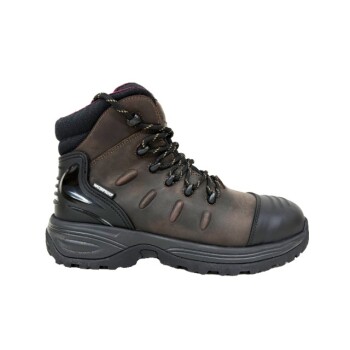
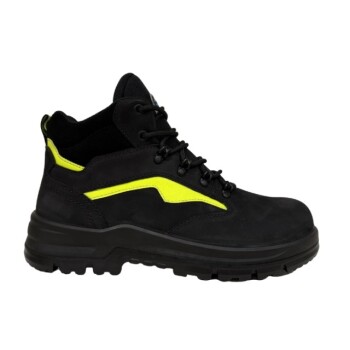
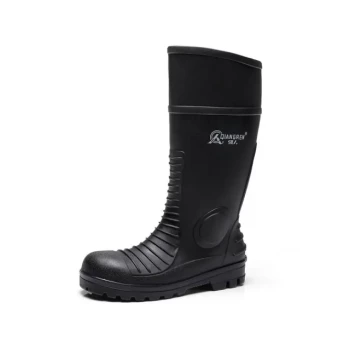
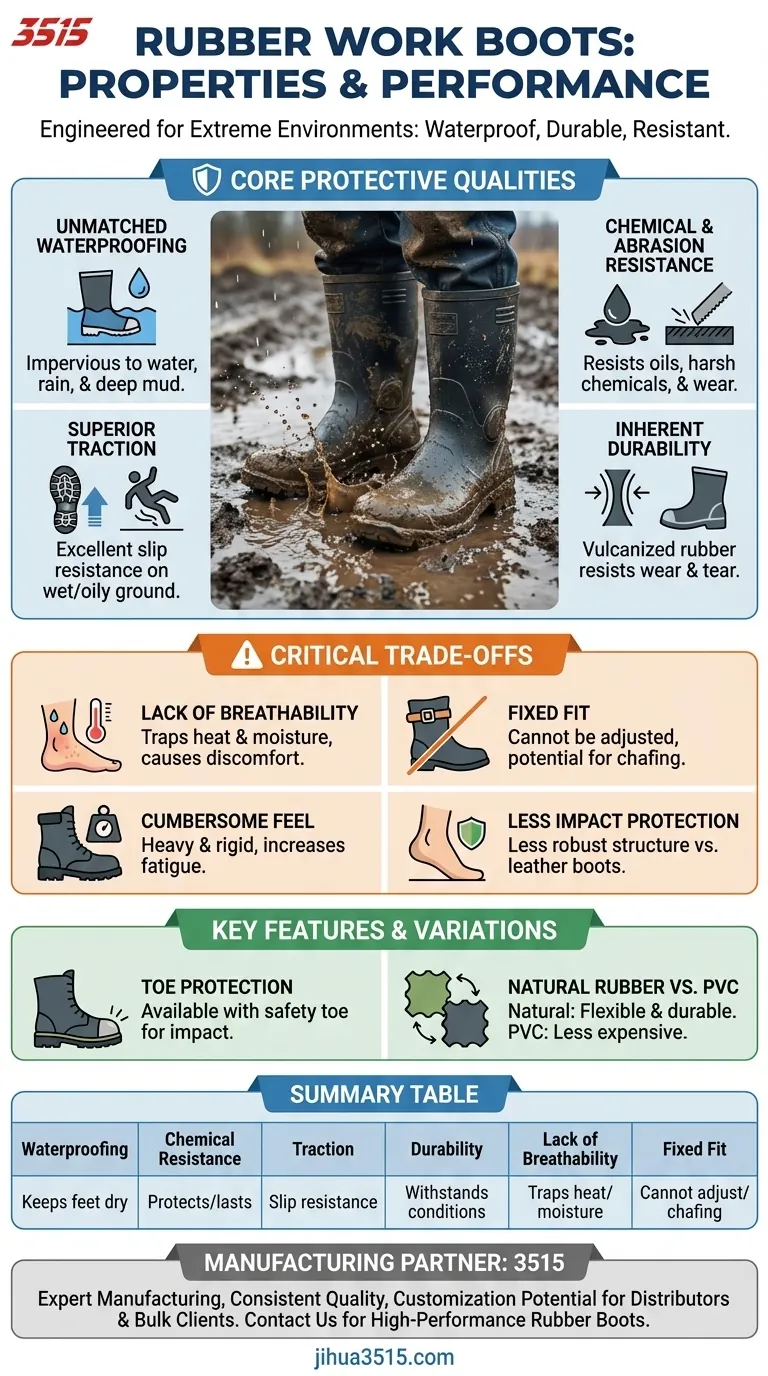
Rubber work boots are primarily defined by their exceptional waterproofing, durability against wear, and resistance to chemicals and oils. They create an impermeable barrier that is ideal for wet, muddy, and hazardous environments, while also being slip-resistant and easy to clean.
While offering superior protection against liquids, the primary trade-off of rubber boots is their lack of breathability and an unchangeable fit. This makes them a highly specialized tool for specific environmental hazards, not a versatile, all-day work boot.
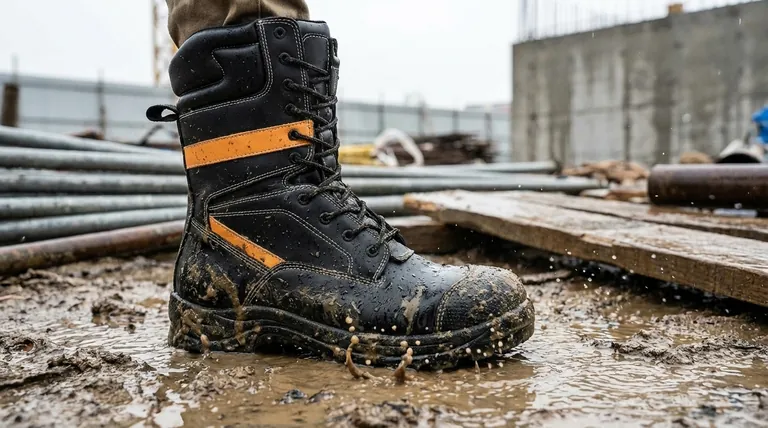
The Core Protective Qualities of Rubber
Rubber boots are chosen for jobs where protection from the elements is the number one priority. Their material properties offer several distinct advantages.
Unmatched Waterproofing
The primary strength of a rubber boot is that it is impervious to water. This quality makes it the definitive choice for work in heavy rain, standing water, and deep mud, ensuring feet remain completely dry.
Chemical and Abrasion Resistance
Rubber as a material is naturally resistant to oil and abrasion. This is a critical safety and longevity feature for anyone working in industrial, automotive, or agricultural settings where chemical spills or rough surfaces are common.
Superior Traction
The composition of rubber soles provides excellent traction and slip resistance. This is a non-negotiable safety feature when working on wet, slick, or oily surfaces, helping to prevent falls.
Inherent Durability
High-quality rubber is known for its durability and flexibility, allowing it to resist wear and tear without easily losing its shape. This durability is often enhanced through a process called vulcanization, which strengthens the material.
Understanding the Critical Trade-offs
The same features that make rubber boots protective also create significant limitations. Understanding these trade-offs is crucial for selecting the right footwear.
The Inevitable Lack of Breathability
The non-porous nature of rubber means it has virtually no breathability. This traps heat and sweat, which can lead to significant discomfort and potential foot health issues during a long workday.
The Challenge of a Fixed Fit
Unlike boots with laces, a rubber boot's shape is fixed and cannot be adjusted for fit. This can result in a loose, unsupportive feel or painful chafing, compromising both safety and comfort.
A Cumbersome Feel for Active Work
The rigid structure and weight of many rubber boots can feel heavy and cumbersome. This can lead to fatigue, especially for jobs that require extensive walking, climbing, or agility.
Impact Protection Considerations
While durable against scuffs, a standard rubber boot often provides less impact protection compared to a heavy-duty leather work boot, which typically has a more robust structure around the foot and ankle.
Key Features and Variations
Not all rubber boots are created equal. Pay attention to these key variations when making a selection.
The Importance of Toe Protection
Rubber work boots are available with or without safety toe protection. For any job with a risk of falling objects or compression, choosing a model with a certified steel or composite toe is essential.
Natural Rubber vs. PVC
Boots labeled as "rubber" can also be made from PVC, a synthetic plastic. Natural rubber tends to be more flexible and durable, while PVC is often a less expensive, but potentially less comfortable, alternative.
Making the Right Choice for Your Job
Your decision should be based entirely on the primary demands of your work environment.
- If your primary focus is keeping feet dry in wet, muddy, or chemical-heavy conditions: A rubber boot is the unparalleled choice for its impermeable protection.
- If your primary focus is all-day comfort, breathability, and ankle support for varied terrain: A high-quality leather or synthetic fabric boot is a more suitable option.
- If your primary focus is protection from occasional standing water without sacrificing mobility: Consider a waterproof leather boot as a hybrid solution.
Ultimately, choosing the right boot means matching the material's specific properties to the unique hazards of your job.
Summary Table:
| Key Property | Benefit for the Worker |
|---|---|
| Unmatched Waterproofing | Keeps feet completely dry in rain, mud, and standing water. |
| Chemical & Abrasion Resistance | Protects against oils and harsh substances; lasts longer. |
| Superior Traction | Provides slip resistance on wet and oily surfaces. |
| Inherent Durability | Withstands tough conditions without losing shape. |
| Lack of Breathability | Trade-off: Can trap heat and moisture during long wear. |
| Fixed Fit | Trade-off: Cannot be adjusted, may cause chafing or instability. |
Need Durable, Protective Rubber Work Boots for Your Team?
As a large-scale manufacturer, 3515 produces a comprehensive range of high-performance rubber work boots tailored for the needs of distributors, brand owners, and bulk clients. We understand that your business requires footwear that delivers on its promise of protection and durability.
Partnering with 3515 gives you access to:
- Expert Manufacturing: Advanced production capabilities for all types of rubber boots, including safety-toe options.
- Consistent Quality & Supply: Reliable, large-volume production to meet your demand and timelines.
- Customization Potential: Options to develop boots that meet your specific market requirements.
Let's discuss how we can supply the durable rubber work boots your customers need. Contact our team today for a consultation.
Visual Guide
Related Products
- Durable Canvas Work Shoes with Rubber Lug Sole | Wholesale Manufacturer
- Factory Direct Wholesale Rain Boots Durable Waterproof & Fully Customizable
- Durable Leather Work Boots for Wholesale & Custom Manufacturing
- Durable Leather Work Boots for Wholesale & Custom OEM Manufacturing
- Wholesale Durable Leather Work Boots | 8-Inch Goodyear Welt Manufacturer
People Also Ask
- What are the properties of canvas as a shoe material? A Guide to Lightweight Comfort & Style
- Why is the selection of high-strength fabric materials necessary in the production of canvas shoes and training shoes?
- What types of jobs are canvas work boots suitable for? Ideal for Light-Duty, High-Mobility Roles
- Can canvas shoes be worn in rainy conditions? The Truth About Water Resistance
- What are the functional advantages of choosing rubber soles over leather soles for work boots? Superior Safety & Durability