
At its core, a cowboy boot's style is defined by its intended function. The primary styles include the traditional Classic Western for riding, the Roper for walking and groundwork, the Western Work Boot for durability, and several modern variations like Short, Dress, and Exotic boots designed for fashion or formal wear. These categories are distinguished by their specific combination of heel height, toe shape, and materials.
Choosing the right cowboy boot is less about picking a style and more about understanding how its core components—the heel, the toe, and the material—are engineered to serve a specific purpose, from the saddle to the city street.
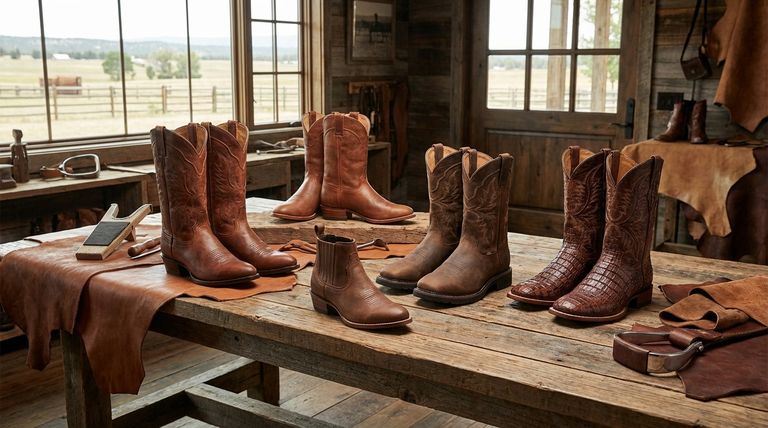
The Anatomy of a Cowboy Boot: Function Defines Form
Before categorizing boot styles, it's essential to understand the functional components that create them. The design of each part directly impacts the boot's performance and comfort.
The Heel: From Riding Stability to Walking Comfort
The heel is perhaps the most critical functional element. Its height and angle are tailored for specific tasks.
There are three primary heel styles. The high "cowboy" or "riding" heel is angled to prevent a rider's foot from slipping through a stirrup.
The intermediate "walking" heel is lower and broader, offering a compromise between the stability of a riding heel and the comfort of a flat sole.
Finally, the low "roper" heel is flat and straight, similar to a traditional work boot, making it ideal for walking, running, and extensive groundwork.
The Toe: A Matter of Use and Aesthetics
Toe shape has evolved from pure function to include strong stylistic preferences.
Pointy toes were originally designed to help a rider easily guide their foot into the stirrup. Today, they are often considered a more fashion-forward choice.
Round toes offer a more conservative look and are often prioritized for comfort, providing ample room for the toes to spread.
Square toes have become extremely popular, particularly for work and rodeo wear. They provide the most room and are seen as a modern, practical choice.
The Materials: Durability vs. Distinction
The material, or "skin," of the boot defines its durability, purpose, and price.
Most boots are made from durable cowhide leather, built to withstand harsh conditions. Work boots often feature thicker, more rugged leather for maximum protection.
Exotic boots, on the other hand, are crafted from unique materials like alligator, ostrich, or snakeskin. These are primarily for aesthetic appeal and are less suited for rigorous work.
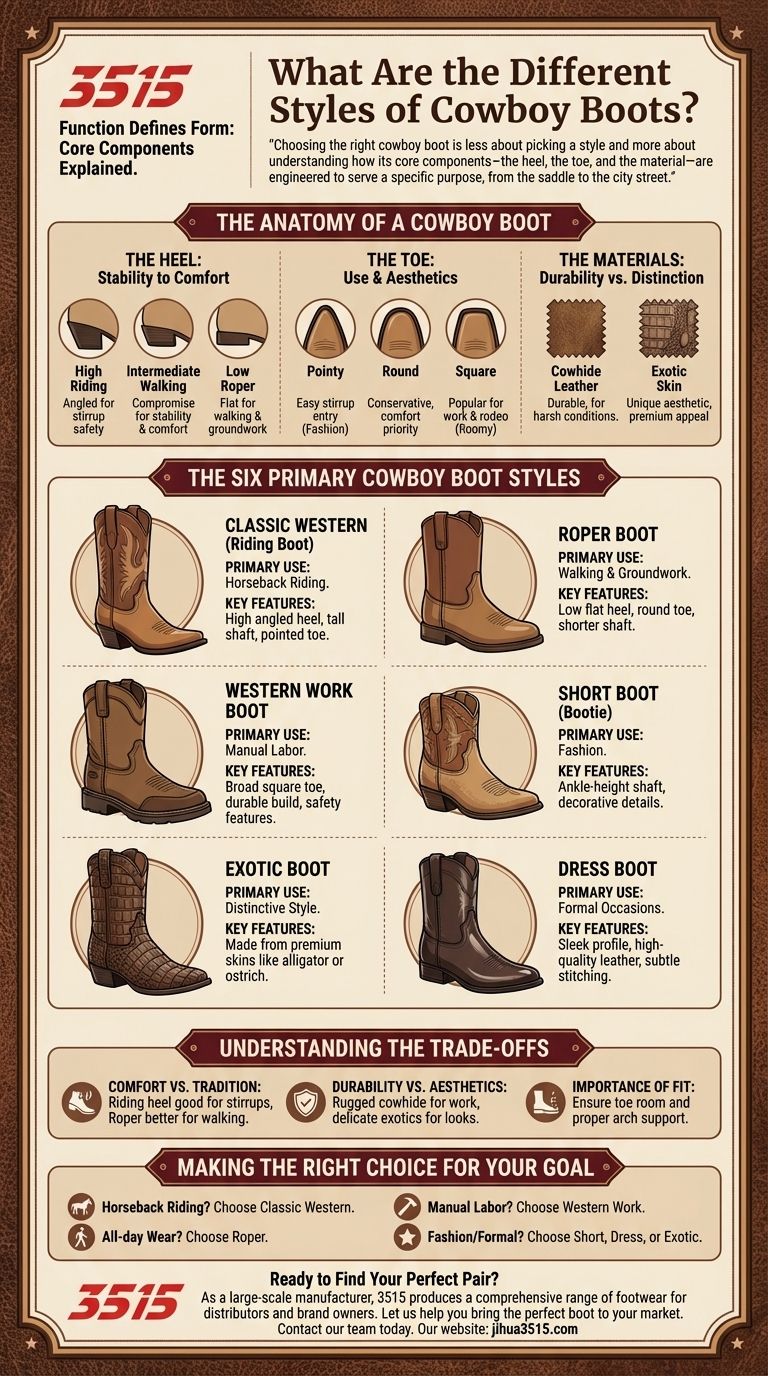
The Six Primary Cowboy Boot Styles
With an understanding of the components, we can now clearly define the main styles you'll encounter.
The Classic Western (or Riding) Boot
This is the quintessential cowboy boot. It features a high, angled riding heel and a tall shaft (at least mid-calf) to protect the rider's leg. The toe is often pointed or narrowly rounded.
The Roper Boot
Designed for rodeo cowboys who needed to quickly dismount and work on foot, the Roper is built for versatility. It features a low, square roper heel, a round toe, and a shorter shaft.
The Western Work Boot
This modern style blends the look of a cowboy boot with the functionality of a safety shoe. It typically has a low heel, a broad square toe for comfort, and often includes features like rubber soles and reinforced safety toes.
The Short Boot (or Bootie)
A purely fashion-driven style, the short boot or "bootie" adopts cowboy boot elements like decorative stitching or a Cuban heel but features a much shorter shaft, usually ending at the ankle.
The Exotic Boot
This category is defined entirely by its material. An exotic boot can come in any shape—Roper, Classic Western, or otherwise—but is crafted from a non-traditional, premium skin for a distinctive look.
The Dress Boot
A dress boot elevates the classic silhouette for more formal occasions. It typically uses high-quality leathers, features a sleeker profile, and may have finer, more subtle decorative stitching.
Understanding the Trade-offs
Selecting a boot style requires balancing its intended purpose with your personal needs for comfort and aesthetics.
Comfort vs. Tradition
A traditional, high-heeled riding boot is excellent in the stirrup but can be uncomfortable for extensive walking. A roper or work boot with a lower heel offers far superior all-day comfort on the ground.
Durability vs. Aesthetics
A tough, cowhide work boot is designed to be beaten up. An expensive, delicate alligator skin boot is not. You must match the boot's material to the environment you plan to wear it in.
The Importance of Fit
No style will work if the fit is wrong. Regardless of the toe shape you choose, you must have enough room for your toes to lie flat. Similarly, proper arch support is critical for long-term comfort, and many boots allow for removable insoles to accommodate your specific needs.
Making the Right Choice for Your Goal
Use the boot's intended function as your guide to select the right style for you.
- If your primary focus is horseback riding: Choose a Classic Western boot with a high, angled heel for safety and stability in the stirrup.
- If your primary focus is all-day wear and walking: Choose a Roper-style boot with its low, flat heel for maximum comfort and versatility.
- If your primary focus is manual labor: Choose a Western Work boot, prioritizing a durable build, a comfortable square toe, and a non-slip sole.
- If your primary focus is fashion or formal events: Choose a Short, Dress, or Exotic boot that matches your aesthetic and the occasion's level of formality.
Understanding that every element of a cowboy boot's design serves a purpose is the key to finding the perfect pair for your needs.
Summary Table:
| Style | Primary Use | Key Features |
|---|---|---|
| Classic Western | Horseback Riding | High angled heel, tall shaft, pointed toe |
| Roper | Walking & Groundwork | Low flat heel, round toe, shorter shaft |
| Western Work Boot | Manual Labor | Broad square toe, durable build, safety features |
| Short Boot / Bootie | Fashion | Ankle-height shaft, decorative details |
| Exotic Boot | Distinctive Style | Made from premium skins like alligator or ostrich |
| Dress Boot | Formal Occasions | Sleek profile, high-quality leather, subtle stitching |
Ready to Find Your Perfect Pair of Cowboy Boots?
As a large-scale manufacturer, 3515 produces a comprehensive range of footwear for distributors, brand owners, and bulk clients. Our production capabilities encompass all types of shoes and boots, ensuring you get the right style, fit, and durability for your specific needs—whether for riding, work, or fashion.
Let us help you bring the perfect boot to your market. Contact our team today to discuss your requirements and discover how we can support your business with high-quality, purpose-built footwear.
Visual Guide
Related Products
- High-Traction Suede Tactical Boots Wholesale & Custom Manufacturing
- Wholesale High-Traction Camo Boots - Custom Manufacturer for Brands
- Wholesale Lightweight Tactical Boots Custom Manufacturer for Desert & Combat Use
- Durable Leather Tactical Boots Wholesale & Custom Manufacturing for Brands
- Wholesale Durable Mid-Cut Tactical Boots for Custom & Private Label Brands
People Also Ask
- Why is sequential analysis utilized to evaluate tactical boots? Master Dynamic Boot Development and Ergonomic Performance
- How does the material of tactical boots affect their performance? Choose the Right Material for Your Mission
- How do tactical boots differ from regular boots? Performance, Durability & Design Explained
- How do military uniforms and tactical boots impact the prediction of thermal risk? Essential Safety Insights
- What are the benefits of integrating FES and sEMG into tactical boots? Safety, Reliability & Field-Ready Performance


















