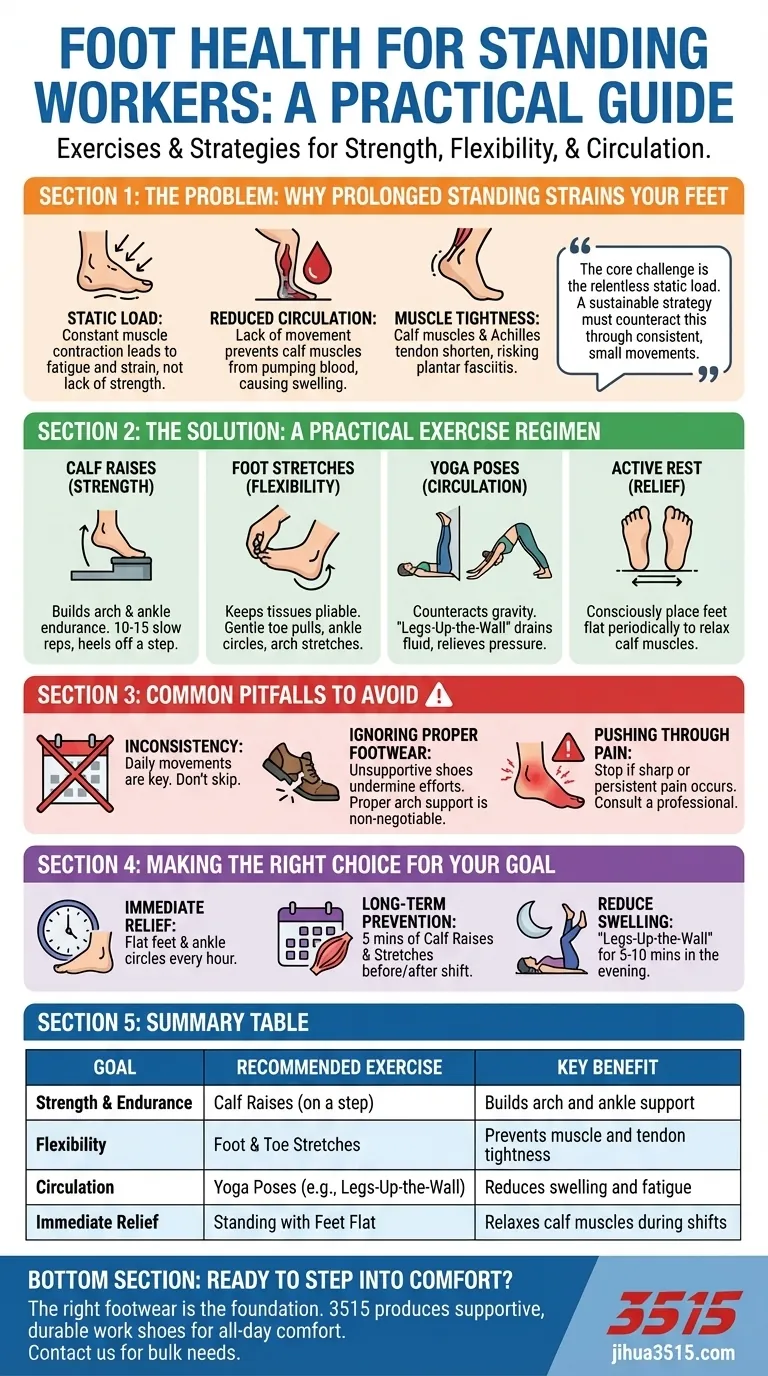
To maintain foot health during long periods of standing, the most effective exercises focus on strength, flexibility, and circulation. Key movements include calf raises performed on a step to build muscle, general foot and toe stretches to maintain flexibility, and simple yoga poses to improve blood flow. It is also beneficial to consciously place your feet flat on the floor periodically, which allows the calf muscles and Achilles tendon to relax from a state of constant tension.
The core challenge for standing workers isn't a lack of strength, but the relentless static load placed on the feet. A sustainable foot health strategy, therefore, must focus on counteracting this load through consistent, small movements that strengthen support muscles, improve flexibility, and restore circulation.
Why Prolonged Standing Strains Your Feet
Understanding the underlying mechanics of foot strain is the first step toward effective prevention. The problem is not standing itself, but the lack of movement that comes with it.
The Problem of Static Load
When you walk, your foot muscles contract and relax, which helps pump blood and distribute pressure. When you stand still, your muscles are held in a constant, static contraction to keep you upright, leading to fatigue and strain.
Reduced Blood Circulation
The natural pumping action of your calf muscles is critical for pushing blood from your lower legs back to your heart. Without this movement, blood can pool, causing swelling, aches, and a feeling of heaviness in the feet and legs.
Muscle and Tendon Tightness
Holding a standing posture for hours can cause the calf muscles and the Achilles tendon to shorten and tighten. This imbalance is a primary contributor to common conditions like plantar fasciitis and heel pain.
A Practical Exercise Regimen
These exercises are designed to be simple and effective, targeting the specific issues caused by static standing.
The Calf Raise (For Strength)
Performing calf raises, especially with your heels hanging off a step, directly strengthens the muscles that support your foot's arch and ankle. This builds endurance to better handle long hours of standing. Aim for 10-15 slow, controlled repetitions.
General Foot Stretches (For Flexibility)
Incorporate simple stretches to keep the small muscles and connective tissues in your feet pliable. This can include pulling your toes gently back towards your shin, performing ankle circles, or using your hands to stretch the arch of your foot.
Yoga Poses (For Circulation)
Simple yoga poses can powerfully counteract the effects of gravity. A pose like "Legs-Up-the-Wall" is exceptionally effective after a long shift for draining fluid and relieving pressure. Even a "Downward-Facing Dog" stretches the entire chain of muscles from your heels to your back.
Active Rest (For In-the-Moment Relief)
The reference to keeping feet flat on the floor is a form of active rest. Throughout the day, make a conscious effort to stand with your weight evenly distributed. This gives your calf muscles a break from the tension of even a slight tiptoe or lean.
Common Pitfalls to Avoid
Exercises are only one part of the equation. Avoiding these common mistakes is crucial for long-term foot health.
Inconsistency is the Real Enemy
The most significant pitfall is inconsistency. Performing these exercises for a few minutes every day is far more effective than one long session per week. The goal is to consistently undo the daily strain.
Ignoring Proper Footwear
No amount of stretching can compensate for unsupportive footwear. Shoes with proper arch support and cushioning are non-negotiable as they provide the foundational structure your feet need. Exercises should be seen as a supplement to, not a replacement for, good shoes.
Pushing Through Sharp Pain
These exercises are for maintenance and preventing general soreness. If you experience sharp, stabbing, or persistent pain, it is a signal to stop and consult a healthcare professional. Do not try to "stretch through" a potential injury.
Making the Right Choice for Your Goal
Integrate these movements into your routine based on your most pressing need.
- If your primary focus is immediate relief during a shift: Consciously place your feet flat on the floor to relax your calves and perform simple ankle circles every hour.
- If your primary focus is long-term prevention and strength: Dedicate five minutes before or after your shift to performing calf raises and targeted foot stretches.
- If your primary focus is reducing end-of-day swelling and fatigue: Incorporate a "Legs-Up-the-Wall" yoga pose into your evening routine for 5-10 minutes.
Consistent, small movements are the key to building resilient foot health that supports you throughout your workday.
Summary Table:
| Goal | Recommended Exercise | Key Benefit |
|---|---|---|
| Strength & Endurance | Calf Raises (on a step) | Builds arch and ankle support |
| Flexibility | Foot & Toe Stretches | Prevents muscle and tendon tightness |
| Circulation | Yoga Poses (e.g., Legs-Up-the-Wall) | Reduces swelling and fatigue |
| Immediate Relief | Standing with Feet Flat | Relaxes calf muscles during shifts |
Ready to step into comfort? The right footwear is the foundation of foot health. As a large-scale manufacturer, 3515 produces a comprehensive range of supportive and durable work shoes and boots designed for all-day comfort. Whether you are a distributor, brand owner, or bulk client, we can provide the perfect footwear solution to complement your exercise routine. Contact us today to discuss your needs and discover how our production capabilities can support your workforce.
Visual Guide