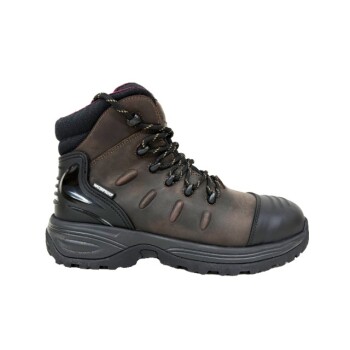
The core functions of industrial safety shoes in solid waste treatment are to provide a fortified physical barrier against mechanical trauma and to stabilize the worker on unpredictable terrain. Specifically, these shoes utilize puncture-resistant midsoles and impact-resistant toe caps to defend against sharp debris like glass or metal and falling heavy loads. Furthermore, they actively enhance worker stability through high-traction outsoles and reinforced ankle support, which is critical for preventing falls during manual handling tasks.
In solid waste environments, safety shoes serve as a critical interface between the worker and a volatile physical environment. By combining penetration resistance with gait stabilization, they mitigate the high-probability risks of crushing injuries, punctures, and debilitating falls on unstable surfaces.
Mechanical Protection Against Debris and Load
Preventing Penetration Injuries
Solid waste treatment sites are frequently littered with concealed sharp hazards, including broken glass and metallic shards. To counter this, safety shoes are engineered with puncture-resistant midsoles. These specialized layers prevent sharp objects from piercing the sole and inflicting deep tissue injuries on the foot.
Shielding Against Crushing Force
The manual handling of waste involves moving unpredictable and often heavy loads. Impact-resistant toe caps are essential in this environment. They provide a rigid protective shell that absorbs and deflects the kinetic energy of falling objects, effectively preventing toe fractures and crushing injuries.
Stability on Uneven Surfaces
Enhancing Traction Control
The ground conditions in waste treatment facilities are rarely uniform; they are often cluttered, uneven, or slippery. Specialized outsoles feature high-traction patterns designed to bite into irregular surfaces. This superior grip significantly reduces the likelihood of slips and trips, which are common accidents in these facilities.
Structural Ankle Support
Navigating uneven terrain while handling waste places immense mechanical stress on the lower joints. Shoes equipped with reinforced ankle support structures are designed to restrict excessive lateral movement. This enhances overall gait stability and acts as a preventative measure against ankle sprains during dynamic movements.
Understanding the Trade-offs
Weight vs. Fatigue
While reinforced midsoles and toe caps provide maximum safety, they inevitably add weight to the footwear. Heavier boots can lead to increased leg fatigue over the course of a long shift, potentially affecting worker alertness and agility in the final hours of operation.
Rigidity vs. Range of Motion
The structural rigidity required for ankle support and puncture resistance can compromise flexibility. A highly protective boot may limit the foot's natural range of motion. This trade-off can make tasks requiring kneeling or crouching more difficult or uncomfortable compared to lighter, less protective footwear.
Making the Right Choice for Your Safety Goals
Selecting the correct safety footwear requires matching the specific protective feature to the most prevalent hazard in your operational zone.
- If your primary focus is Avoiding Penetration Injuries: Prioritize footwear with certified puncture-resistant midsoles to neutralize the threat of hidden glass and metal shards.
- If your primary focus is Heavy Material Handling: Ensure the footwear features high-grade impact-resistant toe caps to offer maximum defense against falling loads.
- If your primary focus is Stability on Rough Terrain: Select boots with aggressive high-traction outsoles and rigid ankle reinforcement to prevent slips and sprains.
True safety in waste treatment is achieved not just by covering the foot, but by mechanically countering the specific instability and debris of the environment.
Summary Table:
| Core Function | Key Feature | Protection Goal |
|---|---|---|
| Mechanical Shielding | Impact-resistant toe caps | Prevents crushing from heavy falling loads |
| Penetration Defense | Puncture-resistant midsoles | Blocks glass and metal shards from piercing the foot |
| Gait Stabilization | High-traction outsoles | Reduces slips and trips on uneven or slippery waste |
| Injury Prevention | Reinforced ankle support | Minimizes sprains during manual handling tasks |
Partner with 3515 for Robust Industrial Footwear Solutions
As a large-scale manufacturer serving distributors and brand owners, 3515 offers comprehensive production capabilities for all footwear types, anchored by our flagship Safety Shoes series. Whether you need specialized penetration resistance for waste management or rugged traction for outdoor work, our extensive portfolio covers work and tactical boots, training shoes, and sneakers to meet your diverse bulk requirements.
Maximize worker safety and streamline your supply chain with our durable, high-performance designs. Contact us today to discuss your bulk needs and custom orders!
References
- Godwin Usoh, E. O. Sam. Risk Assessment on Waste Management Officials in Uyo Metropolis, Akwa Ibom State. DOI: 10.52589/irme-gzrirjdy
This article is also based on technical information from 3515 Knowledge Base .
Related Products
- Premium Waterproof High-Cut Industrial Safety Boots for Wholesale and Bulk Orders
- Premium Wheat Nubuck Safety Shoes for Bulk Distribution
- Wholesale Mesh Steel Toe Safety Shoes with Dial Closure Factory Production
- Wholesale Anti-Smash & Puncture-Proof Safety Shoes Custom Manufacturing for Brands
- Premium KPU Athletic Safety Shoes for Wholesale
People Also Ask
- Why are oil-resistant and anti-slip properties critical for industrial safety boots? Expert Outsole Engineering Guide
- What are the primary protective functions of industrial safety boots in oil palm plantations? Master Rough Terrain Safety
- What are the protective functions of industrial safety boots in sugar factory clarification stations? Thermal & Slip Experts
- Why are industrial safety boots with high-grip outsoles required for oil leaks and B3 waste? Ensure Worker Stability
- Why is professional industrial-grade safety footwear a suitable carrier for diabetic rehabilitation insoles?