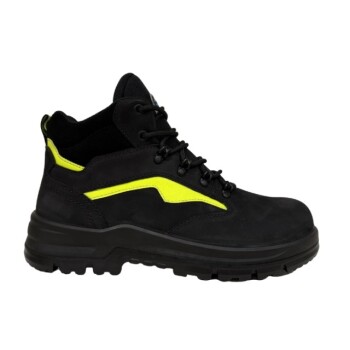
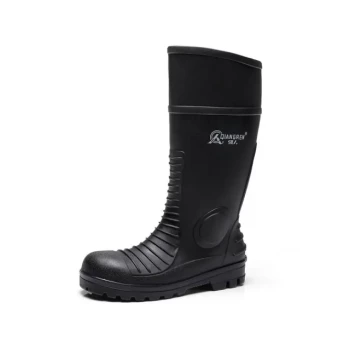
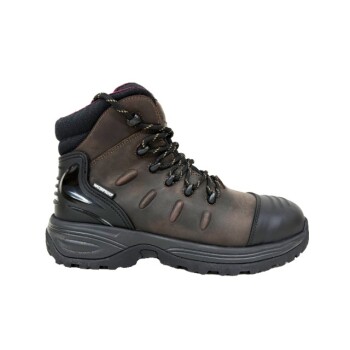
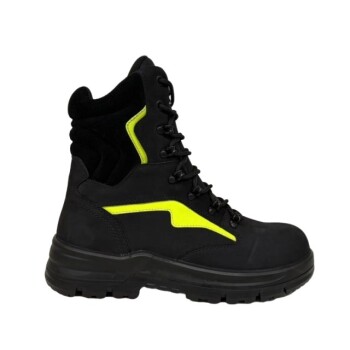
The C/75 rating on a work boot signifies that its protective toe cap can withstand a compressive load of 2,500 pounds. Under this force, the boot must maintain at least a 0.50-inch clearance inside the toe box to protect the wearer's foot. This standard is formally defined by the ASTM F2413 specification.
The "C/75" designation is not an arbitrary class but a direct measure of performance. It certifies that a boot has passed a specific test against a 2,500-pound rolling or compressive force, making it a critical metric for environments with heavy rolling equipment or materials.
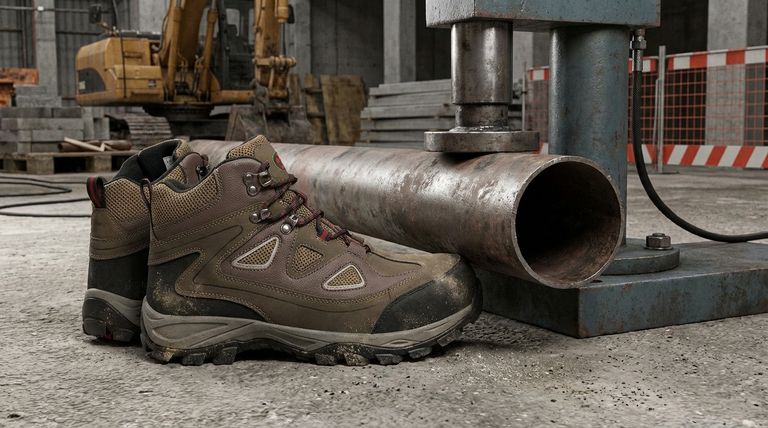
Deconstructing the ASTM F2413 Safety Rating
To fully understand the C/75 rating, you must see it within the context of the complete safety code found on the boot's tongue. This code provides a clear summary of the boot's protective capabilities.
The Governing Standard: ASTM F2413
The ASTM F2413 standard is the specification for performance requirements for protective (safety) toecap footwear. Any boot carrying this rating has been tested to meet these stringent requirements.
The Full Rating Code: I/75 C/75
A common rating you will see is "ASTM F2413 M/I/75/C/75". The "M" simply stands for "Male," and the two most critical parts are I/75 and C/75.
Understanding 'I/75' for Impact
The I/75 rating relates to impact resistance. This test measures the boot's ability to protect the foot from a falling object.
Specifically, it certifies that the boot's toe cap can withstand an impact of 75 foot-pounds while maintaining the required 0.50-inch interior clearance.
The Core of Your Question: 'C/75' for Compression
The C/75 rating relates to compression resistance, which is crucial for protection against rolling objects or crushing forces.
This standard verifies that the boot's toe cap will not compress to less than 0.50 inches of internal clearance when subjected to a static force of 2,500 pounds.
How Certification Guarantees Performance
The ASTM rating is more than just a label; it's a verifiable promise of safety backed by a standardized process.
The Role of Independent Labs
To achieve an ASTM certification, footwear must be evaluated by an independent, third-party laboratory. This ensures unbiased and accurate testing against the standard.
What the Test Actually Measures
The key outcome of both the impact and compression tests is clearance. The goal is to ensure a "survival space" for your toes inside the protective cap after a major incident, preventing a severe crush injury.
Common Pitfalls to Avoid
Understanding the limitations of a safety rating is just as important as knowing what it certifies. A single rating does not cover all potential workplace hazards.
A Rating is Hazard-Specific
A C/75 rating offers no protection against punctures, electrical shock, or slips. Your work environment dictates the full range of protections needed.
Look for additional ASTM ratings on the label, such as EH (Electrical Hazard), PR (Puncture Resistant), or SR (Slip Resistant), if you face those risks.
The Difference Between Steel, Composite, and Alloy Toes
All three types of protective toes (steel, composite, alloy) can meet the I/75 and C/75 standards. The material affects weight and conductivity, but a certified boot provides the same minimum level of impact and compression protection regardless of the toe material.
Making the Right Choice for Your Goal
Use the boot's full ASTM rating code to select the appropriate protection for your specific job site hazards.
- If your primary focus is protection from rolling objects (e.g., carts, pipes, vehicles): You must look for the 'C/75' rating, which ensures the toe can withstand a 2,500-pound compressive load.
- If your primary focus is protection from falling objects (e.g., tools, building materials): The 'I/75' rating is the critical standard, protecting against a 75 foot-pound impact.
- If you work in a dynamic environment with multiple hazards: Ensure your boot carries all necessary ASTM ratings for your job, as the impact and compression standards cover only the protective toe cap.
By understanding what these precise ratings mean, you can make an informed decision that directly contributes to your personal safety.
Summary Table:
| Standard | Test Type | Force/Load | Minimum Clearance |
|---|---|---|---|
| C/75 | Compression | 2,500 pounds | 0.50 inches |
| I/75 | Impact | 75 foot-pounds | 0.50 inches |
Need C/75 certified work boots for your team? As a large-scale manufacturer, 3515 produces a comprehensive range of ASTM-rated footwear for distributors, brand owners, and bulk clients. Our production capabilities encompass all types of safety shoes and boots, ensuring your workforce is protected against impact and compression hazards. Contact us today to discuss your custom or bulk order requirements!
Visual Guide

Related Products
- Durable Leather Work Boots for Wholesale & Custom Manufacturing
- Durable Leather Work Boots for Wholesale & Custom OEM Manufacturing
- Durable Goodyear Welt Leather Work Boots for Wholesale & Private Label
- Wholesale Customizable Safety Boots Durable & Protective Footwear Manufacturing
- Durable Leather Moc Toe Work Boots for Wholesale & Custom Manufacturing
People Also Ask
- What is the difference between full-grain and top-grain leather? Premium Material Guide for Boot Manufacturers
- What are the common workplace hazards that can be mitigated with the right work boots? Protect Your Workforce
- What are the common foot issues workers face due to uncomfortable work boots? Prevent Pain & Deformities
- What are the advantages of leather versus synthetic work boots? A Guide to Choosing the Right Material
- What are the key components of modern work boots? Engineered for Ultimate Durability and Comfort