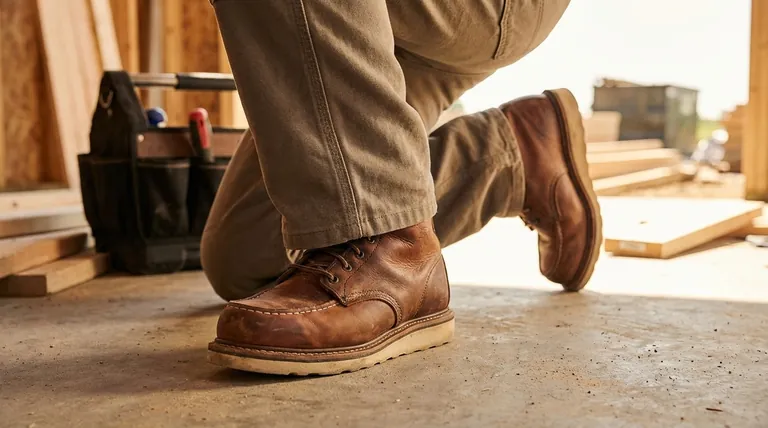
At its core, the comfort of moc toe boots stems directly from their unique construction. The signature U-shaped seam on top creates a fundamentally different fit, providing more vertical space in the toe box for natural foot movement, while the commonly paired wedge sole is engineered to distribute pressure and absorb shock on hard surfaces.
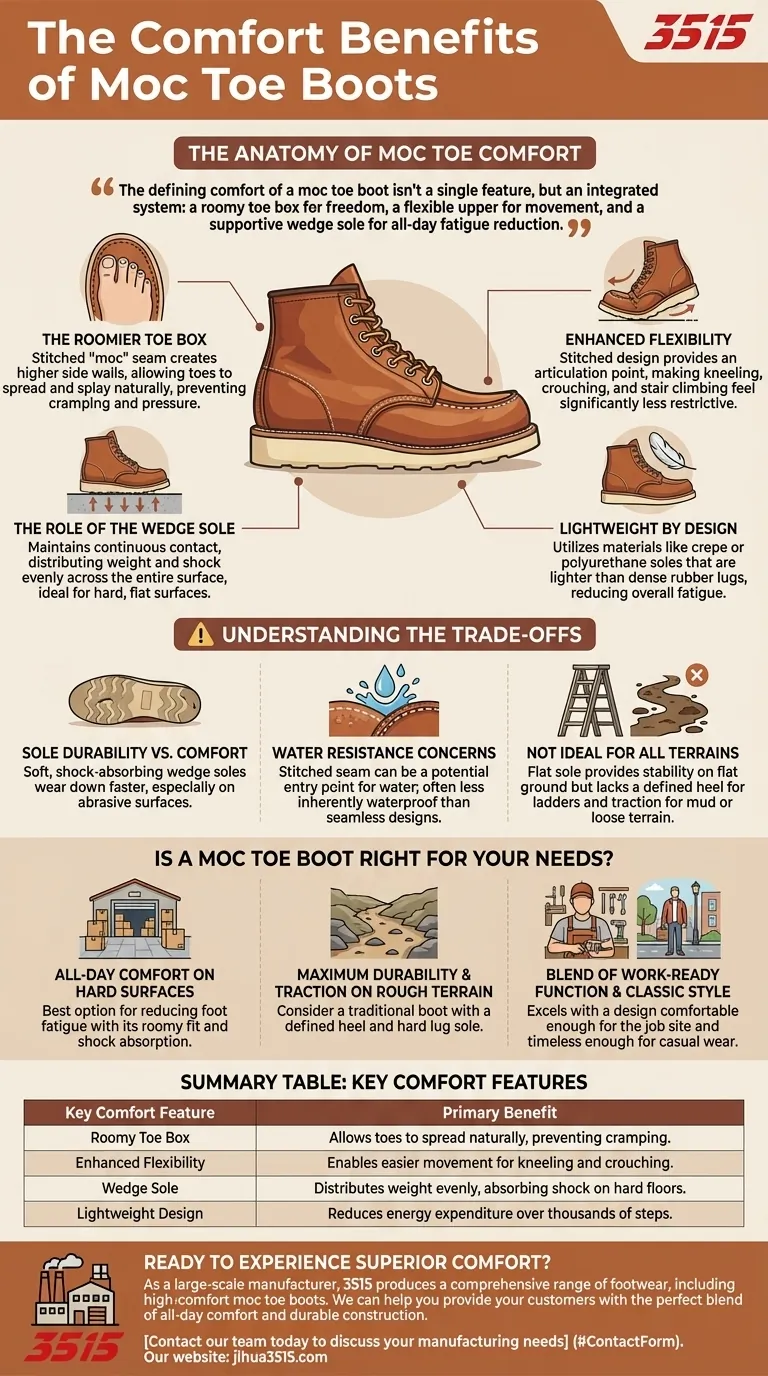
The defining comfort of a moc toe boot isn't a single feature, but an integrated system: a roomy toe box for freedom, a flexible upper for movement, and a supportive wedge sole for all-day fatigue reduction.
The Anatomy of Moc Toe Comfort
To understand why these boots are so comfortable for long hours on your feet, we need to break down the key design elements that work together to reduce strain.
The Roomier Toe Box
The most recognizable feature of the boot is the source of its primary comfort benefit. The stitched "moc" seam isn't just for style; it creates higher side walls around the front of the boot.
This construction results in a boxier, more spacious toe area. It allows your toes to spread and splay naturally, preventing the cramping and pressure common in more tapered boot designs, especially after hours of standing or walking.
Enhanced Flexibility
That same seam provides an additional point of articulation. The stitched design allows the forefoot of the boot to flex more easily than a boot made from a single, rigid piece of leather.
This added flexibility makes actions like kneeling, crouching, and climbing stairs feel significantly less restrictive and more natural, reducing overall foot fatigue.
The Role of the Wedge Sole
Moc toe boots are almost universally paired with a wedge sole. This sole design maintains continuous contact with the ground from heel to toe.
Unlike a traditional heeled boot that concentrates impact on the heel and ball of the foot, the wedge sole distributes your weight and shock evenly across its entire surface. This is the key reason they excel on hard, flat surfaces like concrete floors and asphalt.
Lightweight by Design
The materials typically used in moc toe boots, particularly the crepe or polyurethane wedge soles, are inherently lighter than the dense rubber lugs found on many heavy-duty work boots.
While it may seem minor, shaving ounces off your footwear makes a significant difference in the energy you expend over thousands of steps, leading to less end-of-day fatigue.
Understanding the Trade-offs
No boot design is perfect for every situation. The features that make a moc toe exceptionally comfortable also create specific limitations you must consider.
Sole Durability vs. Comfort
The soft, shock-absorbing material that makes a wedge sole so comfortable also means it wears down faster than a hard lug sole. On highly abrasive surfaces like rough concrete or gravel, you will see wear much more quickly.
Water Resistance Concerns
While the leather upper can be waterproofed, the stitched seam of the moc toe itself can be a potential point for water to enter. While many high-quality boots have sealed seams, they are often inherently less waterproof than seamless "bathtub" designs.
Not Ideal for All Terrains
The flat, continuous surface of a wedge sole provides excellent stability on flat ground but lacks key features for other environments. The absence of a defined heel can make it less secure for climbing ladders, and the shallow tread offers limited grip in thick mud or on loose, uneven ground.
Is a Moc Toe Boot Right for Your Needs?
Choosing the right boot means matching its strengths to your daily demands. The moc toe's comfort is undeniable, but only if it's applied in the right context.
- If your primary focus is all-day comfort on hard, flat surfaces: The moc toe's combination of a roomy fit and a shock-absorbing wedge sole is one of the best options available for reducing foot fatigue.
- If your primary focus is maximum durability and traction on rough terrain: You should consider a traditional boot with a defined heel and a hard lug sole, as the moc toe's sole may wear too quickly and lack the necessary grip.
- If your primary focus is a blend of work-ready function and classic style: The moc toe excels, offering a design that is comfortable enough for the job site and timeless enough for casual wear.
Ultimately, the moc toe boot delivers its renowned comfort by prioritizing natural foot mechanics and even pressure distribution.
Summary Table:
| Key Comfort Feature | Primary Benefit |
|---|---|
| Roomy Toe Box | Allows toes to spread naturally, preventing cramping. |
| Enhanced Flexibility | Enables easier movement for kneeling and crouching. |
| Wedge Sole | Distributes weight evenly, absorbing shock on hard floors. |
| Lightweight Design | Reduces energy expenditure over thousands of steps. |
Ready to Experience Superior Comfort?
As a large-scale manufacturer, 3515 produces a comprehensive range of footwear for distributors, brand owners, and bulk clients. Our production capabilities encompass all types of shoes and boots, including high-comfort styles like moc toe boots.
We can help you provide your customers with the perfect blend of all-day comfort and durable construction.
Contact our team today to discuss your manufacturing needs and bring superior comfort to your market.
Visual Guide
Related Products
- Durable Leather Moc Toe Work Boots for Wholesale & Custom Manufacturing
- Durable Moc Toe Wedge Sole Work Boots for Wholesale and Private Label
- Durable Moc-Toe Wedge Work Boots | Wholesale Manufacturing for Brands
- Wholesale Durable Safety Boots Manufacturer Customizable Steel Toe Work Boots
- Wholesale Customizable Safety Boots Durable & Protective Footwear Manufacturing
People Also Ask
- What are moc toe work boots designed for? Superior Comfort and Mobility for Tradespeople
- What are the key features to look for when purchasing moc toe boots? A Guide to Durability & Fit
- How did moc toe boots originate? A Legacy of Workwear Durability and Style
- What clothing items complement the Outdoorsman/Heritage Look with moc toe boots? Build a Timeless, Rugged Wardrobe
- What types of outfits can moc toe boots be worn with? Versatile Style Guide