
At their core, short riding boots are ankle-high boots, also known as paddock or jodhpur boots, designed for equestrian activities. They are characterized by their flexibility, affordability, and informal style, making them a popular choice for beginners, children, and casual riders who prioritize comfort and versatility.
The central takeaway is that short riding boots offer superior comfort and value for everyday use, but they must be paired with half-chaps to provide the necessary leg protection and grip that a tall boot offers in a single piece.
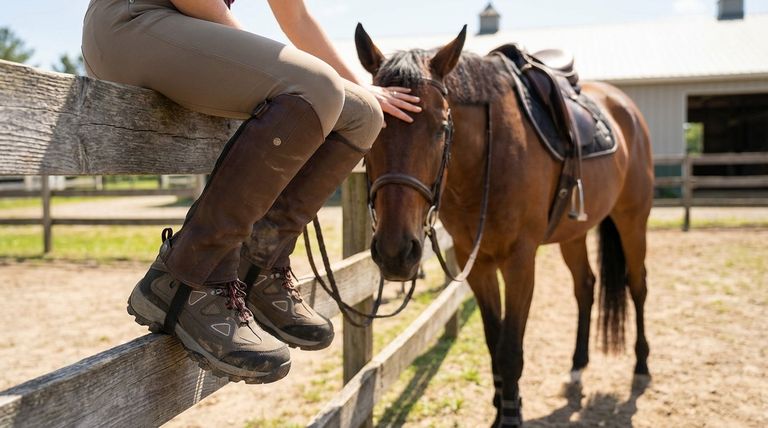
The Core Appeal: Comfort and Versatility
Short riding boots are the go-to choice for many riders due to their practical, everyday design. Their strengths lie in areas where traditional tall boots can be restrictive.
Unmatched Flexibility and Feel
Because they only cover the ankle, these boots allow for significant freedom of movement. This flexibility is especially beneficial for beginners and juniors who are learning to give effective leg aids, as it provides closer contact and a better "feel" for the horse.
All-Day Comfort
Short boots are easy to slip on and off, making them convenient for frequent use. In hot weather, they are cooler and less likely to cause sweating compared to the full coverage of a tall boot.
Practical for Around the Yard
Their sturdy construction makes them suitable for general work around the stable, not just for riding. This dual-purpose nature adds to their overall value and convenience.
The Essential Pairing: Why Half-Chaps are Necessary
While short boots are functional on their own, they are designed to work as part of a two-piece system with half-chaps (or clips) for serious riding.
Mimicking the Tall Boot
When a quality leather short boot is paired with well-fitting half-chaps of a similar material, the combination can closely resemble the look and function of a more expensive tall boot.
Protection from Chafing
Without the protection of a chap, the stirrup leathers can easily rub, chafe, or pinch the rider's calf. Half-chaps create a smooth, protective barrier.
Added Leg Support and Grip
Half-chaps provide structure and support to the lower leg, helping to keep it still and secure. This also improves grip against the saddle, similar to the shaft of a tall boot.
Understanding the Trade-offs
Choosing short boots involves accepting a few key compromises compared to their taller counterparts.
The Formality Factor
Short boots are inherently more casual. While acceptable for schooling and many informal events, they are generally not considered as smart or elegant as tall boots for higher levels of competition.
Reduced Inherent Protection
Worn alone, short boots leave the lower leg exposed. This offers no protection from kicks, falls, or getting scraped by trail obstacles. This risk is why pairing them with half-chaps is critical for safety.
Key Features to Look For
When selecting a pair of short riding boots, several design elements are critical for safety and performance.
The Right Fit
Boots should be snug around the foot and ankle to prevent slipping, but not so tight that they restrict circulation or cause discomfort after a short time.
Material Choices
Leather is the traditional choice, offering excellent durability and the ability to mold to your foot over time. Synthetic materials are often more affordable, waterproof, and breathable from the start.
Critical Heel Height
The most important safety feature is a distinct heel, typically 1.5 to 2 inches high. This heel prevents the foot from accidentally sliding all the way through the stirrup, which is a major safety hazard.
Specialized Options
For cold climates, winter riding boots are available. These feature insulation like fleece or sheepskin, robust non-slip soles, and enhanced waterproofing to keep your feet warm and dry.
Making the Right Choice for Your Needs
Selecting the right boot depends entirely on your riding context and priorities.
- If your primary focus is training for a beginner or child: Short boots are the ideal choice for their affordability, comfort, and the enhanced feel they provide for learning leg aids.
- If your primary focus is casual, everyday riding and yard work: The versatility and all-day comfort of a short boot make it a more practical and convenient option than a restrictive tall boot.
- If your primary focus is a smart, formal appearance for competition: While a high-quality short boot and chap combination can work, a traditional tall boot is often the preferred and required standard.
Ultimately, the short riding boot is a highly functional and comfortable piece of equipment that serves as an excellent foundation for the majority of riders.
Summary Table:
| Characteristic | Description |
|---|---|
| Height | Ankle-high (also called paddock or jodhpur boots) |
| Primary Use | Equestrian activities, casual riding, stable work |
| Key Appeal | Superior comfort, flexibility, affordability, and versatility |
| Essential Pairing | Must be worn with half-chaps for leg protection and grip |
| Ideal For | Beginners, children, casual riders, and everyday use |
Ready to equip your riders with high-quality, comfortable footwear?
As a large-scale manufacturer, 3515 produces a comprehensive range of equestrian boots for distributors, brand owners, and bulk clients. Our production capabilities encompass all types of riding footwear, including durable and comfortable short riding boots perfect for your target market.
We can help you provide the ideal gear that balances comfort, safety, and value. Contact us today to discuss your manufacturing needs and see how we can support your business.
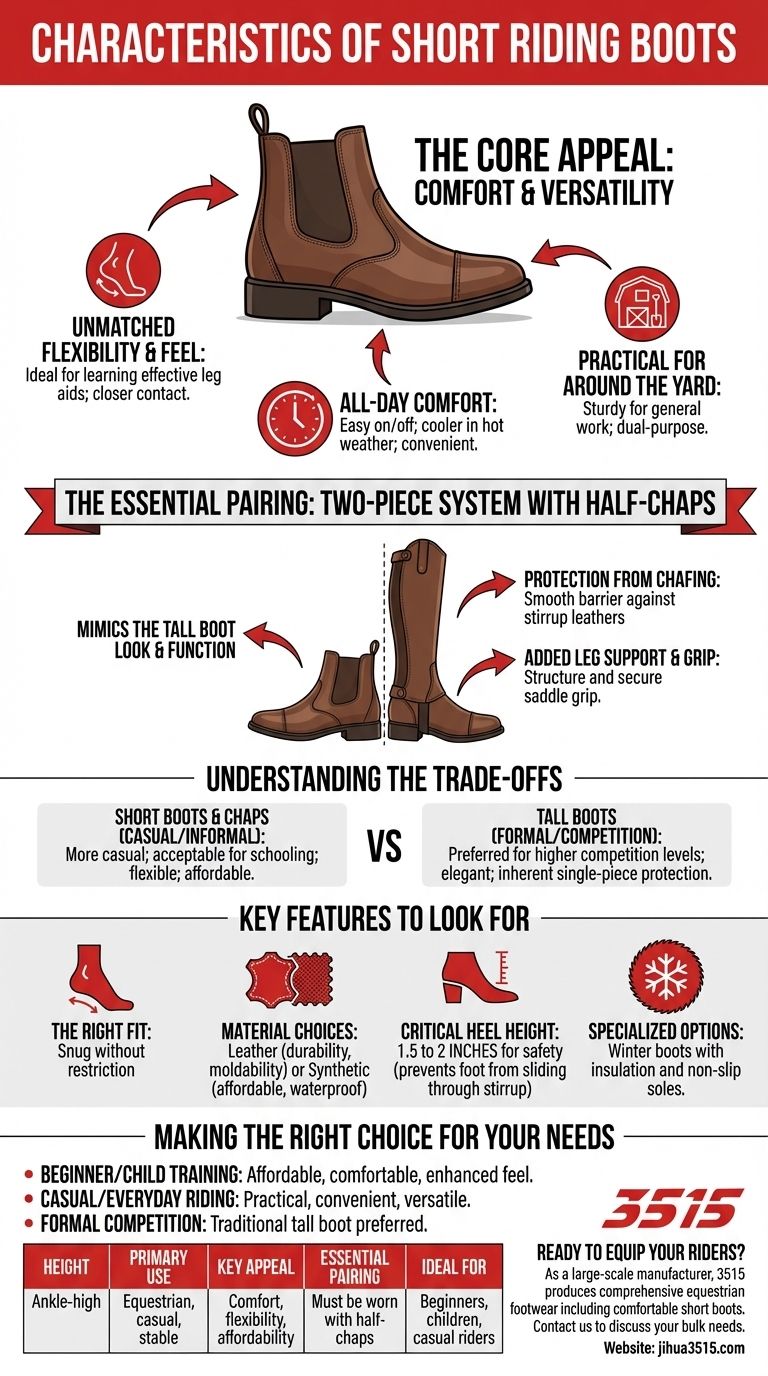
Visual Guide
Related Products
- Wholesale Durable Mid-Cut Tactical Boots for Custom & Private Label Brands
- Wholesale Lightweight Tactical Boots with Dial Closure OEM & Bulk Orders
- Premium Wholesale Tactical Style Safety Shoes Boots with Quick Lacing
- Wholesale Lightweight Tactical Boots Custom Manufacturer for Desert & Combat Use
- Durable Goodyear Welt Leather Work Boots for Wholesale & Private Label
People Also Ask
- How does the extended self theory explain high-value footwear? Build Your Professional Identity and Status
- What are the general characteristics of tactical boots? Lightweight, Agile Footwear for Professionals
- How should tactical boots be stored to maintain their condition? Protect Your Gear Investment
- Can tactical boots be stylish for everyday wear? Yes, with the right styling and features.
- What are some tips for breaking in new tactical boots? Achieve a Perfect, Pain-Free Fit



















