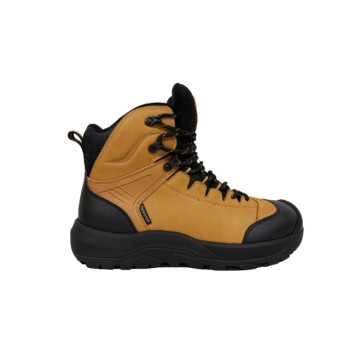
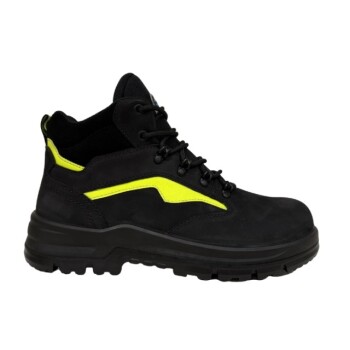
In short, work boots provide a critical combination of safety, warmth, and stability for winter. They are specifically engineered to protect your feet from low temperatures and prevent slips on icy surfaces while offering the structural integrity required for demanding environments. Their design balances insulation with the durability needed for long-term use in harsh conditions.
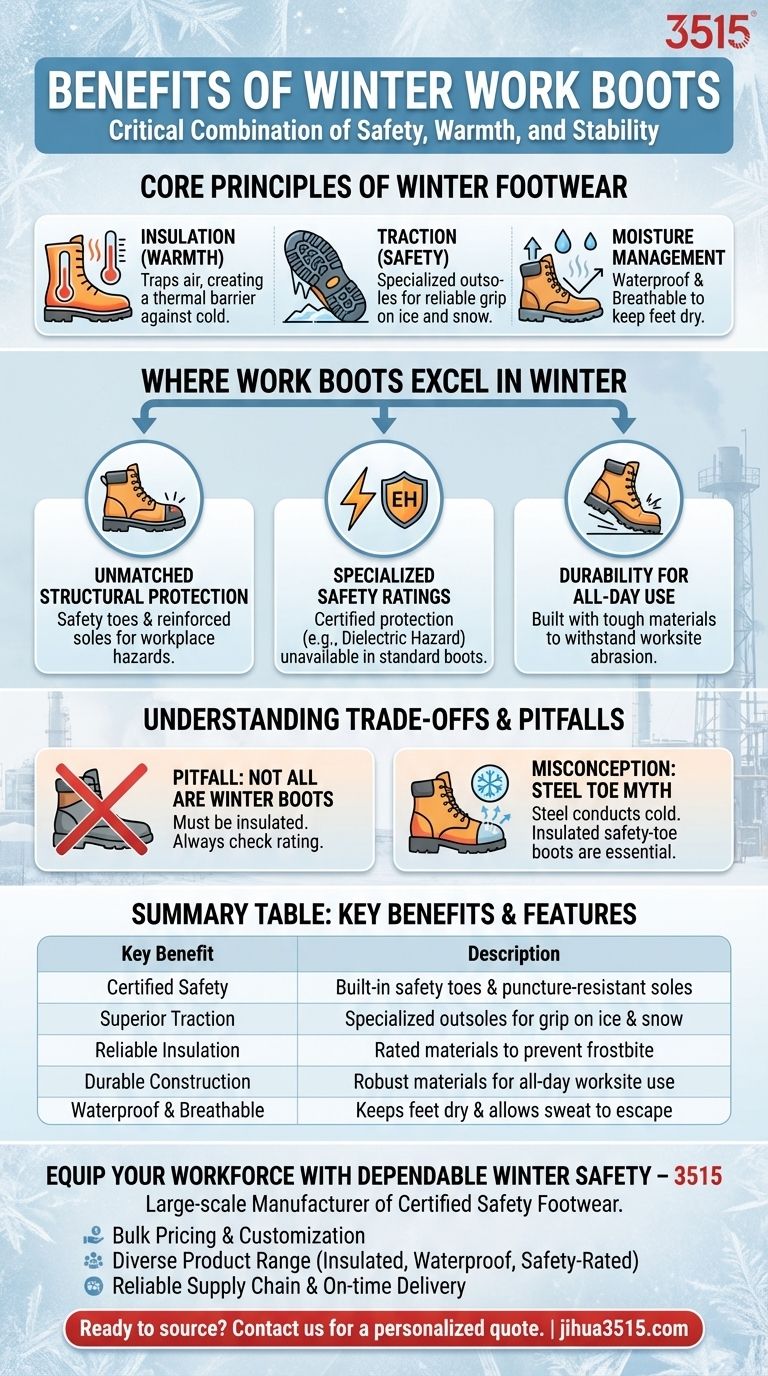
The primary benefit of winter work boots is not just warmth, but certified protection. Unlike standard snow boots, they merge thermal insulation and superior traction with non-negotiable safety features required for hazardous job sites.
The Foundation: Core Principles of Winter Footwear
To understand the specific advantages of work boots, we must first establish the essential functions any good piece of winter footwear must perform. These are the non-negotiable requirements for keeping feet safe and healthy in cold, wet, and slippery conditions.
Maintaining Warmth Through Insulation
The primary defense against cold is insulation. This material traps air, creating a thermal barrier that slows the transfer of heat from your foot to the cold environment.
Proper insulation is crucial for preventing cold-related health issues, from discomfort to serious conditions like frostbite.
Ensuring Safety with Superior Traction
Winter surfaces are unpredictable. Ice, packed snow, and slush create hazardous walking conditions where slips and falls are a constant risk.
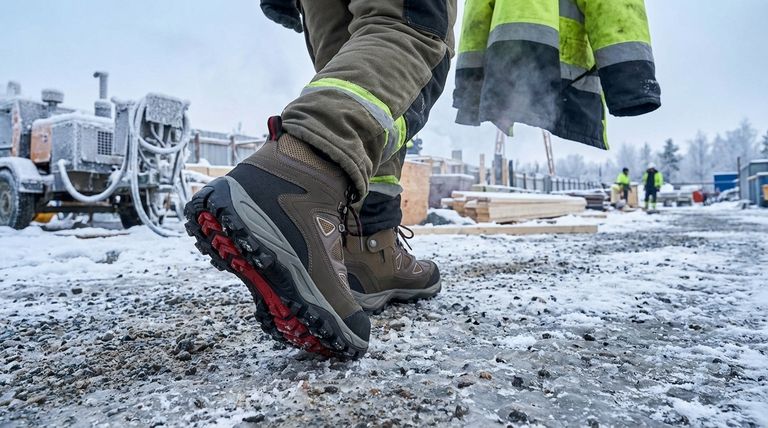
A winter-rated outsole is designed with deep lugs and a specialized rubber compound that remains pliable in freezing temperatures, providing a reliable grip on slippery ground.
Managing Moisture and Water
Keeping feet dry is just as important as keeping them warm. Wet feet lose heat up to 25 times faster than dry feet.
Footwear must be water-resistant or waterproof to block external moisture from snow and slush. Equally important is breathability, which allows sweat vapor to escape, preventing the boot from becoming damp from the inside.
Where Work Boots Excel in Winter
While many boots can offer warmth, work boots are engineered for scenarios where the environment is not just cold, but also presents physical hazards.
Unmatched Structural Protection
This is the key differentiator. Work boots are built with safety features that standard snow or rain boots lack.
This includes protective safety toes (steel or composite), puncture-resistant plates in the sole, and reinforced ankle support to prevent injury from falling objects, sharp debris hidden under snow, or uneven terrain.
Specialized Safety Ratings
For many professionals, safety is a requirement, not an option. Work boots often carry specific safety ratings, such as dielectric hazard (EH) protection, which insulates the wearer from electrical circuits.
These certifications provide a tested and verified level of protection that consumer-grade boots do not offer.
Durability for All-Day Use
Work boots are constructed from robust materials like high-grade leather and are designed for long-distance walking and standing for extended periods.
This ensures they can withstand the abrasion and stress of a worksite day after day, unlike lighter-duty winter boots which may wear out quickly under such demands.
Understanding the Trade-offs and Common Pitfalls
Choosing the right boot requires an objective look at its limitations. Work boots are a specialized tool, and they aren't always the best choice for every winter situation.
Pitfall: Not All Work Boots Are Winter Boots
A standard work boot is not inherently a winter boot. To be effective in the cold, it must be insulated. Always check for an insulation rating (often measured in grams) to ensure it's designed for your climate.
Misconception: The Steel Toe Myth
Contrary to some beliefs, a steel toe does not trap heat. As a metal, steel is a highly efficient thermal conductor, meaning it will draw heat away from your foot, making it feel colder.
For this reason, it is absolutely essential to choose insulated safety-toe boots for cold-weather work to counteract this effect.
Work Boots vs. Dedicated Snow Boots
For casual use like commuting or recreation, a dedicated snow boot is often lighter, more flexible, and may offer more aggressive tread specifically for deep snow.
Work boots are typically heavier and more rigid due to their protective components. The choice depends entirely on the task at hand.
Making the Right Choice for Your Goal
Ultimately, the best winter boot is the one that matches your specific needs and environment.
- If your primary focus is hazardous work in cold conditions: Choose an insulated, waterproof work boot with the appropriate safety ratings for your job.
- If your primary focus is general commuting and non-work activity: A dedicated snow boot will likely provide better comfort, flexibility, and lighter weight for everyday winter use.
- If your primary focus is wet, slushy conditions without extreme cold: A waterproof boot like a Wellington with a warm sock may be sufficient and easier to clean.
Selecting the right footwear is a crucial decision for your safety and well-being during the winter months.
Summary Table:
| Key Benefit | Description |
|---|---|
| Certified Safety | Built-in safety toes and puncture-resistant soles for protection from workplace hazards. |
| Superior Winter Traction | Specialized outsoles that remain grippy on ice and snow to prevent slips and falls. |
| Reliable Insulation | Rated insulation materials to maintain warmth and protect against frostbite in freezing temperatures. |
| Durable Construction | Robust materials designed for all-day use and long-term performance in harsh conditions. |
| Waterproof & Breathable | Keeps feet dry from external moisture while allowing sweat vapor to escape. |
Equip Your Workforce with Dependable Winter Safety
As a large-scale manufacturer, 3515 produces a comprehensive range of certified safety footwear for distributors, brand owners, and bulk clients. Our production capabilities encompass all types of insulated work boots and shoes designed to protect your team in the harshest winter conditions.
We provide:
- Bulk Pricing & Customization: Tailored solutions and competitive pricing for large orders.
- Diverse Product Range: A full catalog of insulated, waterproof, and safety-rated boots.
- Reliable Supply Chain: Consistent quality and on-time delivery to meet your demand.
Ready to source high-quality winter work boots? Contact our team today to discuss your specific needs and receive a personalized quote.
Visual Guide
Related Products
- Premium Insulated Safety Boots and Shoes for Wholesale & Bulk Orders
- Durable Leather Work Boots for Wholesale & Custom Manufacturing
- Durable Leather Work Boots for Wholesale & Custom OEM Manufacturing
- Durable Moc-Toe Wedge Work Boots | Wholesale Manufacturing for Brands
- Wholesale Customizable Safety Boots Durable & Protective Footwear Manufacturing
People Also Ask
- What are the recommended insulation ratings for mild winter conditions? A Guide for Active & Stationary Workers
- How does insulation thickness correlate with temperature ranges? A Guide to Choosing the Right Warmth
- What insulation level is needed for severe cold and stationary work? 1200g or Higher is Essential
- What safety advantages do insulated boots offer beyond warmth? Dielectric Protection & Superior Grip
- How does fleece lining contribute to the warmth of insulated boots? Trapping Air for Superior Cold Protection