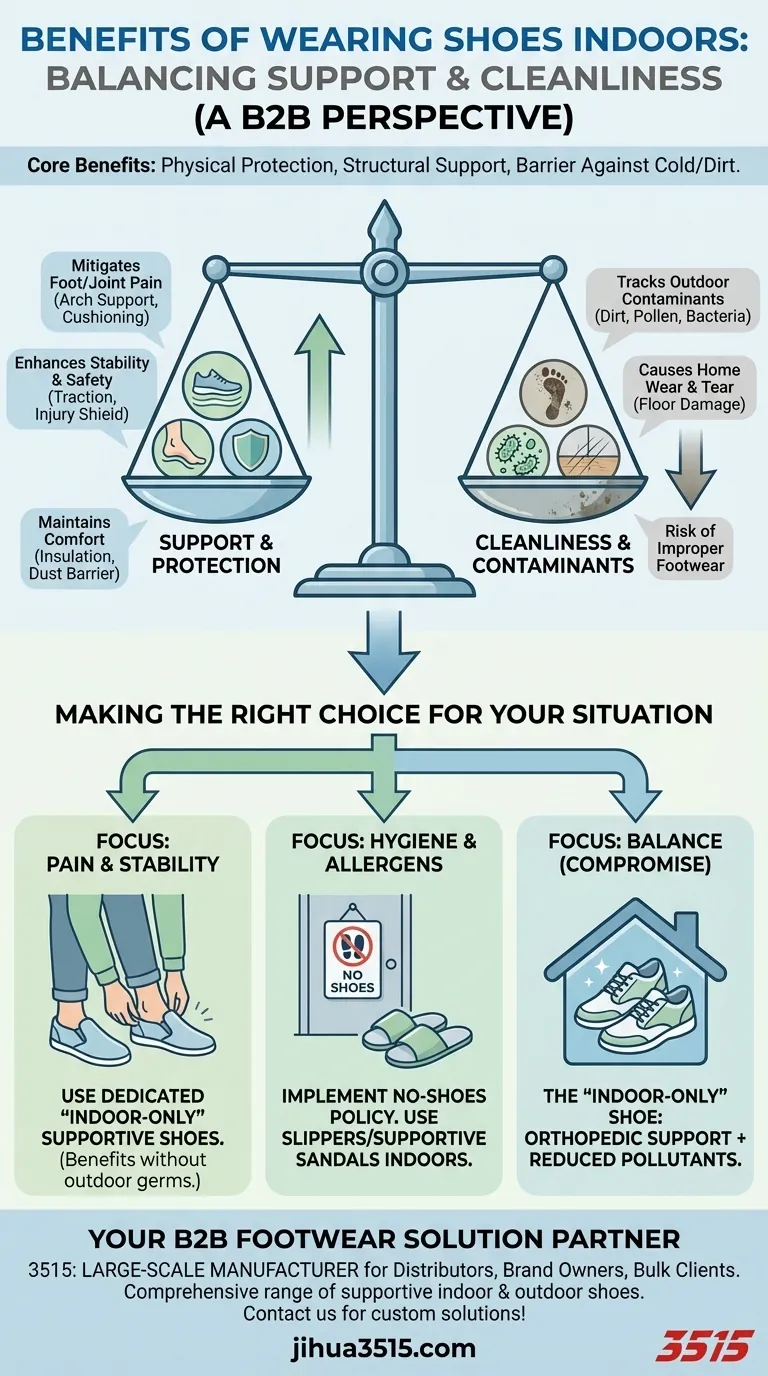
At its core, wearing shoes indoors provides three primary benefits: physical protection from household hazards, structural support for your feet and joints, and a barrier against cold or dirty floors. This practice is especially valuable for individuals with specific foot conditions or those who spend significant time standing on hard surfaces.
The decision to wear shoes indoors is a direct trade-off. You are often choosing between the orthopedic support and protection shoes provide versus the increased cleanliness and reduced allergen exposure that comes from leaving them at the door.
The Case for Indoor Footwear: Support and Protection
The most compelling reasons to wear shoes inside are directly related to personal health and safety. For many, the benefits of structure and stability outweigh the potential downsides.
Mitigating Foot and Joint Pain
Shoes with proper arch support and cushioning are crucial for preventing and managing foot pain, especially for those with conditions like plantar fasciitis.
They distribute pressure more evenly across your feet, which can be a significant relief for anyone standing for long periods on hard surfaces like tile or wood. This support extends up through the body, potentially improving posture and reducing back pain.
Enhancing Stability and Safety
Shoes act as a protective layer, shielding your feet from injuries caused by dropped objects, stubbed toes, or stepping on something sharp.
On potentially slippery surfaces like kitchen or bathroom floors, the traction from a rubber sole can provide critical stability and prevent falls.
Maintaining Foot Hygiene and Comfort
In colder climates or seasons, shoes provide insulation against cold floors, which can be particularly comforting for those with conditions like arthritis.
They also create a barrier between your feet and any accumulated dust, pet hair, or other allergens on the floor, which can help keep your feet cleaner.
Understanding the Trade-offs: Cleanliness and Contaminants
While indoor shoes offer personal benefits, they introduce significant challenges related to the cleanliness and health of your living environment. This is the central conflict you must resolve.
The Hidden Cost of Outdoor Contaminants
The most significant drawback is that shoes track in everything they've touched outside. This includes dirt, pollen, bacteria, and chemical residues from lawns or streets.
These contaminants become embedded in carpets and circulate in your home's air, potentially triggering allergies or asthma. This is a critical consideration for households with young children or pets who have frequent contact with the floor.
Wear and Tear on Your Home
The abrasive materials and treads on outdoor shoes can cause significant wear and tear on flooring over time. Hard soles can scratch wood floors, while dirt and gravel can grind down carpets, leading to premature aging and the need for replacement.
The Importance of Proper Shoe Selection
Not all shoes are beneficial. Wearing improperly fitting or unsupportive footwear indoors can create new problems, from blisters to long-term conditions like bunions.
Furthermore, over-reliance on highly structured shoes can potentially weaken the intrinsic muscles in your feet. It's important to balance support with time spent barefoot to maintain natural foot strength and flexibility.
Cultural and Social Considerations
In many cultures around the world, removing shoes before entering a home is a fundamental sign of respect and cleanliness. It's a non-negotiable social norm that separates the "outside" world from the "inside" sanctuary of the home.
Making the Right Choice for Your Situation
The optimal decision depends entirely on your personal priorities. There is no single correct answer, only the one that best serves your health and lifestyle.
- If your primary focus is alleviating foot pain or improving stability: Use a dedicated pair of supportive "indoor-only" shoes that are never worn outside to get the benefits without the contaminants.
- If your primary focus is minimizing outdoor allergens and germs: Implement a strict no-shoes policy at the door and use comfortable alternatives like slippers or supportive sandals indoors.
- If you seek a balance of both: The "indoor-only" shoe is the most effective compromise, offering orthopedic support while keeping outdoor pollutants out of your home.
Ultimately, understanding this choice as a balance between personal support and household hygiene empowers you to create a policy that works best for you.
Summary Table:
| Benefit | Key Takeaway | Consideration |
|---|---|---|
| Foot & Joint Support | Provides arch support and cushioning for pain relief. | Can weaken foot muscles if overused. |
| Safety & Stability | Protects from injury and offers traction on slippery floors. | Outdoor shoes track in dirt and allergens. |
| Hygiene & Comfort | Insulates against cold floors and acts as a barrier to dust. | Causes wear and tear on flooring over time. |
Ready to find the perfect indoor footwear solution for your needs? As a large-scale manufacturer, 3515 produces a comprehensive range of supportive and comfortable shoes for distributors, brand owners, and bulk clients. Whether you need dedicated indoor shoes for health reasons or supportive alternatives for a no-shoes household, our production capabilities encompass all types of shoes and boots. Let us help you provide the right footwear for your customers. Contact us today to discuss your requirements!
Visual Guide
Related Products
- Wholesale Durable Camouflage Canvas Shoes with High-Traction Cleated Rubber Sole
- Wholesale Modern Perforated Leather Derby Shoes with Chunky Sole for Custom Branding
- Wholesale Breathable Training Shoes Custom Athletic Footwear Manufacturer
- Wholesale Breathable Perforated Leather Derby Shoes with Modern Comfort Sole
- Wholesale Durable & Breathable Training Shoes for Custom Brands
People Also Ask
- Why is the selection of high-strength fabric materials necessary in the production of canvas shoes and training shoes?
- What are the properties of canvas as a shoe material? A Guide to Lightweight Comfort & Style
- Can canvas shoes be worn in rainy conditions? The Truth About Water Resistance
- What are some examples of vulcanized shoes? Discover the Flexibility and Board Feel of Classic Sneakers
- What are the characteristics of canvas as a shoe material? A Guide to Lightweight, Breathable Footwear