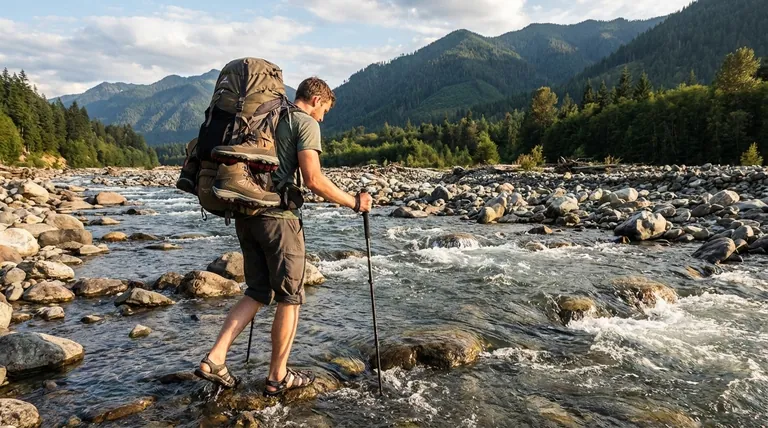
The core benefits of using sandals or water shoes for river crossings are twofold: they protect your feet from unseen hazards and preserve the integrity of your primary hiking boots. This simple strategy prevents your main boots from getting soaked, heavy, and uncomfortable, which is critical for maintaining foot health and morale on any multi-day trek.
Carrying a separate pair of shoes for water crossings is not about convenience; it's a fundamental practice for preventing blisters, maintaining foot support, and ensuring your safety on the trail. A wet hiking boot can quickly become your biggest liability.
The Critical Problem with Wet Hiking Boots
Getting your primary hiking boots wet is far more than a minor inconvenience. It introduces significant risks that can compromise your entire trip.
Preventing Blisters and Skin Breakdown
Wet socks and boots create the perfect environment for friction. As your skin becomes waterlogged and soft, it's far more susceptible to the rubbing that causes painful hotspots and debilitating blisters.
Maintaining Structural Support
Hiking boots are engineered to provide ankle support and stability. When they become saturated with water, the materials can soften and lose their structural integrity, increasing your risk of a rolled ankle on uneven terrain.
The Reality of Drying Time
Modern hiking boots, especially those with waterproof membranes like Gore-Tex, are notoriously slow to dry once the inside is completely soaked. They can remain damp for days, leading to constant discomfort and potential foot issues like trench foot in extreme cases.
Avoiding Excess Weight
Water is heavy. A pair of soaked boots can easily add two to three pounds of weight to your feet. It's often said that a pound on your feet is like five on your back, meaning this extra weight will drain your energy significantly faster.
Analyzing Your River Footwear Options
Choosing the right tool for the crossing is just as important as the decision to change shoes in the first place. Your choice directly impacts your safety and stability in the water.
The Case for Dedicated Water Shoes
Proper water shoes or secure sport sandals are the ideal solution. They are designed with quick-drying materials and drainage ports to shed water immediately after you exit the river.
Their soles provide excellent grip on slippery, uneven riverbeds, while the secure straps ensure the shoe stays on your foot in a current. Most importantly, they offer crucial protection from sharp rocks, broken glass, or other underwater hazards.
The Dangers of Going Barefoot
Crossing a river barefoot is a significant and unnecessary risk. You cannot see the bottom clearly, exposing your feet to sharp rocks that can cause deep cuts. A foot injury in the backcountry can quickly escalate into a serious situation.
Furthermore, bare feet have poor traction on slick rocks, dramatically increasing your chance of a fall.
Understanding the Trade-offs and Common Mistakes
While bringing dedicated water shoes is the professional standard, it's important to understand the complete picture.
The Obvious Weight Penalty
The primary downside is the need to carry an extra item. However, modern ultralight water shoes or sandals can weigh as little as a few ounces, making the weight penalty a small price to pay for the immense benefit to your foot health.
Choosing Inadequate Footwear
A common mistake is using cheap, flimsy flip-flops. These offer almost no protection, provide zero grip, and can easily be pulled off your feet by the river's current, leaving you in a dangerous situation mid-crossing. Your water footwear must be securely attached to your foot.
Forgetting to Dry Your Feet
The process isn't over when you reach the other side. Before putting your dry socks and boots back on, you must take a moment to thoroughly dry your feet with a small towel. Putting on socks while your feet are still damp defeats the purpose and can still lead to skin issues.
Making the Right Choice for Your Hike
Your strategy should adapt to the specific demands of your trip. Use your itinerary to determine the most logical approach.
- If you're on a long backpacking trip with known river crossings: Dedicated water shoes or secure sandals are a non-negotiable piece of safety equipment.
- If you're on a day hike with a single, small stream: You may be able to get by with waterproof boots, but accept the risk of them getting soaked and ruining your day.
- If your primary focus is minimizing pack weight: Choose the lightest possible closed-toe water shoe that still offers a secure fit and a protective sole.
Ultimately, protecting your primary boots is about protecting your most valuable asset on the trail: your feet.
Summary Table:
| Benefit | Why It Matters |
|---|---|
| Protects Primary Boots | Keeps main hiking boots dry, supportive, and lightweight. |
| Prevents Blisters | Avoids skin breakdown from wet, friction-causing boots. |
| Enhances Safety | Provides grip and protection from sharp underwater hazards. |
| Saves Energy | Avoids carrying the extra weight of waterlogged boots. |
Ready to Gear Up Your Next Adventure?
As a large-scale manufacturer, 3515 produces a comprehensive range of durable and specialized footwear for distributors, brand owners, and bulk clients. Whether you need reliable water shoes for your outdoor brand or high-performance hiking boots for your retail lineup, our production capabilities cover all types of shoes and boots.
Let us help you equip your customers with the right gear for any trail. Contact our team today to discuss your manufacturing needs and elevate your product offerings.
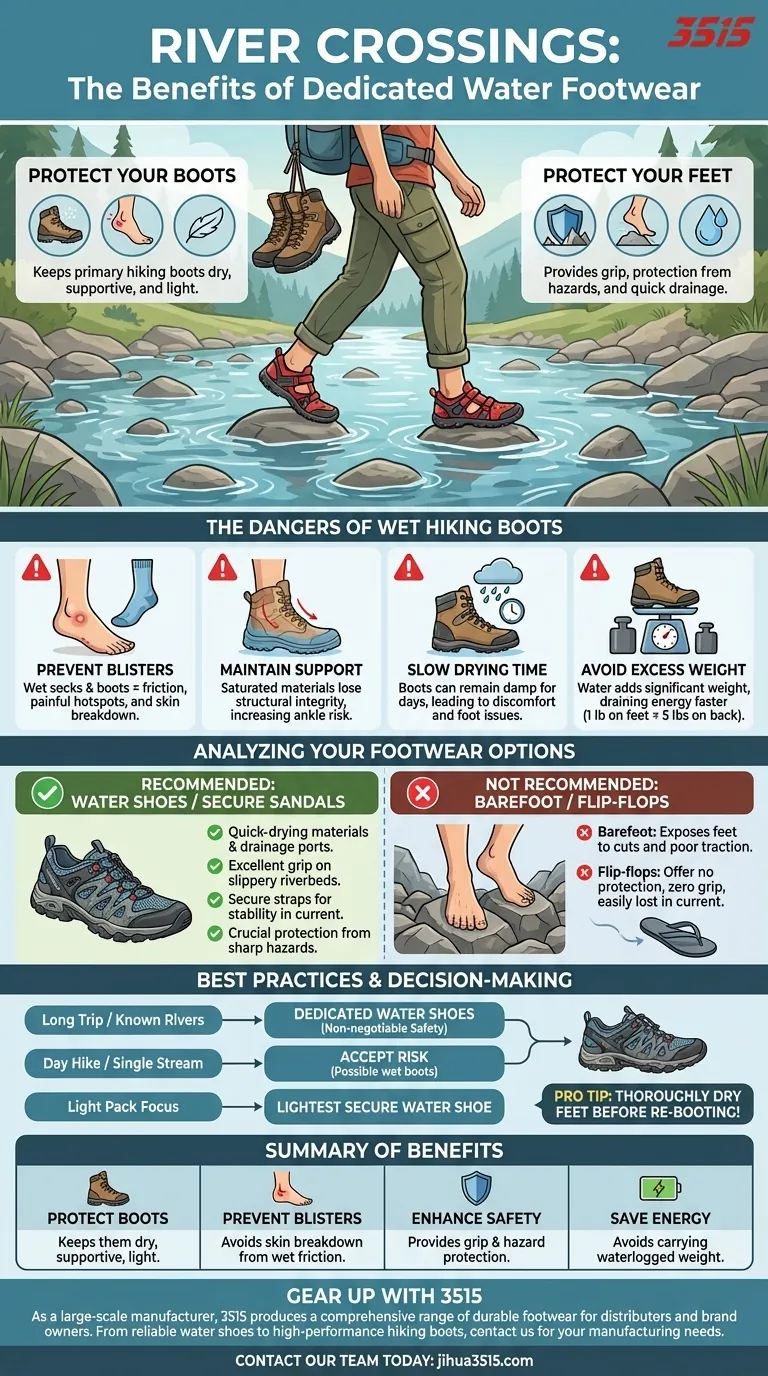
Visual Guide
Related Products
- Wholesale Premium Waterproof Nubuck Safety Shoes Boots
- Heavy-Duty Waterproof Nubuck Safety Boots Safety Shoes for Bulk Supply
- Durable Waterproof Rain Boots | Custom Manufacturer for Wholesale & Brands
- Lightweight Breathable Sneakers with Wet-Traction Grip for Wholesale & Private Label
- Premium Wholesale Waterproof Safety Boots High Performance Protection for Industrial Markets
People Also Ask
- Why are waterproof safety boots recommended for certain work environments? Essential Protection for Wet & Hazardous Jobs
- What materials are commonly used in waterproof boots? The Complete Guide to Durable, Breathable Protection
- What are the drawbacks of waterproof boots? The Breathability vs. Protection Trade-Off
- What is the advantage of one-piece construction in waterproof boots? Unbeatable Seamless Protection
- What is the difference between waterproof, water-resistant, and water-repellent boots? Choose the Right Protection for Your Feet