
Genuine leather acts as a dynamic interface between the rider and the horse, offering benefits that extend far beyond aesthetics. Its primary advantage lies in its ability to mold directly to the wearer's anatomy, providing a custom fit that enhances communication and stability in the saddle. Furthermore, leather offers superior long-term durability and breathability compared to synthetic alternatives, making it a functional investment for serious riders.
While synthetic materials may offer a lower upfront cost, genuine leather delivers superior value through its ability to conform to the rider's leg, its natural breathability, and a structural integrity that allows for repairs and resoling rather than replacement.
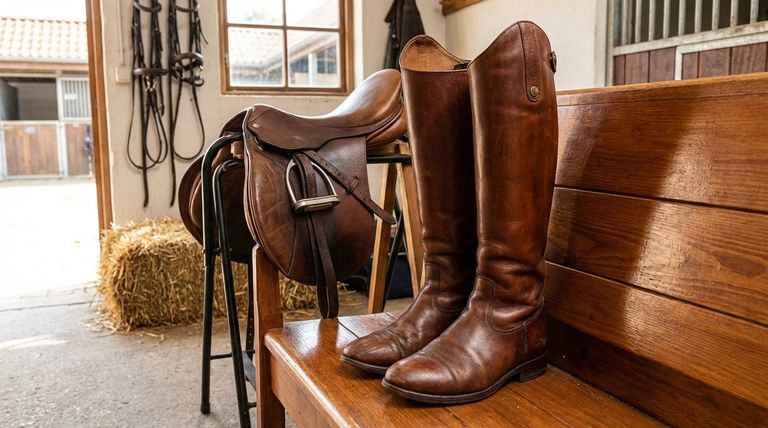
The Mechanics of Performance and Fit
The Adaptive Mold
The defining characteristic of genuine leather is its plasticity during the break-in process. Unlike synthetic materials which retain their original shape, leather fibers relax and conform to the specific contours of your foot and calf.
This creates a "second skin" fit that prevents shifting or chafing. A closer fit results in more precise leg cues and better feedback from the horse's side.
Breathability and Temperature Regulation
Leather is a natural material that facilitates excellent breathability. It allows moisture and heat to escape from the boot, reducing the likelihood of dampness and discomfort during intense riding.
Synthetics often trap heat, creating a greenhouse effect around the foot. Leather manages internal climate more effectively, keeping feet drier over long periods.
Longevity and Structural Integrity
Resilience Against Abrasion
Equestrian environments are harsh, involving constant friction against saddle flaps and exposure to dirt. Full-grain leather is particularly noted for its resilience, resisting punctures and tears that would compromise weaker materials.
Instead of degrading quickly, high-quality leather develops a unique patina over time. This aesthetic aging process does not compromise the boot's strength.
The Advantage of Resoling
A critical economic benefit of leather boots is their repairability. Because the upper material is strong enough to survive the removal of the sole, leather boots often offer more options for resoling.
When the sole of a synthetic boot wears out, the entire boot is typically discarded. With leather, the chassis remains intact, extending the lifecycle of the product significantly.
Water Resistance and Weather Management
Natural vs. Artificial Waterproofing
High-quality leather offers substantial natural water resistance without relying on internal liners. In contrast, many synthetic or hybrid boots rely on Goretex liners, which can fail and leak over time.
Leather maintains its barrier properties through the material itself. It provides robustness against wet conditions while retaining the flexibility needed for riding.
Essential Maintenance and Treatment
To maintain water resistance, leather requires the application of treatments like Nikwax or beeswax-based products like Atsko SNO-SEAL. These products prevent water absorption, which can otherwise reduce breathability and cause the leather to stiffen during wet-dry cycles.
Understanding the Trade-offs
The Requirement of Care
The primary "cost" of leather is the necessity of regular maintenance. Unlike synthetics that can be hosed off, leather requires cleaning and conditioning every few months to a year to prevent drying or cracking.
Vulnerability to Neglect
Leather is susceptible to damage if left soaked or unconditioned. Excessive moisture without protection can ruin the fiber structure. If you cannot commit to a care regimen, the longevity benefits of leather will rapidly diminish.
Making the Right Choice for Your Goals
To determine if genuine leather aligns with your specific needs, consider your primary usage:
- If your primary focus is Precision and Performance: Choose leather for its ability to mold to your leg, ensuring the closest possible contact and communication with the horse.
- If your primary focus is Long-Term Value: Choose leather (specifically full-grain) because it can be resoled and conditioned to last for many seasons, unlike disposable synthetics.
- If your primary focus is Zero Maintenance: You may wish to reconsider leather, as it requires dedication to cleaning and conditioning to maintain its waterproof qualities.
Genuine leather remains the superior choice for riders who view their boots as a piece of technical equipment rather than a disposable accessory.
Summary Table:
| Benefit | Key Advantage |
|---|---|
| Performance & Fit | Molds to your leg for precise cues and stability. |
| Breathability | Natural temperature regulation keeps feet drier. |
| Durability | Resists abrasion and can be resoled for long-term use. |
| Weather Resistance | Offers robust, natural water resistance with proper care. |
Ready to experience the superior performance of professional equestrian footwear?
As a large-scale manufacturer, 3515 produces a comprehensive range of high-quality leather boots for distributors, brand owners, and bulk clients. Our production capabilities ensure you get durable, precision-crafted footwear designed for serious riders.
Contact our team today to discuss your needs and discover how we can add value to your business.
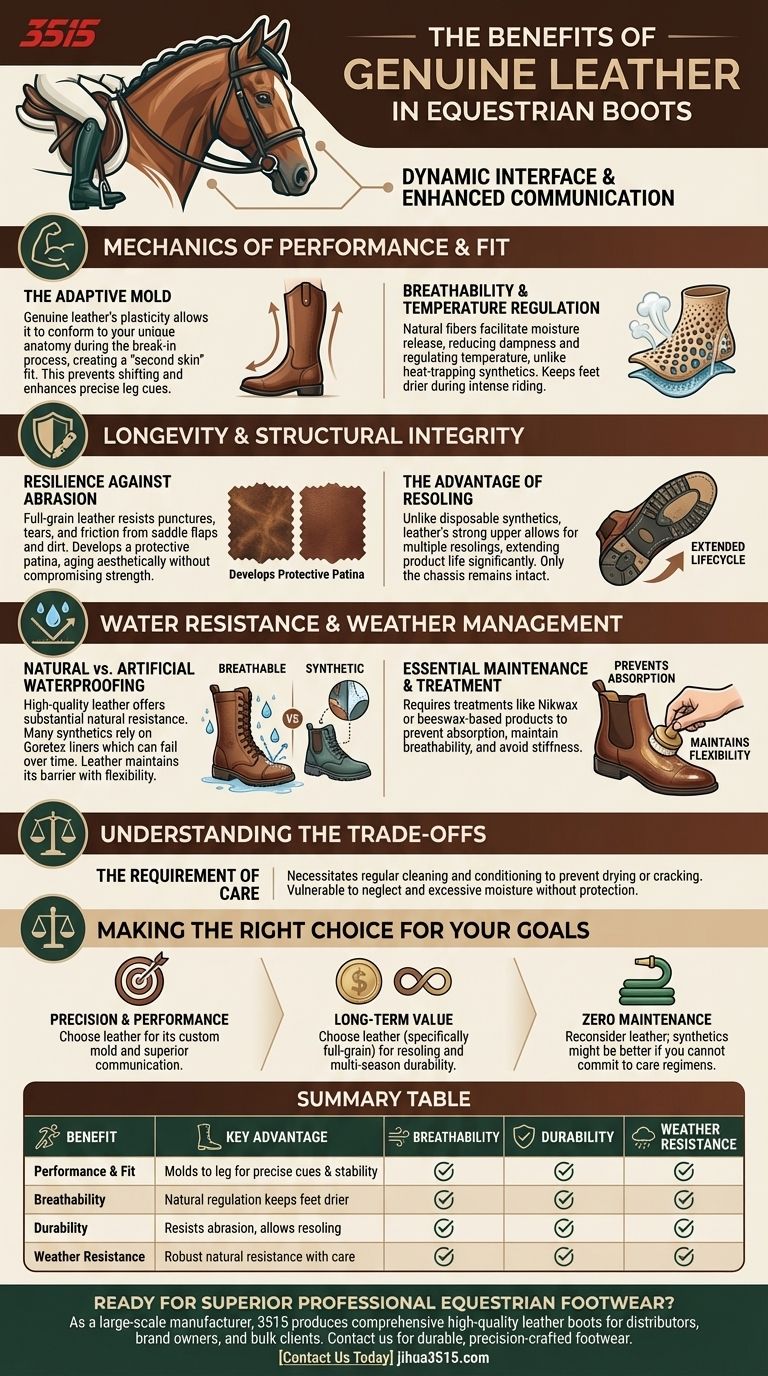
Visual Guide
Related Products
- Wholesale Lightweight Tactical Boots Custom Manufacturer for Desert & Combat Use
- Wholesale Tactical Boots High-Traction & Reflective for Bulk & Brand Orders
- Wholesale High-Traction Camo Boots - Custom Manufacturer for Brands
- Durable Leather High-Ankle Tactical Boots for Wholesale & Custom Manufacturing
- High-Traction Suede Tactical Boots Wholesale & Custom Manufacturing
People Also Ask
- What are the common types of combat boots? Find the Right Boot for Your Mission
- What specialized protections do tactical boots offer? Maximize Endurance with High-Performance Footwear
- How is the compatibility of polymer materials demonstrated in smart footwear? Enhancing Tactical & Training Performance
- What is the role of high-frequency acquisition hardware in technical skill analysis for outdoor and tactical boots?
- How does additive manufacturing equipment reduce environmental risks? Sustainable Tactics for Modern Footwear Production



















