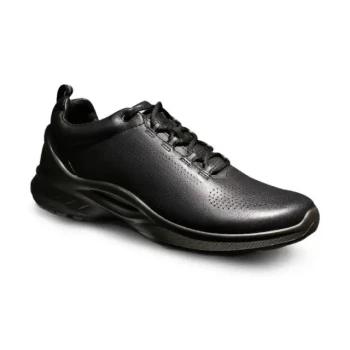
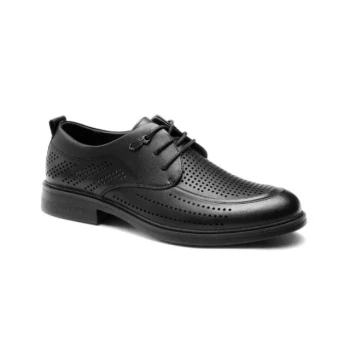
Finding the right walking shoe fit is a precise process that goes far beyond your standard size number. To get an accurate fit, you must try on shoes late in the day when your feet have naturally swelled. Always wear the type of socks you typically walk in and ensure there is about a half-inch of space—roughly a finger's width—between your longest toe and the end of the shoe.
A correctly fitted walking shoe should feel comfortable and supportive immediately, matching your foot’s unique mechanics without requiring any "break-in" period. The goal is to prevent discomfort and injury by choosing a shoe that works with your foot, not against it.
The In-Store Litmus Test: Nailing the Basics
The environment and timing of your purchase can dramatically affect the outcome. Following a simple in-store protocol is the first step toward a perfect fit.
Time Your Shopping Strategically
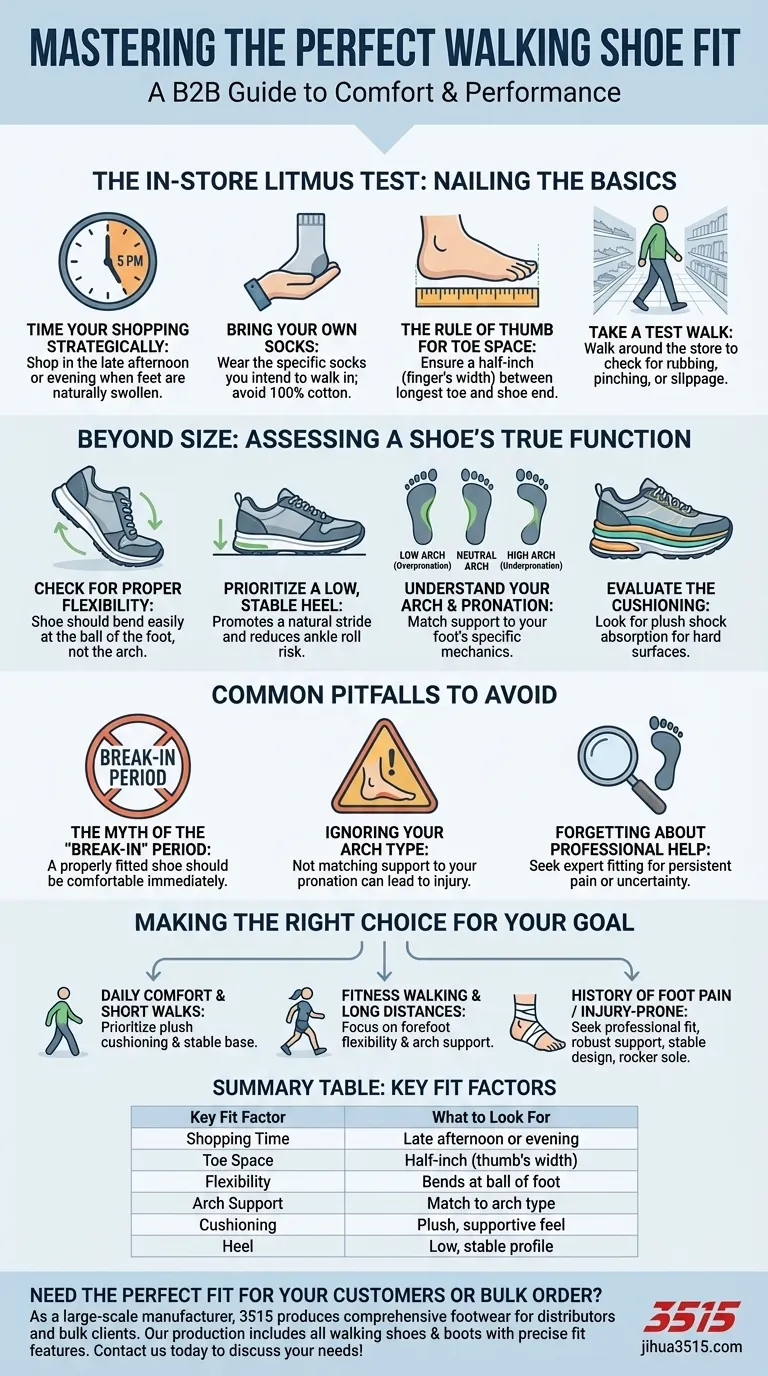
Your feet naturally expand throughout the day due to gravity and activity. Shopping for shoes in the late afternoon or evening ensures you are fitting them when they are at their largest, preventing a fit that feels too tight later on.
Bring Your Own Socks
The thickness of your socks directly impacts how a shoe fits. Always test new shoes with the specific socks you intend to wear for walking to get a true-to-life feel. Avoid 100% cotton socks, which retain moisture and can cause blisters.
The Rule of Thumb for Toe Space
Proper length is critical. There should be at least a half-inch of space between your longest toe (which is not always the big toe) and the front of the shoe. This "wiggle room" prevents your toes from jamming into the front, which can cause pain and bruising.
Take a Test Walk
Never buy a shoe without walking around the store for a few minutes. Pay close attention to any rubbing, pinching, or heel slippage. The shoe should feel secure but not restrictive.
Beyond Size: Assessing a Shoe's True Function
A shoe that is the right size is only half the battle. Its structural characteristics must align with the natural movement of your foot.
Check for Proper Flexibility
A good walking shoe should bend easily at the ball of the foot, not in the middle of the arch. This flexibility allows your foot to roll through a step naturally. If the shoe is too stiff, it will work against your foot's mechanics.
Prioritize a Low, Stable Heel
Walking shoes should have a low heel profile. A heel that is not significantly built up or flared out promotes a more natural and stable stride, reducing the risk of ankle rolls.
Understand Your Arch and Pronation
Your arch type—low, neutral, or high—determines how your foot absorbs impact. You can get a rough idea of your arch by wetting your foot and examining your footprint. Low arches often lead to overpronation (foot rolls inward), while high arches can cause underpronation (foot rolls outward). The right shoe provides the correct support to keep your foot neutral.
Evaluate the Cushioning
Quality cushioning provides shock absorption, which reduces fatigue and soreness in your feet, legs, and back. Look for a shoe that feels plush and supportive underfoot, especially if you walk on hard surfaces.
Common Pitfalls to Avoid
Even with the right knowledge, it's easy to make a few common mistakes. Being aware of them is crucial for making a confident decision.
The Myth of the "Break-In" Period
A properly constructed and correctly fitted walking shoe should feel comfortable from the very first step. If a shoe feels tight or causes discomfort in the store, do not assume it will get better with time. This is a sign it is the wrong shoe for your foot.
Ignoring Your Arch Type
Choosing a shoe based on looks or brand without considering your foot's mechanical needs is a primary cause of walking-related injuries. A shoe that doesn’t support your specific pronation type can lead to strain on your feet, ankles, and knees.
Forgetting About Professional Help
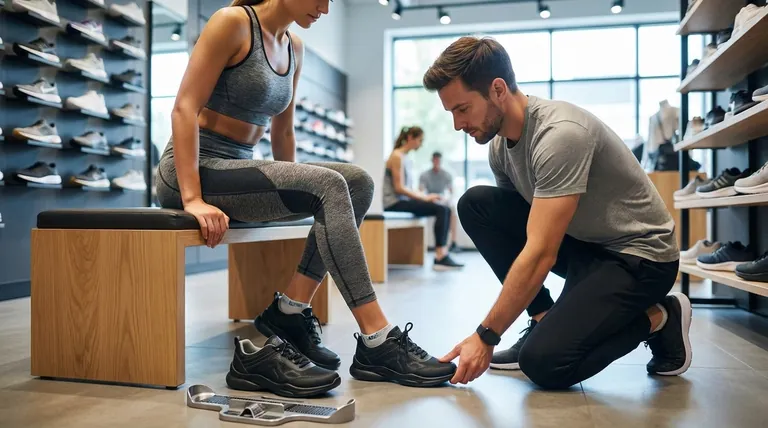
If you have persistent foot pain or are unsure of your needs, a professional fitting at a specialty running or walking store is invaluable. These experts can analyze your gait and provide personalized recommendations based on your foot's specific characteristics.
Making the Right Choice for Your Goal
Select your shoe based on your primary walking activity to ensure optimal performance and comfort.
- If your primary focus is daily comfort and short walks: Prioritize plush, out-of-the-box cushioning and a stable base.
- If your primary focus is fitness walking or long distances: Focus on a shoe with excellent flexibility at the forefoot and support that matches your specific arch type.
- If you have a history of foot pain or are injury-prone: Seek a professional fitting and look for a shoe with robust support, a stable design, and potentially a rocker sole to ease the heel-to-toe transition.
Ultimately, investing a few extra minutes to verify the fit ensures miles of comfortable, injury-free movement.
Summary Table:
| Key Fit Factor | What to Look For |
|---|---|
| Shopping Time | Try on shoes in the late afternoon or evening. |
| Toe Space | A half-inch (a thumb's width) between longest toe and shoe end. |
| Flexibility | Shoe should bend easily at the ball of the foot. |
| Arch Support | Match shoe support to your arch type (low, neutral, high). |
| Cushioning | Plush, supportive feel for shock absorption on hard surfaces. |
| Heel | Low, stable heel profile for a natural stride. |
Need the perfect fit for your customers or bulk order?
As a large-scale manufacturer, 3515 produces a comprehensive range of footwear for distributors, brand owners, and bulk clients. Our production capabilities encompass all types of walking shoes and boots, designed with the precise fit and support features detailed above. Let us help you provide comfortable, high-quality footwear to your market.
Contact our team today to discuss your manufacturing needs!
Visual Guide
Related Products
- Durable Rubber Sole Outdoor Shoes Wholesale & Custom Manufacturing
- Wholesale Durable Camouflage Canvas Shoes with High-Traction Cleated Rubber Sole
- Premium Suede Sport Safety Shoes for Wholesale & Bulk Orders
- Premium Lightweight Safety Shoes for Wholesale & Bulk Orders
- Wholesale Comfortable Business Casual Shoes Custom Manufacturing
People Also Ask
- What is the function of the sole in outdoor shoes? Find the Perfect Grip and Support
- What role do outdoor shoes and sneakers play in navigating external terrains? Engineered Stability for Every Surface
- How is AI utilized in the design of outdoor and safety footwear? Harnessing Big Data for Market-Driven Shoe Innovation
- Why is durability important when selecting outdoor shoes? A Guide to Safety & Long-Term Value
- What are the key components of outdoor shoes that affect comfort and sturdiness? A Guide to Durable, High-Performance Footwear