
At their core, adjustable wellington boots provide a customizable fit for various calf sizes using a buckle or gusset, while short wellies offer greater flexibility and comfort by ending below the calf muscle. Both designs solve the common problem of poor fit found in traditional, one-size-fits-all tall boots, but they do so for different user needs and activities.
The choice between adjustable and short wellies is a decision between a secure, tailored fit for walking (adjustable) and maximum comfort and freedom of movement for daily tasks (short), especially for those with wider calves.
The Primary Benefit: A Better Fit for Every Leg
Traditional wellies often fail because they are designed for a single, generic leg shape. Both adjustable and short wellies directly address this by fundamentally changing the approach to fit.
Adjustable Wellies for a Custom Fit
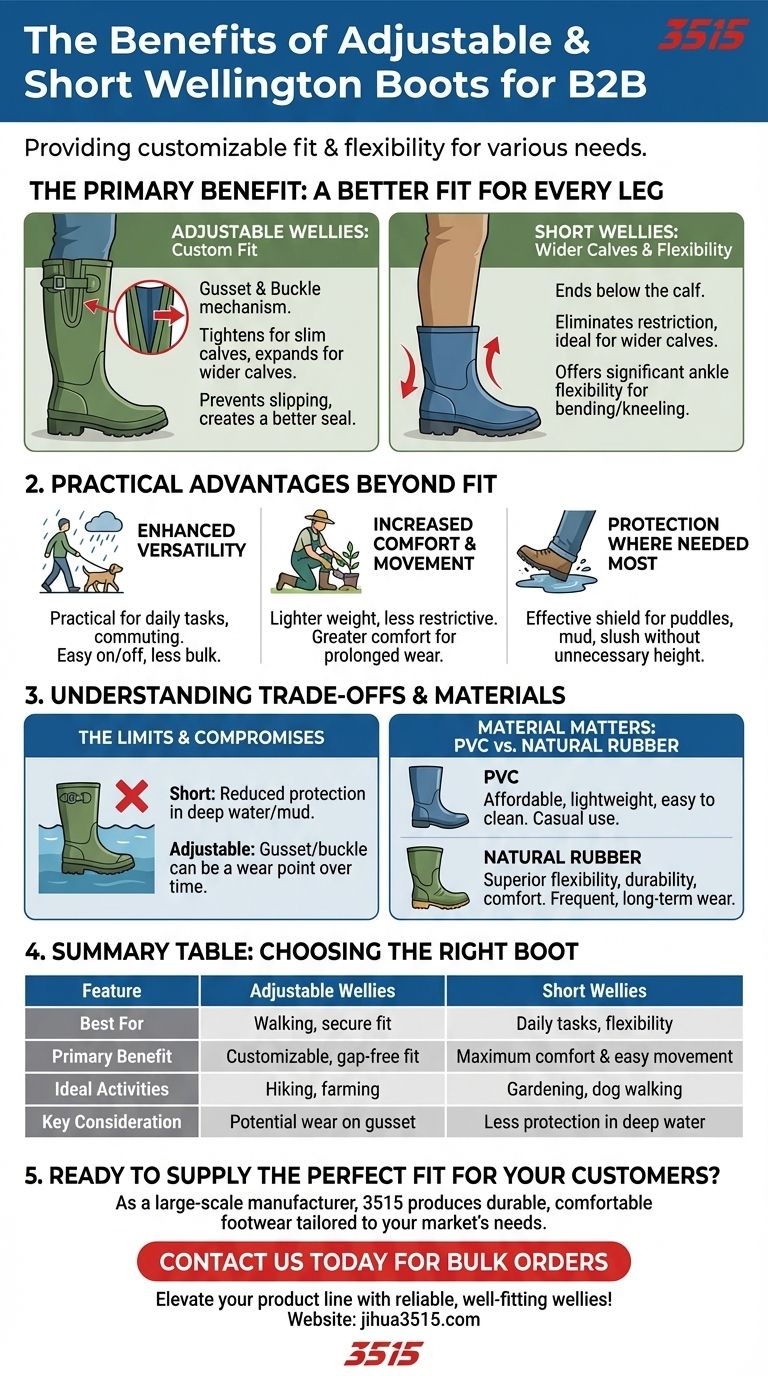
An adjustable wellington boot incorporates a side gusset—an expandable, waterproof panel—and a buckle. This mechanism allows you to either tighten the boot for a snug fit on slimmer calves or expand it to comfortably accommodate wider calves.
This tailored fit prevents the boot from slipping down as you walk and creates a better seal at the top, which helps keep rain, snow, and debris out.
Short Wellies for Wider Calves and Flexibility
Short wellies, sometimes called ankle or mid-calf boots, solve the fit problem by avoiding the widest part of the calf altogether. By stopping lower on the leg, they eliminate the most common point of restriction.
This design not only makes them an excellent choice for individuals with wider calves but also provides significantly more ankle flexibility, which is ideal for activities that require frequent bending or kneeling, such as gardening.
Practical Advantages Beyond Just Fit
While improved fit is the main draw, these designs offer distinct advantages that make them more suitable for specific, everyday scenarios.
Enhanced Versatility for Daily Tasks
Short wellies are exceptionally practical for routine activities like dog walking, commuting on rainy days, or running errands. They are far less cumbersome to put on and take off than full-length boots, offering waterproof protection without the bulk.
Increased Comfort and Ease of Movement
The lower height of short wellies makes them lighter and less restrictive than their tall counterparts. This directly translates to greater comfort during prolonged wear and easier movement for active users.
Protection Where It's Needed Most
For the majority of wet-weather situations, such as walking through puddles, mud, or slush, a short welly provides all the necessary protection. They shield your feet and ankles effectively without the unnecessary height of a traditional boot.
Understanding the Trade-offs
Choosing the right boot means acknowledging the limitations of each design. No single style is perfect for every situation.
The Limits of Short Wellies
The most obvious trade-off for short wellies is reduced protection. They are not suitable for wading through deep water, trekking through tall wet grass, or navigating deep mud, as water and debris can easily splash over the top.
The Adjustability Compromise
While the gusset and buckle on an adjustable boot are key to its custom fit, this area can be a point of wear and tear over time. On lower-quality models, the gusset may represent a potential weak point for water ingress if not properly constructed.
Material Matters: PVC vs. Natural Rubber
The material of the boot impacts performance. PVC is often more affordable, lightweight, and easy to clean, making it suitable for casual use. Natural rubber, while typically more expensive, offers superior flexibility, durability, and comfort, making it the better choice for frequent, long-term wear.
Making the Right Choice for Your Needs
To select the best boot, you must align the boot's design with your primary goal.
- If your primary focus is a secure, gap-free fit for walking: An adjustable tall wellington is the ideal choice, as it will prevent slipping and keep the elements out.
- If your primary focus is comfort, convenience, and accommodating wider calves: A short welly offers the best combination of waterproof protection and unrestricted movement for daily tasks.
- If your primary focus is maximum protection from deep mud or water: A traditional tall boot is still the best tool, but an adjustable version will ensure a proper fit for better performance.
Ultimately, choosing the right wellington is about matching the boot's features to your specific body shape and lifestyle.
Summary Table:
| Feature | Adjustable Wellies | Short Wellies |
|---|---|---|
| Best For | Secure fit for walking, slim/wider calves | Daily tasks, wider calves, flexibility |
| Primary Benefit | Customizable, gap-free fit | Maximum comfort & easy movement |
| Ideal Activities | Hiking, farming, wet weather walks | Gardening, dog walking, commuting |
| Key Consideration | Potential wear on gusset/buckle over time | Less protection in deep water/mud |
Ready to Supply the Perfect Fit for Your Customers?
As a large-scale manufacturer, 3515 produces a comprehensive range of adjustable and short wellington boots for distributors, brand owners, and bulk clients. Our production capabilities ensure durable, comfortable footwear tailored to your market's needs.
Contact us today to discuss your bulk order requirements and elevate your product line with reliable, well-fitting wellies!
Visual Guide
Related Products
- Durable Waterproof Rain Boots | Custom Manufacturer for Wholesale & Brands
- Wholesale Leather Work Boots with Customizable Wedge Sole for Brands
- Wholesale Durable Safety Boots Manufacturer Customizable Steel Toe Work Boots
- Durable Goodyear Welt Leather Work Boots for Wholesale & Private Label
- Durable High-Ankle Tactical Boots for Wholesale & Custom Manufacturing
People Also Ask
- What are the main materials for waterproof rain boots? Choose the Right Material for Durability & Comfort
- What is the overall recommendation for choosing rain boot materials? A Guide to Rubber vs. PVC
- How does boot height affect waterproofing? Choose the Right Height for Ultimate Protection
- Why are rain boots more flexible and comfortable than snow boots? The Key Differences Explained
- What are the best types of shoes for different gardening conditions? Find Your Perfect Match.



















