
At its core, a 90-degree heel on a work boot is a specialized design feature engineered for safety and stability in demanding environments. It provides a distinct edge for gripping surfaces like ladder rungs and navigating uneven, soft, or rocky terrain where a flatter sole would fail.
The 90-degree heel is not a matter of style; it is a functional tool. It creates a critical locking point for stability, particularly for climbing, and acts as an anchor on unpredictable ground.
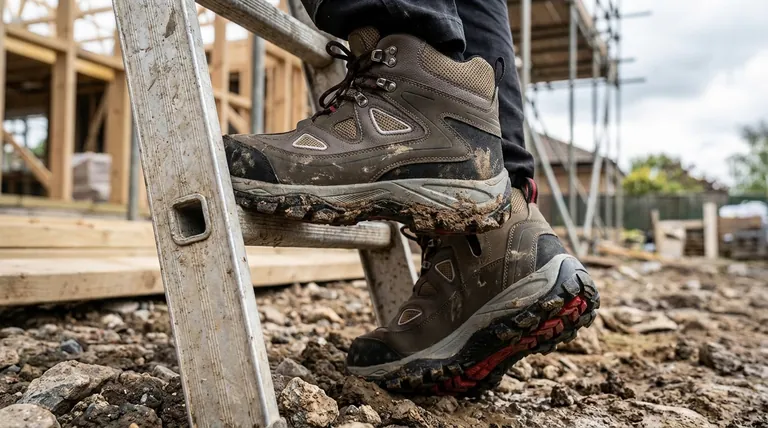
The Engineering Behind the 90-Degree Heel
The pronounced, sharp angle of a 90-degree heel is a deliberate design choice that directly impacts a boot's performance and safety profile. It transforms the footwear from a simple covering into a piece of high-performance equipment.
A Deliberate Anchor for Stability
The most critical function of the 90-degree heel is creating a "catch point." This allows the boot to securely lock onto a ladder rung, piece of scaffolding, or ledge.
This feature is so important for safety that it is often required by OSHA (Occupational Safety and Health Administration) standards for jobs that involve frequent climbing.
Maximizing Grip on Unpredictable Terrain
On soft ground like mud or loose soil, the sharp heel edge digs in, providing superior traction and preventing the foot from sinking or slipping.
This contrasts sharply with wedge or flat soles, which distribute weight over a wider, smoother area and are more prone to sliding on such surfaces.
Enhancing Balance and Support
The defined heel provides a stable, robust base that helps maintain balance on rocky, uneven, or sloped ground.
Boots featuring this heel design are typically constructed for rugged use, often incorporating excellent ankle support to prevent twists and sprains in challenging conditions.
Who Benefits Most from This Design?
While durable, this boot style is specifically optimized for workers facing certain environmental challenges. Understanding if your work falls into these categories is key.
Workers on Ladders and Scaffolding
For electricians, contractors, and builders, the safety aspect of locking onto a ladder rung cannot be overstated. The 90-degree heel is a non-negotiable feature for these professions.
Outdoor Professionals
Landscapers and outdoor construction workers benefit immensely from the enhanced grip and stability on wet, muddy, and rough terrain. The design provides confident footing where it matters most.
Workers Demanding Maximum Durability
These boots are built to withstand harsh outdoor conditions. They are often made of materials like full-grain leather, which offers exceptional durability and water resistance while molding to the foot for a custom fit over time.
Understanding the Trade-offs
No single boot design is perfect for every situation. The strengths of the 90-degree heel in some environments can become drawbacks in others.
Not Ideal for Flat, Hard Surfaces
The pronounced heel can create pressure points on the foot when standing or walking for extended periods on hard, flat surfaces like concrete floors.
Workers who spend all day on factory or warehouse floors often find a wedge sole, which provides more even surface contact, to be more comfortable.
The Break-in Period
The robust construction and durable materials, such as full-grain leather, that make these boots last often require a significant break-in period.
Making the Right Choice for Your Work
To determine if this is the right boot for you, analyze your daily tasks and primary work environment.
- If your primary focus is safety while climbing ladders or scaffolding: A 90-degree heel is essential and may be required.
- If your primary focus is traction on outdoor, uneven, or soft terrain: The anchoring ability of a 90-degree heel offers superior performance.
- If your primary focus is all-day comfort on flat concrete floors: You should strongly consider a wedge sole boot instead.
Ultimately, choosing a boot with a 90-degree heel is a decision to prioritize stability and safety in challenging, non-uniform environments.
Summary Table:
| Key Benefit | Description | Ideal For |
|---|---|---|
| Ladder & Scaffolding Safety | Creates a secure 'catch point' to lock onto rungs, often required by OSHA standards. | Electricians, Contractors, Builders |
| Superior Traction | Sharp heel edge digs into soft or loose ground like mud and soil to prevent slipping. | Landscapers, Outdoor Construction Workers |
| Enhanced Balance & Support | Provides a stable base on rocky, uneven, or sloped terrain, often with robust ankle support. | Workers in demanding, non-uniform environments |
| Durability | Typically constructed with full-grain leather for long-lasting performance in harsh conditions. | Professionals needing maximum boot longevity |
Need Durable, High-Performance Work Boots for Your Team?
As a large-scale manufacturer, 3515 produces a comprehensive range of safety footwear for distributors, brand owners, and bulk clients. Our production capabilities encompass all types of specialized work boots, including models with 90-degree heels designed for maximum stability and OSHA compliance.
We can provide the durable, high-traction footwear your customers demand. Contact us today to discuss your specific needs and explore our catalog!
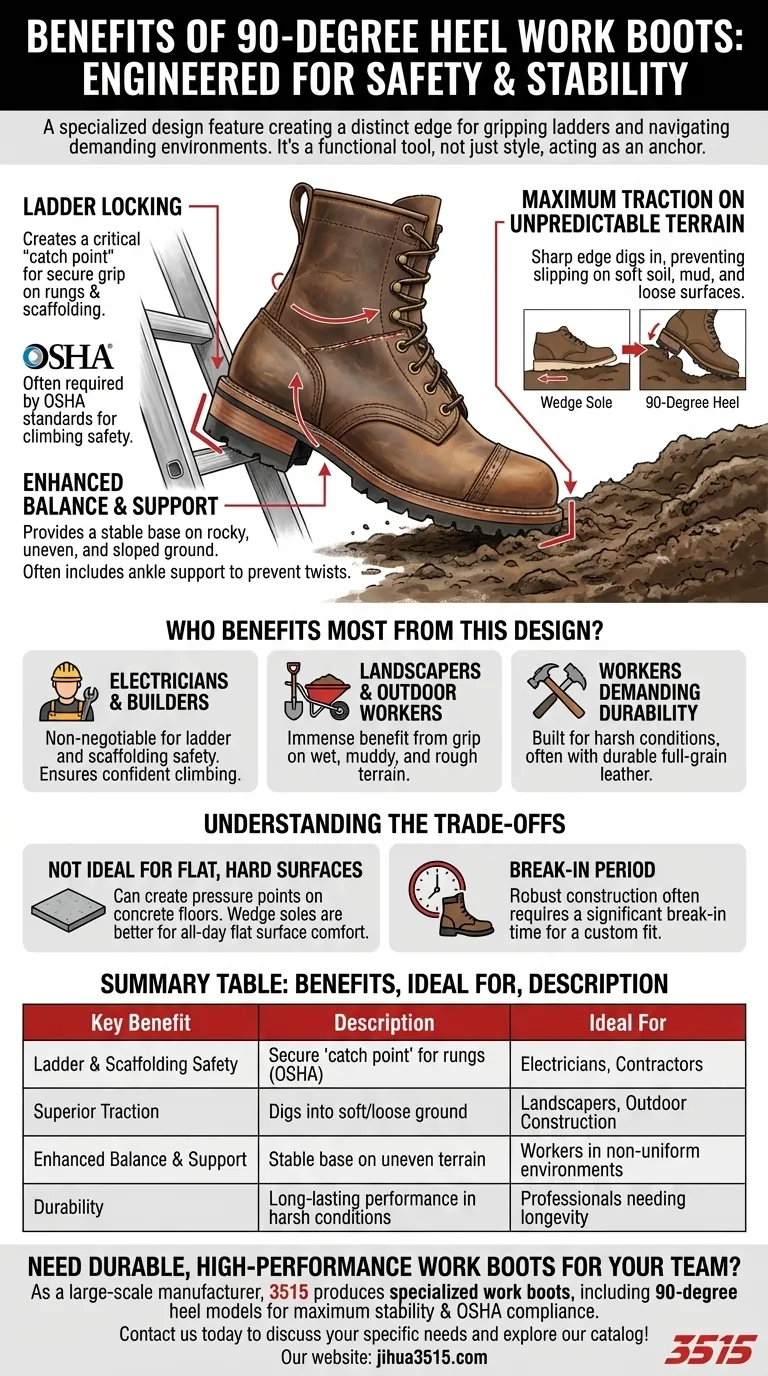
Visual Guide
Related Products
- Durable Leather Moc Toe Work Boots for Wholesale & Custom Manufacturing
- Durable Moc-Toe Wedge Work Boots | Wholesale Manufacturing for Brands
- Durable Goodyear Welt Leather Work Boots for Wholesale & Private Label
- Wholesale Durable Safety Boots Manufacturer Customizable Steel Toe Work Boots
- Wholesale Durable 6-Inch Work Boots | Custom & Private Label Manufacturer
People Also Ask
- What are moc toe work boots designed for? Superior Comfort and Mobility for Tradespeople
- What are the key features to look for when purchasing moc toe boots? A Guide to Durability & Fit
- How did moc toe boots originate? A Legacy of Workwear Durability and Style
- What clothing items complement the Outdoorsman/Heritage Look with moc toe boots? Build a Timeless, Rugged Wardrobe
- What types of outfits can moc toe boots be worn with? Versatile Style Guide













