
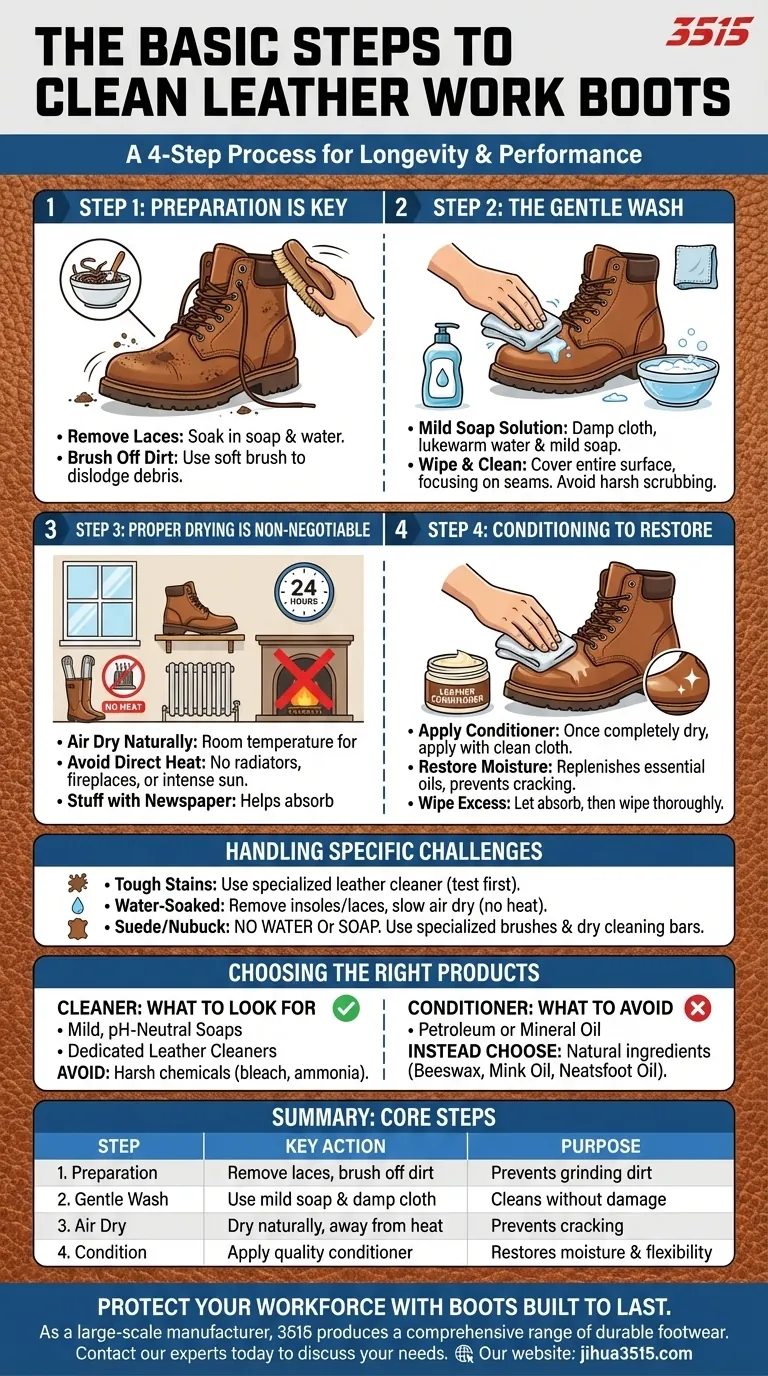
To clean leather work boots, you must follow a four-step process. First, remove the laces and brush off all loose dirt and mud. Second, gently wash the leather with a damp cloth and a mild soap solution. Third, allow the boots to air dry completely away from any direct heat source. Finally, apply a quality leather conditioner to restore moisture and prevent the material from cracking.
The goal of cleaning work boots is not just to improve their appearance, but to preserve the leather itself. Effective cleaning is a two-part system: first you remove damaging dirt and grime, then you restore the essential oils that keep the leather strong and supple.
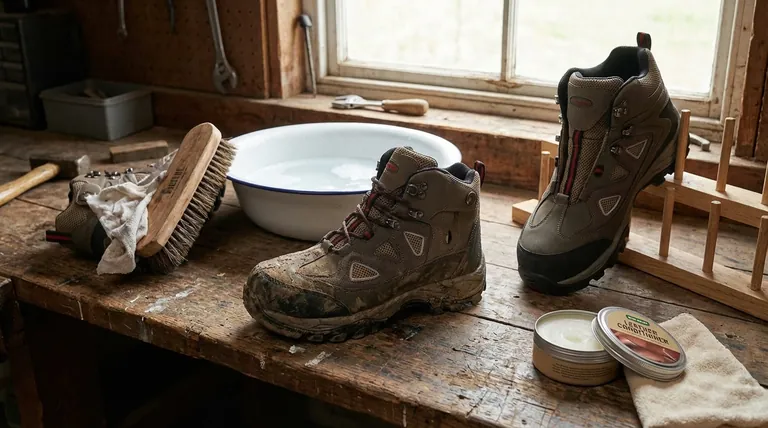
The Essential Four-Step Cleaning Process
Properly cleaning leather is a straightforward process that safeguards the material's integrity. Skipping any of these steps, particularly drying and conditioning, can do more harm than good.
Step 1: Preparation is Key
Before you apply any water, you must remove all surface-level contaminants. This prevents you from grinding abrasive dirt into the leather's grain during the washing stage.
Start by removing the boot laces. This gives you full access to the tongue and eyelets. You can soak the laces in a separate bowl with a bit of dish soap and water.
Next, use a soft-bristled brush (a nylon brush works well) to sweep away all loose dirt, dust, and dried mud. Knock the boots together to dislodge any caked-on debris from the soles and crevices.
Step 2: The Gentle Wash
Leather is a durable skin, but it requires a gentle touch. Harsh scrubbing can damage the finish and open the pores to over-saturation.
Create a cleaning solution with mild soap (like dish soap) and lukewarm water. Dip a clean, soft cloth into the solution, wring it out so it's damp but not dripping, and wipe down the entire surface of the boot.
Pay special attention to seams and crevices where dirt accumulates. For heavy, wet mud, it is acceptable to rinse the boots' exterior under a gentle stream of cool water.
Step 3: Proper Drying is Non-Negotiable
This is the most critical step for preventing permanent damage. Exposing wet leather to high heat causes it to shrink, harden, and crack, fundamentally ruining the boot's structure.
Never place your boots near a radiator, fireplace, or in direct, intense sunlight. The ideal method is to let them air dry naturally at room temperature for at least 24 hours.
If the boots are soaked through, remove the insoles to dry separately. You can stuff the boots with newspaper to help absorb internal moisture and maintain their shape. A boot dryer on a no-heat or very low-heat setting is also a safe option.
Step 4: Conditioning to Restore the Leather
Cleaning, especially with soap and water, strips away some of the leather's natural oils. Conditioning replenishes this moisture, keeping the material flexible and preventing cracks.
Once the boots are completely dry, apply a small amount of leather conditioner to a clean cloth. Work the conditioner into the leather using gentle, circular motions, ensuring you cover the entire surface, including the seams.
Let the conditioner absorb for a few minutes as directed by the product, then wipe away any excess with another clean cloth.
Handling Specific Challenges
Different situations and leather types require slight adjustments to the core cleaning process to avoid causing damage.
Tackling Tough Stains
For stubborn oil or grease stains, a mild soap solution may not be enough. Use a specialized leather cleaner designed for footwear. Always test any new cleaning product on a small, inconspicuous area of the boot first to ensure it doesn't cause discoloration.
Dealing with Water-Soaked Boots
If your boots become completely saturated, immediately remove the insoles and laces to dry separately. Follow the proper drying protocol meticulously, allowing ample time for the leather to dry from the inside out before you even consider conditioning.
A Note on Suede and Nubuck
Suede and nubuck are not smooth-finished leathers and must be treated differently. Never use water or soap solutions on these materials, as it can cause matting and staining.
These delicate leathers require specialized suede or nubuck brushes and cleaners. The process is focused on dry brushing and using specific erasers or cleaning bars to lift stains from the nap.
Understanding the Trade-offs: Choosing the Right Products
The products you use are as important as the technique. Using the wrong cleaner or conditioner can strip the leather's natural defenses or clog its pores.
What to Look for in a Cleaner
Stick to mild, pH-neutral soaps or dedicated leather cleaners. Avoid any harsh household chemicals like bleach, ammonia, or all-purpose surface cleaners, which will severely dry out and damage the leather.
What to Avoid in a Conditioner
Not all conditioners are created equal. Avoid products that contain petroleum or mineral oil, as these can suffocate the leather over time, preventing it from breathing and leading to premature drying.
Instead, opt for conditioners with natural ingredients like beeswax, mink oil, or neatsfoot oil. These ingredients nourish the leather by restoring its essential fats and oils, improving both longevity and water resistance.
Making the Right Choice for Your Goal
Your cleaning routine should match the intensity of your boot usage.
- If your primary focus is routine maintenance: A quick brush-down after each use and a wipe with a damp cloth once a week is sufficient to prevent dirt buildup.
- If your primary focus is deep cleaning: Perform the full four-step wash and condition process seasonally or anytime your boots are exposed to extreme mud, water, or grime.
- If your primary focus is preserving specialized leather (Suede/Nubuck): Invest in a dedicated care kit and clean stains immediately using only dry methods and specialized tools.
Proper care is not a chore; it's the single best way to protect your investment and ensure your boots protect you for years to come.
Summary Table:
| Step | Key Action | Purpose |
|---|---|---|
| 1. Preparation | Remove laces, brush off dirt | Prevents grinding dirt into leather |
| 2. Gentle Wash | Use mild soap & damp cloth | Cleans without damaging the finish |
| 3. Air Dry | Dry naturally, away from heat | Prevents leather from cracking |
| 4. Condition | Apply quality leather conditioner | Restores moisture and flexibility |
Protect Your Workforce with Boots Built to Last
As a large-scale manufacturer, 3515 produces a comprehensive range of durable footwear for distributors, brand owners, and bulk clients. Our production capabilities encompass all types of safety and work boots designed for demanding environments. Proper cleaning is essential for boot longevity, and it starts with a quality product.
Let us help you equip your team with reliable footwear. Contact our experts today to discuss your needs and discover our full range of durable work boots.
Visual Guide
Related Products
- Durable Leather Work Boots for Wholesale & Custom Manufacturing
- Wholesale Leather Work Boots with Customizable Wedge Sole for Brands
- Durable Leather Work Boots for Wholesale & Custom OEM Manufacturing
- Durable Leather Work Boots Wholesale Manufacturer & Custom Factory
- Durable Goodyear Welt Leather Work Boots for Wholesale & Private Label
People Also Ask
- What is the difference between full-grain and top-grain leather? Premium Material Guide for Boot Manufacturers
- What are the common workplace hazards that can be mitigated with the right work boots? Protect Your Workforce
- What are the common foot issues workers face due to uncomfortable work boots? Prevent Pain & Deformities
- What are the advantages of leather versus synthetic work boots? A Guide to Choosing the Right Material
- What are the key components of modern work boots? Engineered for Ultimate Durability and Comfort













