
At their core, the primary advantages of Wellington boots are that they are completely waterproof, exceptionally easy to clean, and provide robust protection. This unique combination makes them essential footwear for dealing with wet weather, muddy terrain, and various hazardous conditions where keeping your feet dry and safe is the top priority.
The true value of a Wellington boot extends far beyond simple rain protection. It is a highly versatile tool designed for specific environments, offering a level of defense against water, mud, chemicals, and physical hazards that conventional footwear cannot match.
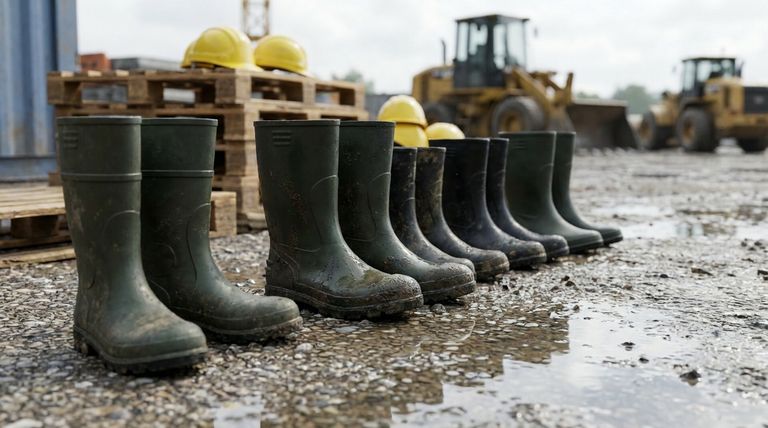
The Foundational Advantages
The original purpose of the Wellington boot was to provide a superior solution for wet and muddy conditions, and these core benefits remain its greatest strength.
Absolute Waterproofing
The most recognized advantage is their seamless, impermeable construction. They are designed to be a single barrier against moisture, keeping your feet entirely dry in heavy rain, deep puddles, and waterlogged ground.
Unmatched Ease of Cleaning
The smooth, non-porous surface, typically made of natural rubber, means mud, dirt, and other substances can be rinsed off with a hose. This makes them incredibly practical for agriculture, gardening, and any messy outdoor activity.
Protection from the Elements
Wellington boots excel in muddy terrain where other shoes would be ruined or offer poor traction. Their durable, often non-slip soles provide a stable footing while the high shaft protects your lower legs and trousers.
Beyond Basic Protection: Industrial and Safety Applications
Modern Wellington boots have evolved into specialized personal protective equipment (PPE) for demanding industrial environments.
Physical Hazard Defense
Many work-specific Wellies are equipped with reinforced steel toes to protect against impact and compression from heavy objects. Some also feature penetration-resistant midsoles to guard against sharp objects from below.
Chemical and Substance Resistance
In sectors like agriculture, mining, and chemical processing, Wellington boots are made from compounds resistant to chemicals, oils, and fuels. This protects the wearer's skin and prevents the boot material from degrading.
Specialized Safety Features
Advanced models incorporate features for specific hazards. These can include cold insulation for low-temperature work, heat resistance for high-temperature environments, and anti-static properties to prevent electrostatic discharge.
Understanding the Trade-offs and Variations
While incredibly useful, it's important to understand the context and variations of Wellington boots to choose the right pair.
Breathability Considerations
The same waterproof properties that keep water out also trap moisture and heat inside. To combat this, many boots include a comfortable polyester lining that helps manage moisture and improve the overall feel.
Design and Style Versatility
Wellington boots are not a one-size-fits-all design. They range from traditional tall boots for maximum coverage to short and ankle-height versions that offer waterproofing with greater flexibility and comfort for urban or festival use.
Modern Material and Use
While rubber is classic, Wellies now appear in various forms, from fashion items at festivals to rugged footwear for fishing crews. Their fundamental design principle—durable, waterproof protection—has been adapted for countless modern uses.
Making the Right Choice for Your Needs
Selecting the correct Wellington boot depends entirely on its intended use.
- If your primary focus is everyday wet weather and gardening: A classic, comfortable waterproof Wellington made from natural rubber is the perfect choice.
- If your primary focus is hazardous industrial work: Look for boots with specific safety certifications for steel toes, chemical resistance, or penetration-proof soles.
- If your primary focus is style and urban convenience: Short or ankle-height designs provide the core waterproof benefit with greater comfort and versatility for daily wear.
Ultimately, the key advantage of a Wellington boot is its ability to provide reliable, specialized protection in environments where other footwear simply fails.
Summary Table:
| Advantage | Key Feature | Ideal Use Case |
|---|---|---|
| Waterproofing | Seamless, impermeable construction | Heavy rain, deep puddles, waterlogged ground |
| Easy Cleaning | Smooth, non-porous surface | Agriculture, gardening, messy outdoor work |
| Hazard Protection | Steel toes, chemical-resistant materials | Industrial sites, mining, chemical processing |
| Versatility | Tall, short, and ankle-height designs | Urban use, festivals, fishing, daily wear |
Need Durable, High-Performance Wellington Boots for Your Business?
As a large-scale manufacturer, 3515 produces a comprehensive range of industrial and safety footwear for distributors, brand owners, and bulk clients. Our production capabilities encompass all types of Wellington boots, including steel-toe, chemical-resistant, and insulated models tailored to your specific needs.
We offer:
- Customizable Designs: Tailor boots to your safety standards and brand requirements.
- Bulk Order Efficiency: Competitive pricing and reliable supply chains for large-volume clients.
- Quality Assurance: Durable materials and rigorous testing to ensure long-lasting performance in harsh environments.
Let's discuss your footwear requirements — contact our team today for a quote!
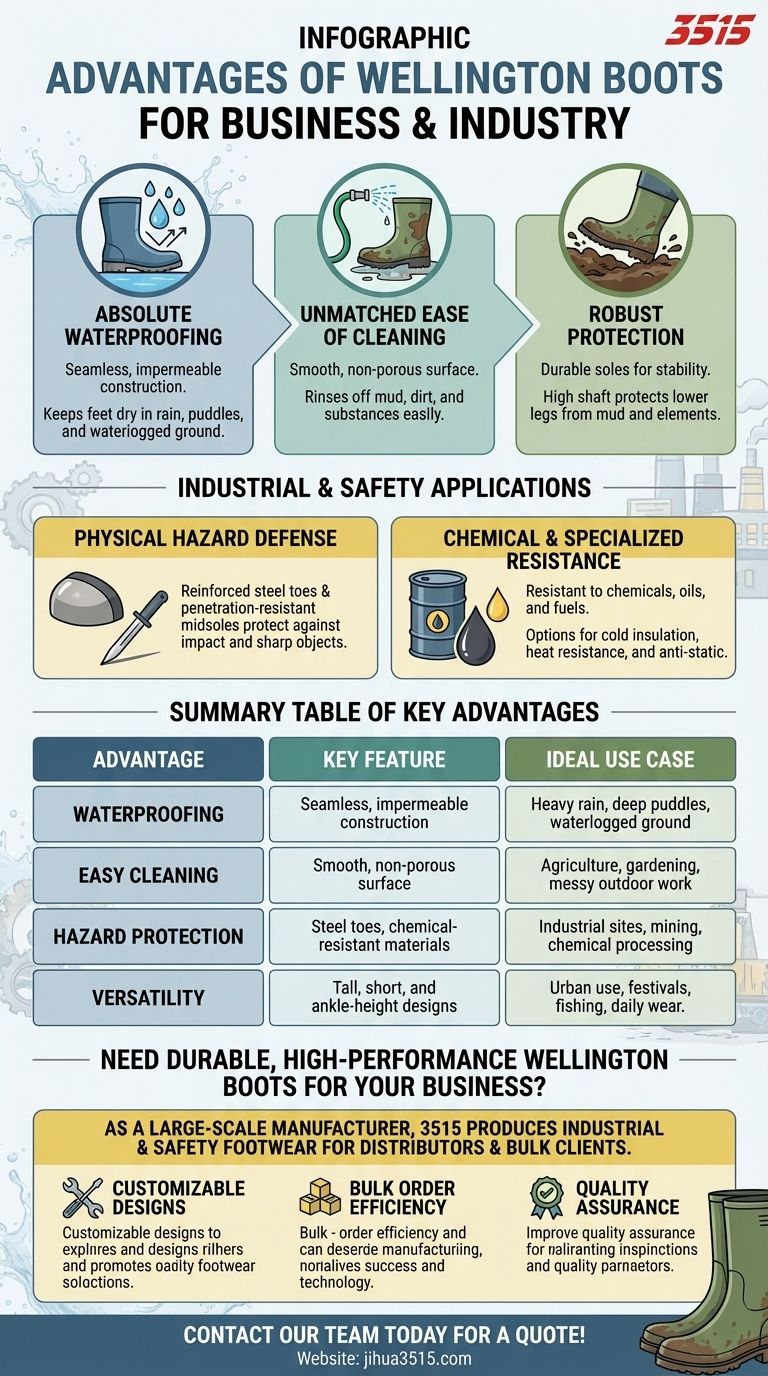
Visual Guide
Related Products
- Durable Waterproof Rain Boots | Custom Manufacturer for Wholesale & Brands
- Durable Goodyear Welt Leather Work Boots for Wholesale & Private Label
- Wholesale Durable Leather Work Boots | 8-Inch Goodyear Welt Manufacturer
- High-Traction Suede Tactical Boots Wholesale & Custom Manufacturing
- Premium Wholesale Tactical Style Safety Shoes Boots with Quick Lacing
People Also Ask
- What are the main materials for waterproof rain boots? Choose the Right Material for Durability & Comfort
- What is the overall recommendation for choosing rain boot materials? A Guide to Rubber vs. PVC
- How does boot height affect waterproofing? Choose the Right Height for Ultimate Protection
- Why are rain boots more flexible and comfortable than snow boots? The Key Differences Explained
- What are the best types of shoes for different gardening conditions? Find Your Perfect Match.



















