
At their core, tall riding boots offer three primary advantages over other footwear: they provide superior stability for the rider's lower leg, create a closer and more direct line of communication with the horse, and present the polished, traditional appearance required for competition. This integrated design eliminates the need for separate half chaps.
While paddock boots offer everyday comfort and practicality, tall boots are specialized equipment designed for performance. They are the definitive choice when the rider's goals shift from casual riding to refined communication and formal presentation in the show ring.
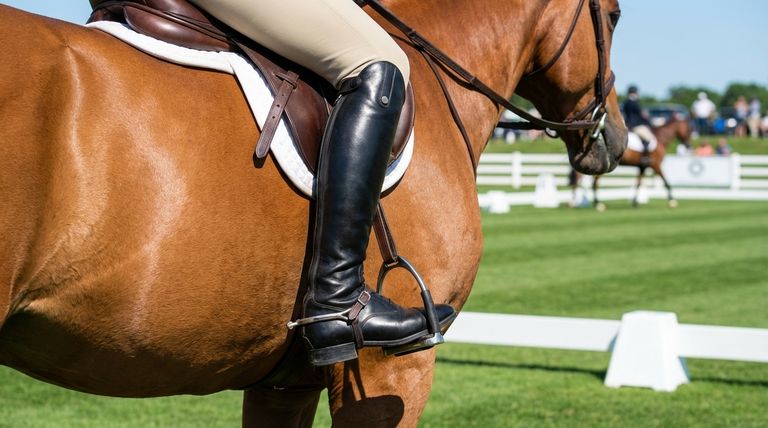
The Functional Advantages of Tall Boots
The design of a tall boot is not merely about tradition; it directly impacts the rider's effectiveness and connection with the horse. Every element serves a distinct, functional purpose.
Enhanced Rider-Horse Communication
The most significant advantage is the uninterrupted contact between the rider's leg and the horse's side. A single, smooth piece of leather allows for the transmission of subtle leg cues without the interference of a seam from a half chap.
This direct contact is vital for guiding the horse, signaling transitions in gait, and establishing the quiet, harmonious connection that is the hallmark of skilled riding.
Unmatched Leg Stability
The stiff, contoured structure of a tall boot provides critical support to the rider's lower leg. This helps keep the leg still and in the correct position.
By minimizing unwanted movement, the boot allows the rider to apply precise and intentional aids, making their signals clearer and more effective.
Integrated Safety and Design
Like all proper riding footwear, tall boots feature a distinct heel of around 1.5 to 2 inches. This is a crucial safety feature that prevents the rider's foot from sliding completely through the stirrup.
The smooth inner surface of the boot also protects the rider's calf from being pinched or chafed by the stirrup leathers, a common issue without proper leg protection.
The Aesthetic and Traditional Importance
Beyond pure function, tall boots are deeply rooted in equestrian tradition and are the standard for formal presentation, particularly in the competitive arena.
The Gold Standard for Showing
For most English riding disciplines, tall boots are the required attire for competition, especially at the upper levels. Solid black is the universally accepted and expected color.
Choosing to compete in anything less can be seen as a break from tradition and may not be appropriate for the formal setting of a horse show.
Creating a Polished Silhouette
The design of a tall boot is intended to flatter the rider's position. Features like a "Spanish-cut" topline, which is higher on the outside of the knee, visually elongate the rider's leg.
This creates a clean, uninterrupted line from the hip to the heel, contributing to an overall picture of elegance and professionalism.
Understanding the Trade-offs
While advantageous for performance, tall boots are a specialized tool and come with practical considerations that make them less suitable for all situations.
The Break-In Period
New tall boots, particularly high-quality leather ones, are notoriously stiff. Riders should expect a significant break-in period where the boots can be uncomfortable as they soften and conform to the shape of the leg.
Higher Initial Cost
Generally, tall boots represent a much larger financial investment than paddock boots. Their complex construction and use of more material contribute to a higher price point, making them a serious purchase.
Reduced Everyday Practicality
Tall boots are designed for riding, not for walking around the barn for extended periods. Their stiffness and snug fit make them less comfortable and practical for groundwork, mucking out, or other daily chores compared to the more versatile paddock boot.
Choosing the Right Boot for Your Riding Journey
Your choice of boot should be directly aligned with your current activities and future ambitions in the sport.
- If your primary focus is competition and performance: A well-fitted pair of tall boots is the essential standard for a professional appearance and refined leg aids.
- If your primary focus is lessons and everyday training: Paddock boots, often paired with half chaps, offer a more comfortable, cost-effective, and practical solution for daily use.
- If you are a beginner or a young, growing rider: Start with paddock boots, as they are easier to fit, more affordable, and more forgiving during the learning process.
Ultimately, the right boot is the one that best supports your safety, communication, and specific goals in the saddle.
Summary Table:
| Advantage | Key Benefit |
|---|---|
| Enhanced Communication | Smooth leather allows for subtle, direct leg cues to the horse. |
| Leg Stability | Stiff, contoured design keeps the rider's leg still and in position. |
| Safety & Design | Built-in heel prevents foot from slipping through stirrups. |
| Aesthetic Appeal | Creates a polished, professional silhouette required for showing. |
Ready to experience the performance advantage of premium tall boots?
As a large-scale manufacturer, 3515 produces a comprehensive range of equestrian footwear for distributors, brand owners, and bulk clients. Our production capabilities ensure you receive high-quality, durable riding boots that enhance rider-horse communication and meet the demands of competitive disciplines.
Contact us today to discuss your tall boot requirements and discover how we can support your business with reliable, high-performance footwear.
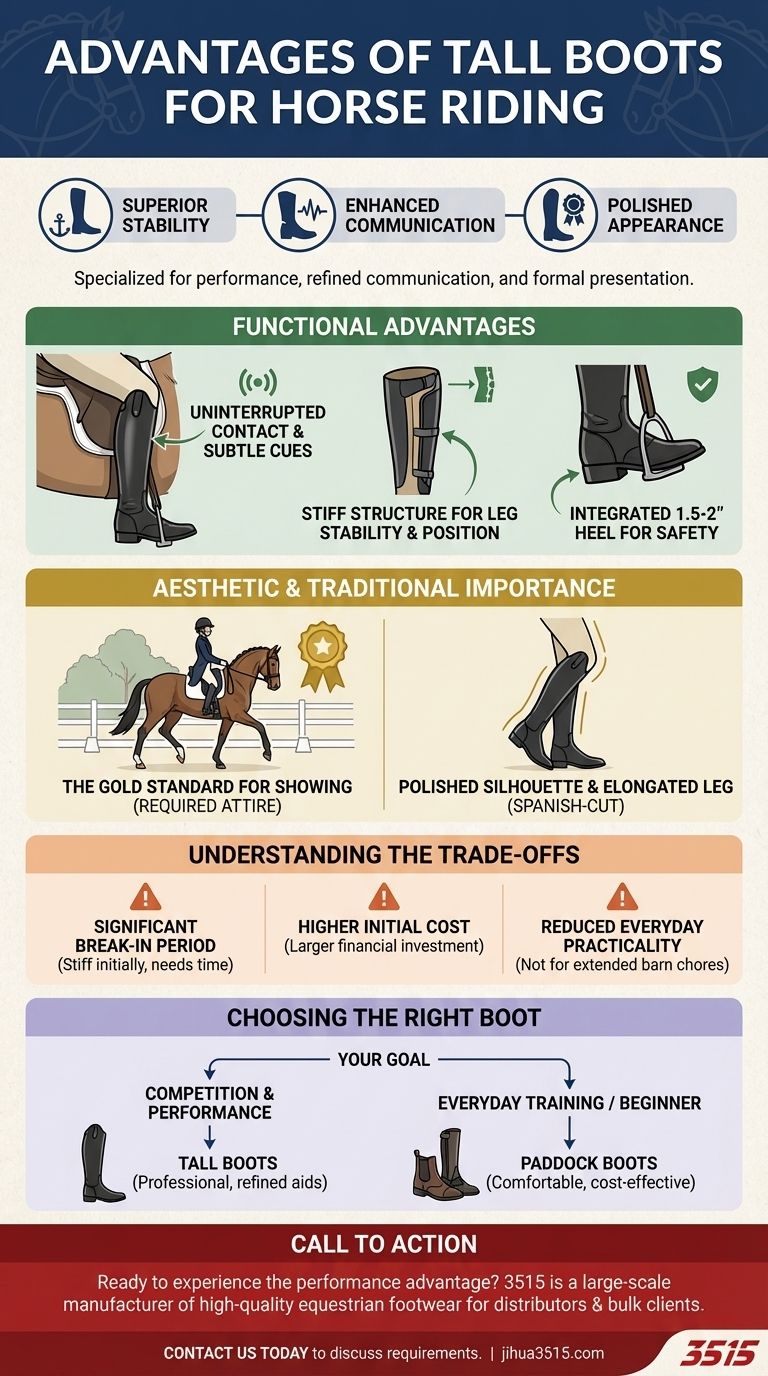
Visual Guide
Related Products
- Durable High-Ankle Tactical Boots Wholesale Manufacturer for Custom & Bulk Orders
- Durable High-Ankle Tactical Boots for Wholesale & Custom Manufacturing
- Durable Leather High-Ankle Tactical Boots for Wholesale & Custom Manufacturing
- Wholesale High-Traction Camo Boots - Custom Manufacturer for Brands
- Wholesale Tactical Boots High-Traction & Reflective for Bulk & Brand Orders
People Also Ask
- What specialized protections do tactical boots offer? Maximize Endurance with High-Performance Footwear
- How do tactical boots protect against injuries? Discover the Integrated Safety System
- What are the ideal use cases for tactical boots? Empower Your Performance in Demanding Scenarios
- Can tactical boots be stylish for everyday wear? Yes, with the right styling and features.
- What are the primary benefits of wearing tactical boots for everyday use? Get All-Day Comfort & Durability



















