Low-cost resistive thin films represent a transformative material choice for smart insoles, providing a critical balance between mechanical performance and economic viability. By utilizing these materials, engineers can develop high-density sensing arrays that remain affordable while delivering the high-resolution data required for advanced applications like fall detection.
Low-cost resistive films solve the conflict between sensor density and manufacturing cost, offering a flexible solution that captures the precise, high-fidelity data necessary for safety-critical wearable technology.
Seamless Integration into Soft Structures
Superior Flexibility
Unlike rigid sensor components, resistive thin films offer excellent flexibility. This mechanical property allows the sensors to bend and flex naturally with the movement of the foot without compromising structural integrity.
Streamlined Processability
The material's inherent processability simplifies the manufacturing workflow. This allows for easy integration directly into the soft, pliable structures of an insole, ensuring the final product remains comfortable for the user.
Economic Scalability and Density
The Cost Advantage Over Capacitive Sensors
When designing for scale, cost becomes a primary constraint. Resistive films provide a significant cost advantage compared to traditional capacitive pressure sensors, which can become prohibitively expensive in complex layouts.
Enabling High-Density Arrays
Because the core material is cost-effective, developers can implement high-density sensor arrays. This allows for a greater number of sensing points across the insole, creating a detailed grid without drastically increasing the unit cost.
Enhanced Data Quality for Fall Detection
Capturing Subtle Pressure Changes
Effective fall detection requires more than simple binary contact data. The pressure-sensitive characteristics of these films allow for the precise capture of subtle changes in plantar pressure distribution.
High-Resolution Raw Data
The sensitivity of resistive films generates high-resolution raw data. This fidelity is essential for feeding sophisticated algorithms that monitor stability and detect potential falls before they result in injury.
Understanding the Design Trade-offs
Cost vs. Tradition
While traditional capacitive pressure sensors are a known quantity in the industry, they present a barrier to scaling. Choosing resistive films involves prioritizing affordability and density over the specific characteristics of capacitive systems.
Application Specificity
The choice of this material is driven by the specific need for high-density mapping and fall detection. Designers must ensure that the resistive properties align with their specific data processing requirements, leveraging the raw data output effectively.
Making the Strategic Choice for Your Device
- If your primary focus is mass production and affordability: Leverage resistive thin films to build high-density sensor arrays that remain cost-competitive compared to capacitive alternatives.
- If your primary focus is safety and monitoring: Utilize the material’s ability to capture subtle pressure variations to ensure your fall detection algorithms have the high-resolution data they need to function correctly.
By prioritizing resistive thin films, you ensure your smart insole delivers critical health data without sacrificing manufacturability.
Summary Table:
| Feature | Resistive Thin Films | Traditional Capacitive Sensors |
|---|---|---|
| Cost Efficiency | High (Ideal for mass production) | Low (Prohibitively expensive at scale) |
| Sensor Density | High-density arrays possible | Limited by cost and complexity |
| Flexibility | Superior (Natural foot movement) | Moderate to Low |
| Data Resolution | High-fidelity pressure mapping | Variable |
| Primary Use Case | Fall detection & high-density mapping | Simple contact sensing |
Partner with 3515 for Advanced Footwear Solutions
As a large-scale manufacturer serving distributors and brand owners worldwide, 3515 offers comprehensive production capabilities for all footwear types. Whether you are developing next-generation smart insoles or require high-performance footwear, our expertise is anchored by our flagship Safety Shoes series.
Our extensive portfolio covers:
- Smart-Integrated Solutions: Specialized production for tactical and training footwear.
- Work & Tactical Boots: Rugged durability for demanding environments.
- Outdoor & Sneakers: Comfort meets performance for the modern consumer.
- Dress & Formal Shoes: Premium quality to meet diverse bulk requirements.
Ready to elevate your product line with cutting-edge manufacturing? Contact us today to discuss your bulk requirements and discover how our scale and technical precision can bring your vision to life.
References
- Wei Guo, Lei Jing. PIFall: A Pressure Insole-Based Fall Detection System for the Elderly Using ResNet3D. DOI: 10.3390/electronics13061066
This article is also based on technical information from 3515 Knowledge Base .
Related Products
- Lightweight Breathable Sneakers with Wet-Traction Grip for Wholesale & Private Label
- Wholesale Breathable Athletic Sneakers - Custom Lightweight Cushioned Footwear Manufacturer
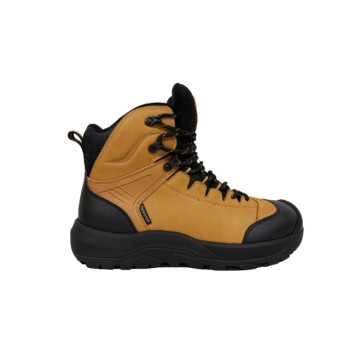
- Wholesale Durable Safety Boots Manufacturer Customizable Steel Toe Work Boots
- Wholesale Lightweight Cushioned Athletic Sneakers for Custom Bulk Production
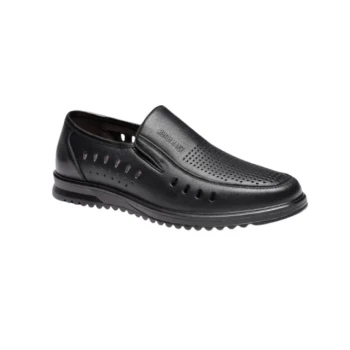
- Wholesale Breathable Perforated Slip-On Loafers Custom Manufacturing
People Also Ask
- Why are breathable sneakers necessary for tropical commuting? Stay Cool and Dry in High Humidity
- What role do lightweight training shoes play in urban traffic? Boost Agility and Reaction for Safer City Navigation
- How do lightweight shoes provide support? The Science of Efficient Cushioning & Stability
- What are the style advantages of lightweight shoes? Sleek, Versatile & Modern Comfort
- How do lightweight shoes contribute to healthier feet? Reduce Fatigue & Prevent Foot Problems